Minimalist Kitchen Design — 7 Principles for a Clutter-Free Cooking Space
The kitchen is the heart of the home, but it’s also the room most prone to clutter and chaos. Between appliances, cookware, pantry items, and decorative touches, it’s easy for a kitchen to feel overwhelming rather than inviting. That’s where minimalist kitchen design comes in—not as a cold, sterile aesthetic, but as a thoughtful approach to creating a functional, beautiful space that makes cooking and gathering genuinely enjoyable.
I’ve spent years studying what makes certain kitchens feel effortlessly organized while others constantly battle clutter, and the difference isn’t about having more storage or a bigger budget. It’s about intentional design choices that prioritize function, quality, and visual calm. In this comprehensive guide, I’ll walk you through the seven core principles of minimalist kitchen design, practical implementation strategies, and how to avoid the common pitfalls that make minimalist kitchens feel cold or impractical.
Whether you’re planning a full kitchen renovation or simply want to declutter your existing space, these principles will help you create a kitchen that’s both beautiful and genuinely functional for everyday life.
WHY MINIMALIST KITCHEN DESIGN WORKS
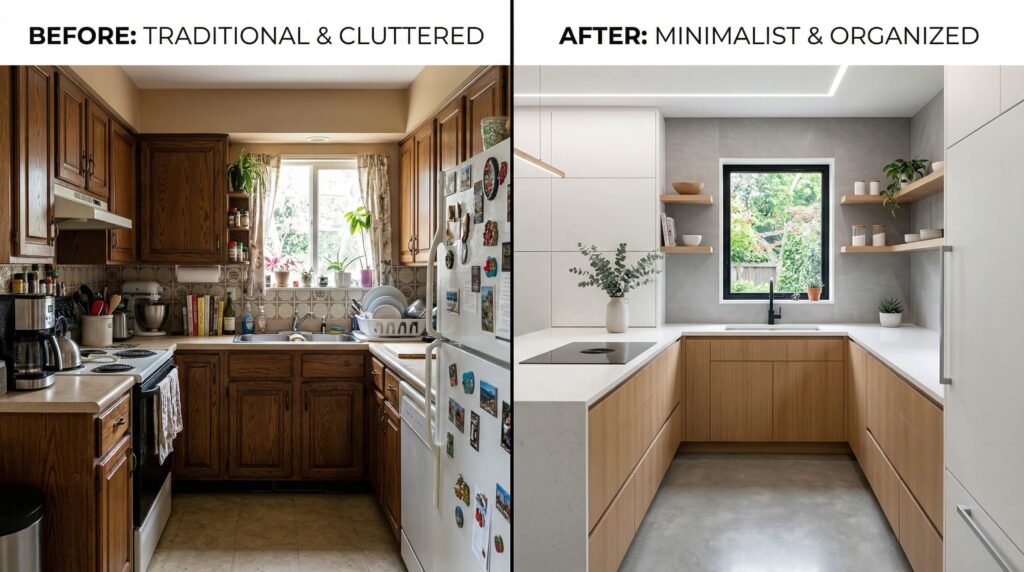
Before we dive into the how, let’s talk about the why. Minimalist kitchen design isn’t about deprivation or following a trend—it’s rooted in practical psychology and functional design principles.
Research shows that visual clutter directly impacts our stress levels and decision-making ability. When your kitchen counters are covered with appliances, utensils, and miscellaneous items, your brain has to process all that visual information every time you enter the space. This creates what psychologists call “cognitive load”—mental fatigue from processing unnecessary stimuli.
A minimalist kitchen reduces this cognitive load by eliminating visual noise. When you walk into a clean, organized kitchen with clear counters and hidden storage, your brain can focus on the task at hand—whether that’s cooking dinner, making morning coffee, or enjoying conversation with family.
But here’s what most people miss: minimalism in the kitchen isn’t about having less. It’s about having exactly what you need, in the right place, easily accessible. A well-designed minimalist kitchen is actually more functional than a cluttered traditional kitchen because everything has a purpose and a place.
THE 7 CORE PRINCIPLES OF MINIMALIST KITCHEN DESIGN
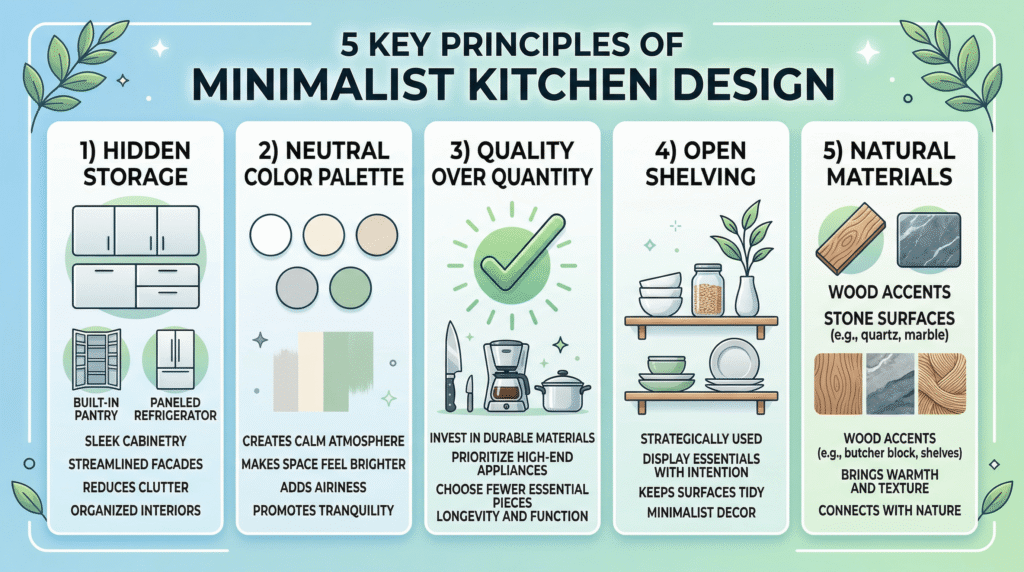
1. Hidden Storage is Your Foundation
The number one rule of minimalist kitchen design is this: if it doesn’t need to be visible, hide it. This doesn’t mean shoving everything into cabinets haphazardly—it means creating smart, organized storage systems that keep your counters clear while making items easy to access.
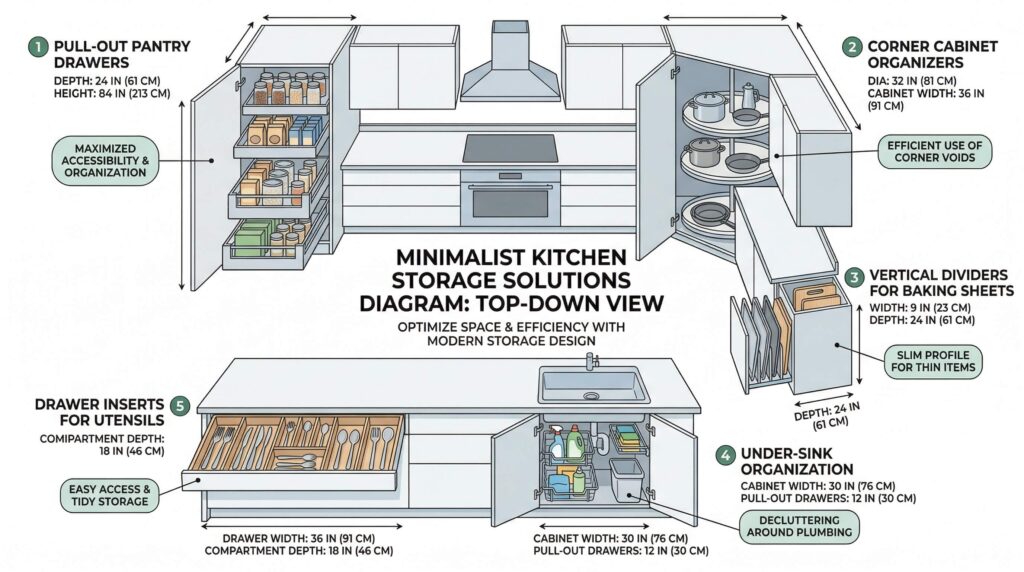
How to implement:
- Install deep drawers instead of lower cabinets (easier to access, better organization)
- Use pull-out pantry systems for dry goods
- Add vertical dividers in cabinets for baking sheets and cutting boards
- Install toe-kick drawers for flat items like placemats
- Use drawer organizers to keep utensils separated and visible
The goal is “a place for everything, and everything in its place.” When you open a drawer or cabinet, you should immediately see what you need without digging or moving other items.
2. Quality Over Quantity in Everything
Minimalist kitchen design is fundamentally about curation. Instead of owning 20 mismatched mugs, own 6-8 beautiful ones you actually love. Instead of 5 cheap pots and pans, invest in 3 high-quality pieces that will last decades.
This principle extends beyond cookware to every element of your kitchen:
- Appliances: Keep only what you use weekly. That bread maker gathering dust? Donate it.
- Dishes: Choose one cohesive set rather than mixing patterns and styles
- Utensils: Invest in quality tools that perform multiple functions
- Decor: One beautiful cutting board displayed is better than five cluttering your counter
The beauty of this approach is that it actually saves money long-term. Quality items last longer, perform better, and bring more satisfaction than a drawer full of cheap alternatives.
3. Neutral Color Palette Creates Visual Calm
Color is one of the most powerful tools in minimalist design. A neutral palette—whites, grays, beiges, natural wood tones—creates a sense of spaciousness and calm that’s impossible to achieve with bold, competing colors.
The minimalist kitchen color formula:
- Base (60%): White or light gray cabinets and walls
- Secondary (30%): Natural wood or warm gray countertops
- Accent (10%): Black hardware, fixtures, or a single accent color
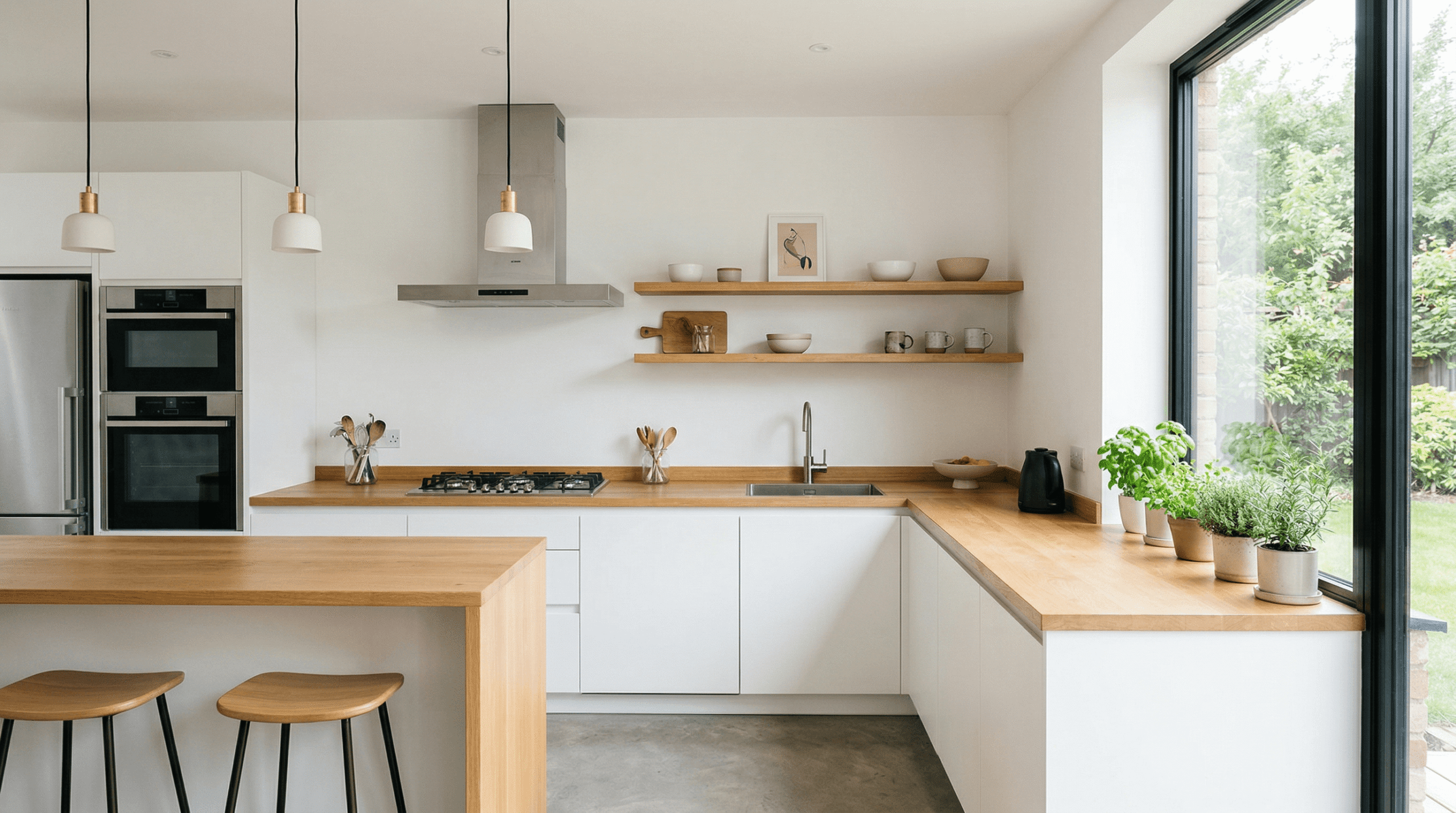
This doesn’t mean your kitchen has to be boring. Texture and material variation create visual interest without color chaos. Think matte white cabinets paired with glossy subway tile, natural wood counters against cool marble, brushed nickel hardware on warm gray cabinetry.
The key is cohesion. Every element should feel like it belongs to the same design family, creating a harmonious whole rather than a collection of individual pieces.
4. Open Shelving (Done Right)
Open shelving is a hallmark of minimalist kitchen design, but it’s also the most misunderstood element. Done wrong, open shelves become cluttered catch-alls that defeat the entire purpose. Done right, they create beautiful, functional display space.
Rules for successful open shelving:
- Display only what you use daily (everyday dishes, glasses, coffee mugs)
- Keep items uniform in style and color (all white dishes, matching glassware)
- Leave breathing room—shelves should never look packed
- Limit decorative items to 1-2 per shelf (a plant, a small vase)
- Keep it practical—items should be easy to grab and put away
Open shelving works best when it replaces upper cabinets in a small section of your kitchen (typically near the sink or stove) rather than throughout the entire space. This gives you the visual openness of minimalism while maintaining practical closed storage for less attractive items.
5. Natural Materials Add Warmth
One of the biggest mistakes in minimalist kitchen design is going too sterile. An all-white kitchen with no texture or natural elements can feel cold and institutional rather than inviting. Natural materials are the antidote.
Materials that add warmth without clutter:
- Wood: Butcher block countertops, floating shelves, cutting boards
- Stone: Marble or quartz counters, stone backsplash
- Metal: Brushed brass or matte black hardware and fixtures
- Natural fiber: Linen dish towels, jute rug
These materials bring organic texture and visual warmth while maintaining the clean lines and simplicity of minimalist design. A white kitchen with wood counters and brass fixtures feels completely different from an all-white kitchen—warmer, more inviting, more human.
6. Integrated Appliances Maintain Clean Lines
Nothing disrupts the visual calm of a minimalist kitchen like a row of mismatched appliances cluttering the counter. Integrated and built-in appliances are a game-changer for maintaining clean lines.
Appliance strategies:
- Built-in: Refrigerator, dishwasher, microwave hidden behind cabinet panels
- Stored: Coffee maker, toaster, blender kept in appliance garage or cabinet
- Displayed: Only items used daily (coffee maker if you’re a daily coffee drinker)
- Matching: If appliances are visible, choose one finish (all stainless, all white, all black)
If built-in appliances aren’t in your budget, focus on reducing visible appliances to the absolute minimum. Ask yourself: do I use this daily? If not, it doesn’t deserve counter space.
7. Lighting Layers Create Ambiance
Lighting is often overlooked in kitchen design, but it’s crucial for both function and atmosphere. Minimalist kitchens need layered lighting to avoid feeling flat or cold.
The three layers of kitchen lighting:
- Task lighting: Under-cabinet LEDs for food prep areas
- Ambient lighting: Recessed ceiling lights or flush-mount fixtures
- Accent lighting: Pendant lights over island or sink
The key is making lighting feel intentional rather than utilitarian. Simple pendant lights in matte black or brass add visual interest without clutter. Under-cabinet lighting makes counters functional while creating a warm glow in the evening.
Avoid overly decorative or trendy light fixtures—they’ll date your kitchen and distract from the clean lines you’ve worked to create.
COMMON MINIMALIST KITCHEN MISTAKES (AND HOW TO AVOID THEM)
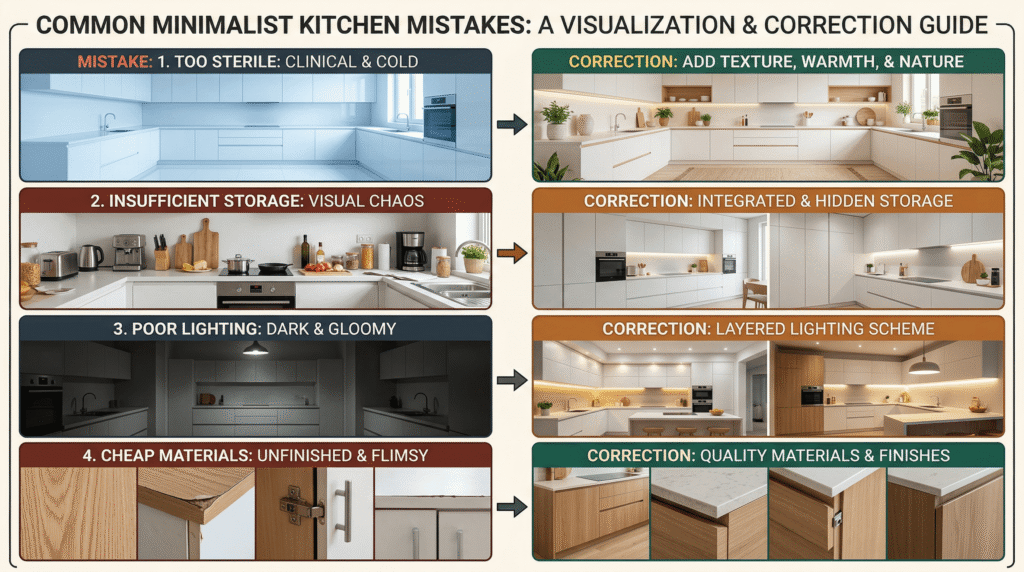
Even with the best intentions, it’s easy to make mistakes when designing a minimalist kitchen. Here are the most common pitfalls and how to avoid them:
Mistake 1: Insufficient Storage
The biggest reason minimalist kitchens fail is inadequate storage. If you don’t have enough hidden storage, items will inevitably end up on counters, defeating the purpose.
Solution: Before removing cabinets or committing to open shelving, audit everything you own and ensure you have a designated storage spot for each item. It’s better to have too much storage than too little.
Mistake 2: Too Sterile and Cold
An all-white kitchen with no texture or warmth can feel like a hospital rather than a home.
Solution: Add natural materials (wood, stone, plants), vary textures (matte cabinets, glossy tile), and include warm lighting. A minimalist kitchen should feel calm, not cold.
Mistake 3: Prioritizing Aesthetics Over Function
Some minimalist kitchens look beautiful in photos but are impractical for actual cooking.
Solution: Design for your real life. If you bake weekly, you need storage for baking supplies. If you have kids, you need accessible storage for their items. Form follows function, always.
Mistake 4: Cheap Materials That Look Unfinished
Minimalism exposes every detail, so cheap materials are glaringly obvious.
Solution: Invest in quality where it matters—countertops, cabinet hardware, faucets. These elements are visible and touched daily, so quality makes a huge difference in how the space feels.
YOUR MINIMALIST KITCHEN ACTION PLAN
Ready to create your own minimalist kitchen? Here’s your step-by-step process:
Phase 1: Declutter (Week 1)
- Remove everything from cabinets and drawers
- Sort into categories: Keep (use weekly), Store (use occasionally), Donate (haven’t used in 6+ months)
- Be ruthless—if you don’t love it or use it, let it go
- Clean empty cabinets and drawers thoroughly
Phase 2: Organize (Week 2)
- Assign a home for every item you’re keeping
- Install drawer organizers, shelf risers, and storage solutions
- Group like items together (all baking supplies, all coffee items)
- Place frequently used items in most accessible spots
Phase 3: Design (Weeks 3-4)
- Choose your color palette (neutral base + accent)
- Select materials (countertops, backsplash, hardware)
- Plan lighting (task, ambient, accent)
- Decide on open vs. closed storage
Phase 4: Implement (Ongoing)
- Start with quick wins (clear counters, organize one drawer)
- Tackle bigger projects (paint cabinets, install backsplash)
- Invest in quality pieces gradually
- Maintain daily (clear counters before bed, put items away immediately)
The key is progress over perfection. You don’t need to renovate your entire kitchen overnight. Start with decluttering and organization, then gradually make design improvements as budget allows.
MINIMALIST KITCHEN DESIGN FOR SMALL SPACES
If you have a small kitchen, minimalist design is even more crucial. Every inch matters, and clutter makes small spaces feel claustrophobic.
Small kitchen strategies:
- Extend cabinets to the ceiling for maximum storage
- Use magnetic strips for knives instead of counter blocks
- Install a fold-down table instead of a permanent island
- Choose compact appliances (18″ dishwasher, apartment-size fridge)
- Use vertical space (hanging pot racks, wall-mounted shelves)
A small minimalist kitchen can actually feel more spacious than a large cluttered one. The key is ruthless editing and smart storage solutions.
MAINTAINING YOUR MINIMALIST KITCHEN
Creating a minimalist kitchen is one thing—maintaining it is another. Here are the daily habits that keep minimalist kitchens functional:
- Clear counters before bed: Make it a nightly ritual
- One in, one out: When you buy a new item, donate an old one
- Weekly audit: Spend 10 minutes putting items back in their designated spots
- Seasonal purge: Every 3 months, reassess what you’re actually using
- Resist impulse purchases: Before buying, ask “Do I have space for this? Will I use it weekly?”
The beauty of a minimalist kitchen is that maintenance becomes easier over time. When everything has a place and you own less, tidying takes minutes rather than hours.