Minimalist Bathroom Design — 7 Principles for a Serene, Clutter-Free Space
Your bathroom should be a sanctuary—a place where you start and end your day feeling calm and refreshed. But for many people, bathrooms become cluttered storage spaces filled with half-empty bottles, tangled hair tools, and expired products. If your bathroom feels chaotic rather than calming, minimalist design might be the solution you’re looking for.
Minimalist bathroom design isn’t about deprivation or cold, sterile spaces. It’s about creating a functional, beautiful environment where every item has a purpose and a place. In this guide, I’ll walk you through seven essential principles for designing a minimalist bathroom that feels like a spa retreat—no matter how small your space is.
WHY MINIMALIST BATHROOM DESIGN WORKS
Before we dive into the principles, let’s talk about why minimalist design is particularly effective in bathrooms:
1. Easier to Clean
Fewer items on countertops and shelves means less surface area to wipe down. A minimalist bathroom can be cleaned thoroughly in 10-15 minutes instead of 30-45 minutes.
2. More Hygienic
Clutter creates hiding spots for dust, mold, and bacteria. A minimalist bathroom with smooth surfaces and minimal decor is inherently more hygienic.
3. Mentally Calming
Research from Princeton University found that physical clutter competes for your attention, reducing performance and increasing stress. A clutter-free bathroom helps you start your day with a clear mind.
4. Timeless Aesthetic
Minimalist design doesn’t follow trends—it focuses on classic materials and clean lines that look good for decades, not just seasons.
5. Works in Any Size Space
Whether you have a spacious master bath or a tiny powder room, minimalist principles help you maximize functionality without sacrificing style.
PRINCIPLE 1: HIDDEN STORAGE IS YOUR BEST FRIEND
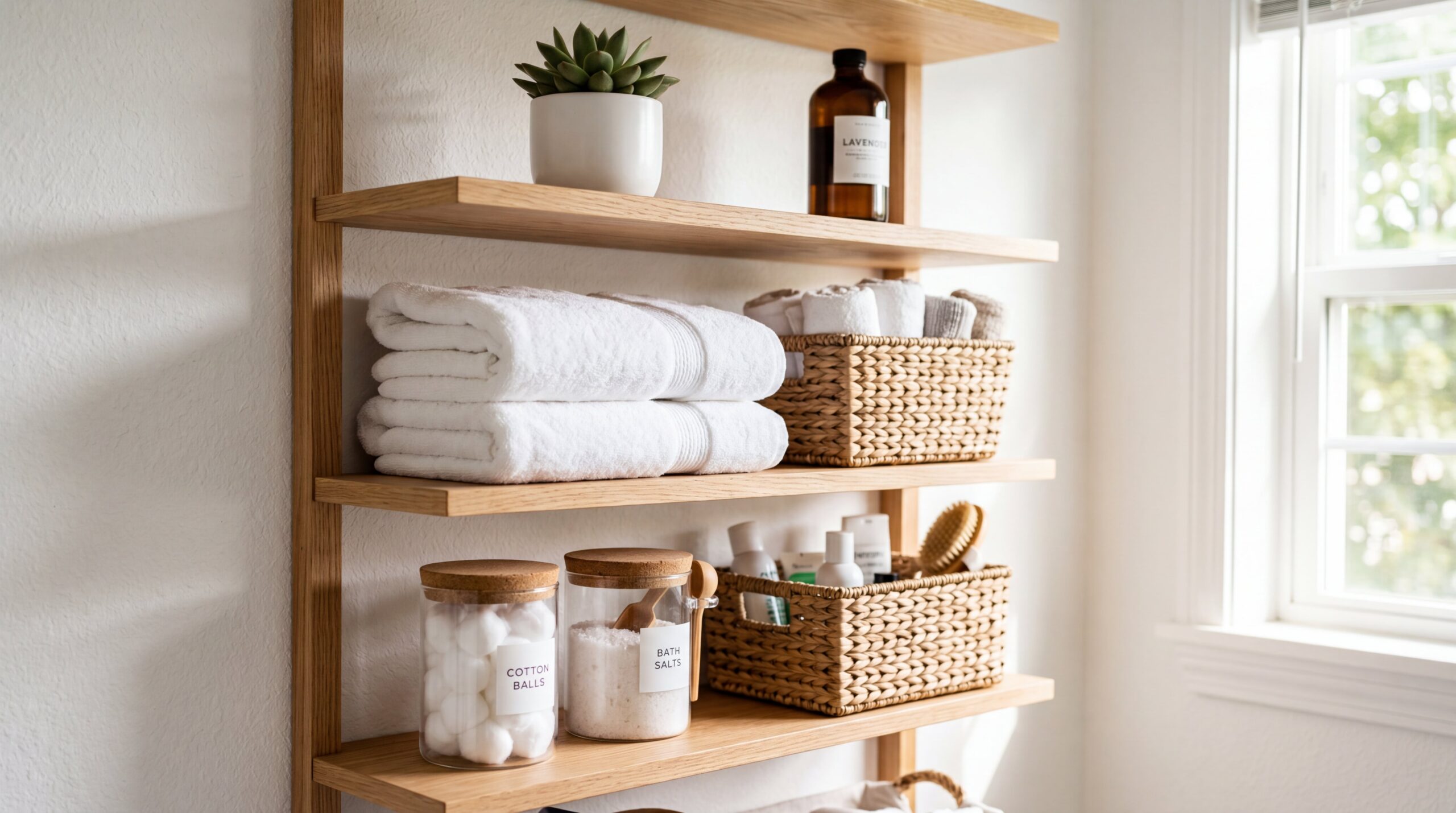
The foundation of any minimalist bathroom is smart storage that keeps everyday essentials out of sight. Visible clutter is the enemy of minimalism, but you still need to store toiletries, towels, cleaning supplies, and more.
### Storage Solutions That Work
Floating Vanities with Drawers
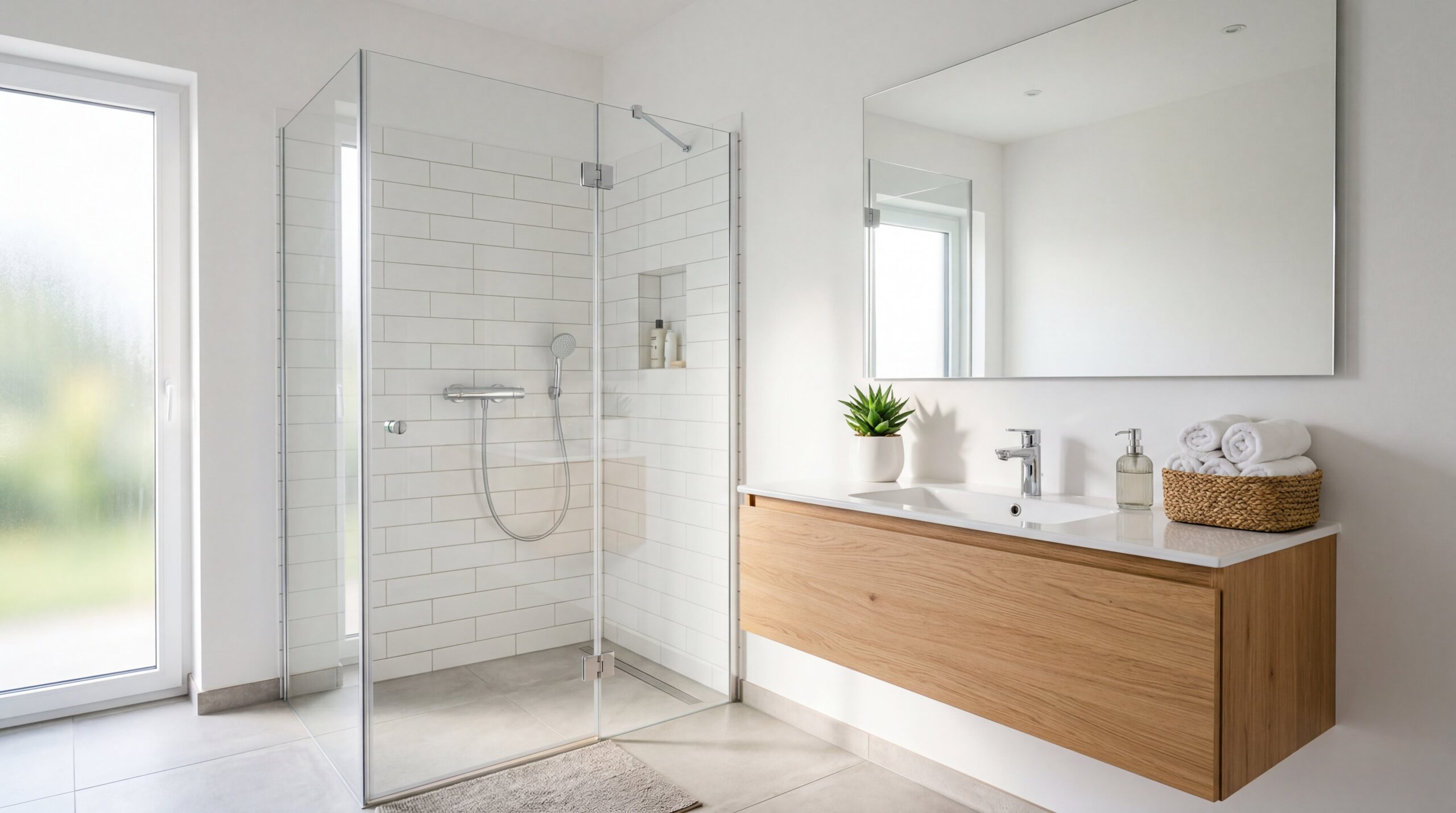
Wall-mounted vanities with built-in drawers provide ample storage while making the floor space feel larger. Look for vanities with:
– Soft-close drawers (quiet and luxurious)
– Internal dividers or organizers
– Integrated electrical outlets for hair tools
Medicine Cabinets with Mirrors
A recessed medicine cabinet behind your mirror provides hidden storage without taking up wall space. Modern options include:
– LED lighting around the edges
– Adjustable shelves
– Defogging features
Built-In Niches
If you’re renovating, add recessed niches in your shower for shampoo and soap. This eliminates the need for hanging caddies or corner shelves that collect soap scum.
Under-Sink Storage
Maximize the cabinet under your sink with:
– Pull-out drawers or sliding baskets
– Door-mounted organizers
– Stackable bins for cleaning supplies
Pro Tip: The “one in, one out” rule works wonders in bathrooms. When you buy a new product, get rid of an old one. This prevents accumulation and forces you to be intentional about what you keep.
PRINCIPLE 2: QUALITY OVER QUANTITY
Minimalism isn’t about having nothing—it’s about having only what you truly need and love. In a bathroom, this means investing in a few high-quality items rather than filling drawers with cheap products you’ll never finish.
### What to Keep
Essential Toiletries Only
– Daily skincare routine (cleanser, moisturizer, sunscreen)
– One shampoo and one conditioner (not five half-empty bottles)
– One body wash or bar soap
– Toothbrush, toothpaste, floss
– Deodorant
– Hair styling products you actually use
Quality Towels
Invest in 2-3 sets of high-quality towels per person instead of a linen closet full of mismatched, worn-out ones. Look for:
– 600+ GSM (grams per square meter) for plush absorbency
– Long-staple cotton (Egyptian or Turkish)
– Neutral colors that won’t fade
One Set of Cleaning Supplies
You don’t need a different cleaner for every surface. A good all-purpose bathroom cleaner, glass cleaner, and toilet brush are sufficient.
### What to Eliminate
– Hotel toiletries you’ll never use
– Expired medications and cosmetics
– Duplicate items (three hairbrushes, five nail clippers)
– Broken or unused hair tools
– Samples and products that don’t work for you
Reality Check: The average American bathroom contains 40-50 products. A minimalist bathroom typically has 15-20. Start by removing anything you haven’t used in the past month.
PRINCIPLE 3: CHOOSE A NEUTRAL COLOR PALETTE
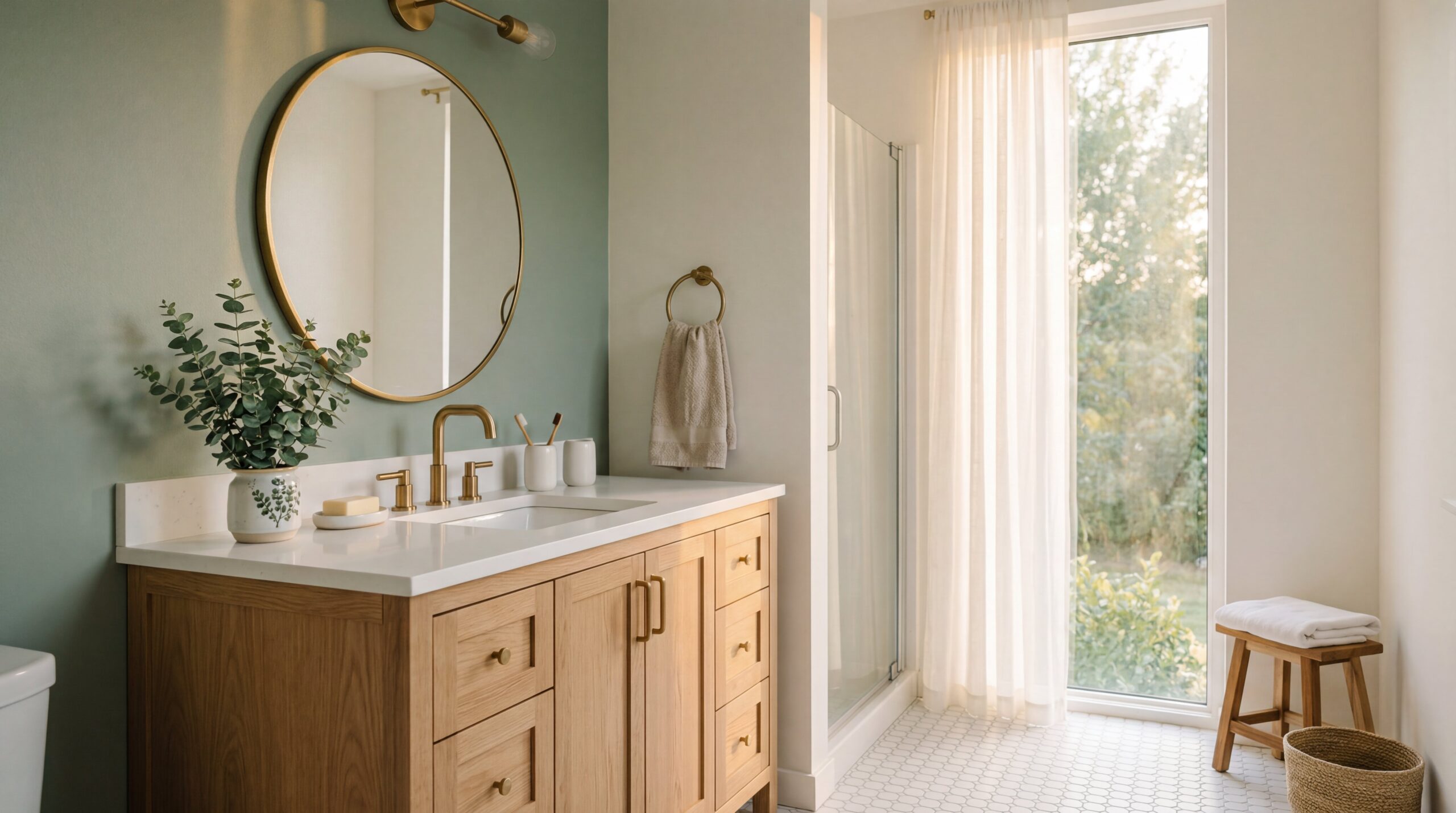
Minimalist bathrooms rely on a calm, cohesive color scheme—usually built around whites, grays, beiges, and natural wood tones. This doesn’t mean your bathroom has to be boring; it means choosing colors intentionally.
### Classic Minimalist Color Schemes
All-White with Natural Wood
– Walls: Pure white or warm white
– Vanity: Light oak, ash, or walnut
– Fixtures: Chrome or brushed nickel
– Accents: White towels, natural fiber baskets
Scandinavian Neutral
– Walls: Soft gray or greige
– Vanity: Light wood with white countertop
– Fixtures: Matte black or brass
– Accents: Linen towels, greenery
Monochrome Gray
– Walls: Light gray
– Vanity: Dark gray or charcoal
– Fixtures: Chrome or brushed stainless steel
– Accents: White towels, black accessories
Warm Minimalist
– Walls: Warm beige or soft taupe
– Vanity: Natural wood
– Fixtures: Brass or gold
– Accents: Cream towels, terracotta accents
### Adding Subtle Color
If all-neutral feels too stark, add color through:
– One accent wall (sage green, soft blue, or warm terracotta)
– Natural elements (eucalyptus branches, small plants)
– High-quality towels in a muted tone
Avoid: Bright, saturated colors; busy patterns; multiple competing color schemes.
PRINCIPLE 4: EMBRACE OPEN SPACE
In minimalist design, empty space isn’t wasted space—it’s intentional breathing room that makes your bathroom feel larger and more peaceful.
### How to Create Open Space
Clear Your Countertops
Aim for completely clear counters, or limit visible items to 1-3 essentials:
– A soap dispenser
– A small plant or single decorative object
– A tray to corral daily-use items
Everything else should be stored in drawers or cabinets.
Choose Frameless or Minimal Fixtures
– Frameless glass shower enclosures (no bulky frames)
– Floating vanities (floor space visible underneath)
– Wall-mounted faucets (no base clutter on counters)
– Frameless or thin-framed mirrors
Limit Decor
A minimalist bathroom doesn’t need:
– Multiple pieces of wall art
– Decorative trays and containers
– Candles and diffusers on every surface
– Fake plants or excessive greenery
Instead, choose one or two high-impact pieces:
– A single piece of abstract art
– One real plant (if you have natural light)
– A beautiful mirror as the focal point
PRINCIPLE 5: INVEST IN QUALITY FIXTURES AND MATERIALS
Minimalist design puts fixtures and materials front and center, so quality matters more than ever. When you’re not hiding behind decorative clutter, every element needs to look intentional and well-made.
### Where to Invest
Faucets and Hardware
Cheap faucets show their age quickly—water spots, tarnishing, and leaks. Invest in:
– Solid brass or stainless steel construction
– Ceramic disc valves (longer-lasting than rubber washers)
– Finishes that resist water spots (brushed nickel, matte black)
Tiles
Large-format tiles (12″×24″ or larger) create a seamless, modern look with fewer grout lines to clean. Consider:
– Porcelain or ceramic for durability
– Neutral colors that won’t date
– Matte or honed finishes (less slippery, hide water spots)
Lighting
Good lighting is essential in a bathroom. Layer your lighting:
– Overhead ambient lighting (recessed LEDs or a flush-mount fixture)
– Task lighting around the mirror (sconces or backlit mirror)
– Natural light (if possible, maximize window size)
Shower Glass
Frameless glass enclosures are a hallmark of minimalist bathrooms. They’re more expensive than framed options but create a seamless, spa-like feel.
### Where to Save
– Toilet (a basic white toilet works fine; save fancy features for other areas)
– Paint (high-quality paint is important, but you don’t need designer brands)
– Accessories (simple white towels from a good retailer beat expensive designer towels)
PRINCIPLE 6: INCORPORATE NATURAL MATERIALS
Minimalism doesn’t mean cold or sterile. Natural materials add warmth and texture without visual clutter.
### Materials That Work
Wood
– Floating vanities in oak, walnut, or teak
– Open shelving for towel storage
– Wooden bath mats or stools
Stone
– Marble or quartz countertops
– Natural stone tiles (travertine, limestone)
– Concrete-look porcelain tiles
Natural Fibers
– Linen or cotton towels
– Woven baskets for storage
– Jute or cotton bath mats
Plants
If you have natural light, add one or two real plants:
– Pothos (low-maintenance, thrives in humidity)
– Snake plant (tolerates low light)
– Eucalyptus branches (hang in shower for spa-like aroma)
Avoid: Plastic organizers, synthetic materials, fake plants (they collect dust and look cheap).
PRINCIPLE 7: MAINTAIN RUTHLESSLY
A minimalist bathroom isn’t a one-time project—it’s an ongoing practice. Without regular maintenance, clutter creeps back in.
### Weekly Maintenance
– Return everything to its designated spot after use
– Wipe down counters and sink daily
– Hang towels to dry properly (prevents mildew)
– Empty trash and replace liners
### Monthly Maintenance
– Check for expired products (medications, cosmetics, sunscreen)
– Deep clean grout and tile
– Organize drawers and cabinets
– Donate or discard unused items
### Quarterly Maintenance
– Audit your entire bathroom inventory
– Replace worn towels or bath mats
– Touch up caulk or grout if needed
– Evaluate what’s working and what’s not
The 90-Day Rule: If you haven’t used a product in 90 days, you probably don’t need it. Donate unopened items or discard opened ones.
COMMON MINIMALIST BATHROOM MISTAKES
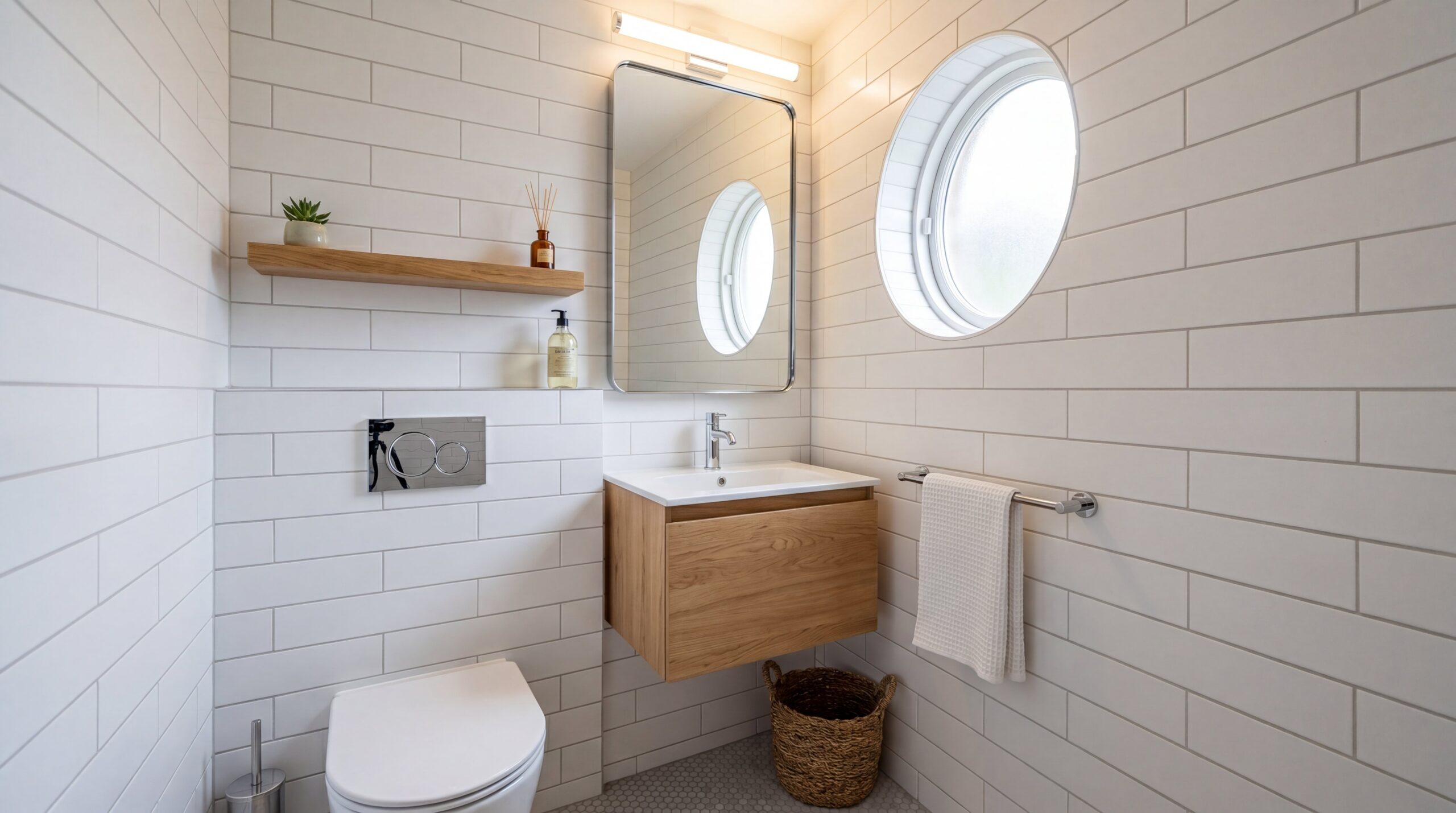
### Mistake #1: Confusing Minimalism with Deprivation
Minimalism isn’t about having nothing—it’s about having only what adds value to your life. If you love a particular skincare routine with 10 steps, that’s fine. Just store it neatly and skip the products you don’t actually use.
### Mistake #2: Ignoring Functionality
A beautiful minimalist bathroom that doesn’t meet your daily needs isn’t successful. Make sure you have:
– Enough storage for your actual needs
– Adequate lighting for grooming tasks
– Proper ventilation to prevent mold
### Mistake #3: All-White Everything
While white is a minimalist staple, an all-white bathroom can feel cold and sterile. Add warmth through:
– Natural wood tones
– Soft textiles (linen towels, cotton bath mats)
– One accent color or natural element
### Mistake #4: Cheap Materials
Minimalism puts materials front and center, so cheap finishes stand out. It’s better to save up for quality fixtures than to fill your bathroom with budget alternatives that look dated quickly.
### Mistake #5: Neglecting Maintenance
A minimalist bathroom requires discipline. Without regular decluttering and cleaning, it will revert to chaos. Build maintenance into your routine from day one.
YOUR MINIMALIST BATHROOM ACTION PLAN
Ready to transform your bathroom? Follow this step-by-step plan:
### Week 1: Declutter
– Empty every drawer, cabinet, and shelf
– Sort items into: Keep, Donate, Discard
– Check expiration dates on all products
– Be ruthless—if you haven’t used it in 3 months, let it go
### Week 2: Organize
– Assign a home for every item you’re keeping
– Invest in drawer organizers or storage bins
– Label shelves or containers if helpful
– Implement the “one in, one out” rule going forward
### Week 3: Evaluate Your Space
– Identify what’s working and what’s not
– Make a list of storage or organizational needs
– Research products or solutions for problem areas
– Set a budget for any purchases
### Week 4: Implement Changes
– Purchase any needed storage solutions
– Install new organizers or fixtures
– Set up your new system
– Take “after” photos to track your progress
### Ongoing: Maintain
– Daily: Clear counters, hang towels
– Weekly: Quick declutter check
– Monthly: Deep clean and audit products
– Quarterly: Full inventory and evaluation
FINAL THOUGHTS
Creating a minimalist bathroom isn’t about following rigid rules or achieving perfection. It’s about designing a space that supports your daily routine, reduces stress, and feels like a retreat rather than a chore.
The key principles—hidden storage, quality over quantity, neutral colors, open space, quality materials, natural elements, and consistent maintenance—work together to create a bathroom that’s both beautiful and functional. Start with one principle that resonates most with you, and build from there.
Remember: minimalism is personal. Your minimalist bathroom might look different from someone else’s, and that’s perfectly fine. The goal is to create a space that works for you, not to follow someone else’s aesthetic.
What’s the first change you’ll make to create your minimalist bathroom? Let me know in the comments—I’d love to hear about your journey!