Minimalist Bedroom Ideas — How to Create a Calm, Clutter-Free Space
A minimalist bedroom isn’t about deprivation. It’s about intention — keeping only what serves you and letting go of the rest.
The result? A space that feels calm, breathable, and restful. A bedroom where you actually want to spend time.
Here’s how to create a minimalist bedroom that feels like a sanctuary.
WHY MINIMALIST BEDROOMS WORK
Clutter creates visual noise. Your brain processes every object in your field of vision, even when you’re not consciously aware of it. A cluttered bedroom keeps your mind active when it should be winding down.
A minimalist bedroom removes the noise. Fewer objects mean less to process, less to clean, and less mental load. The space becomes restorative instead of draining.
The benefits:
- Better sleep (less visual stimulation)
- Easier to clean (fewer surfaces and objects)
- More peaceful atmosphere (calm, not chaotic)
- Easier to maintain (everything has a place)
THE CORE PRINCIPLES OF MINIMALIST BEDROOM DESIGN
1. Keep Only What You Use and Love
If you don’t use it regularly or love looking at it, it doesn’t belong in your bedroom. This applies to furniture, decor, and everything on surfaces.
2. Embrace Negative Space
Empty space isn’t wasted space — it’s breathing room. A minimalist bedroom should have plenty of open surfaces and clear floor space.
3. Choose Quality Over Quantity
One beautiful piece of furniture beats five cheap ones. Invest in a few high-quality items that will last.
4. Stick to a Neutral Color Palette
Neutral colors create calm. Bold colors can be energizing, but bedrooms should be restful.
5. Everything Has a Place
Clutter happens when things don’t have designated homes. In a minimalist bedroom, every item has a specific place.
THE MINIMALIST BEDROOM COLOR PALETTE
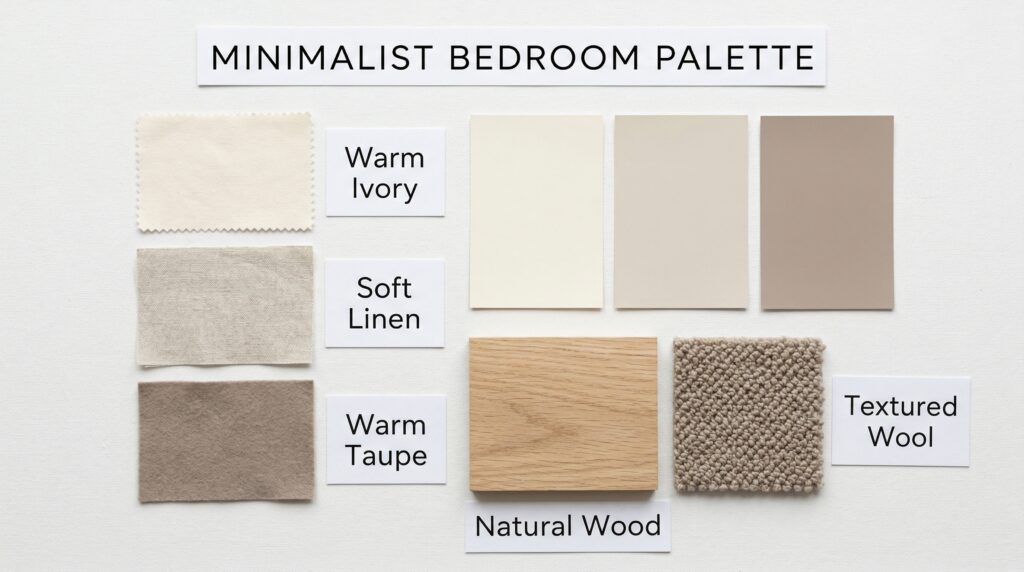
The right color palette is the foundation of a minimalist bedroom.
Best colors for minimalist bedrooms:
Whites and Creams
- Pure white
- Warm ivory
- Cream
- Off-white
Why they work: Bright, airy, and timeless. White walls make small bedrooms feel larger.
Soft Neutrals
- Beige
- Taupe
- Greige (gray-beige)
- Soft linen
Why they work: Warm and inviting without being bold. Neutrals create a cozy, hotel-like feel.
Natural Wood Tones
- Light oak
- Walnut
- Birch
- Ash
Why they work: Wood adds warmth and texture without adding visual clutter.
Accent Colors (Use Sparingly)
- Soft sage green
- Muted terracotta
- Warm gray
- Charcoal (for contrast)
Pro tip: Stick to 2-3 main colors in your bedroom. Too many colors create visual chaos.
FURNITURE: LESS IS MORE
A minimalist bedroom doesn’t need much furniture. The essentials:
Must-Have Furniture
- Bed — The focal point. Choose a simple frame without excessive ornamentation.
- Nightstand(s) — One or two, depending on bed size. Keep surfaces clear.
- Dresser or closet — For clothing storage. Built-in closets are ideal.
Optional Furniture
- Bench at foot of bed — Only if you use it regularly
- Chair — Only if you have space and actually sit in it
- Desk — Only if your bedroom doubles as a workspace
Furniture to Avoid
- Bulky armoires (if you have a closet)
- Decorative furniture that serves no function
- Too many side tables or surfaces
Furniture style tips:
- Choose pieces with clean lines and simple shapes
- Avoid ornate carvings or excessive details
- Opt for furniture with hidden storage (platform beds, storage benches)
- Keep furniture low to the ground (makes ceilings feel higher)
STORAGE SOLUTIONS: HIDING THE CLUTTER
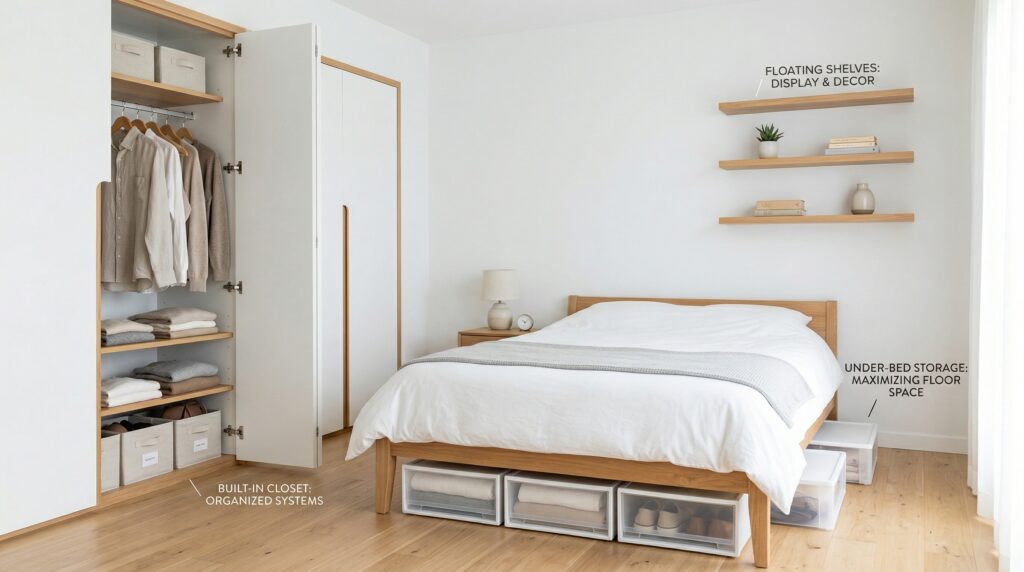
Minimalism isn’t about owning nothing — it’s about keeping things out of sight.
Smart storage ideas:
Under-Bed Storage
- Storage bins or drawers under the bed
- Platform beds with built-in storage
- Keeps seasonal items or extra bedding hidden
Built-In Closets
- Maximize vertical space with shelving
- Use matching hangers for a cohesive look
- Keep closet doors closed (or use curtains)
Floating Shelves
- Minimal and space-saving
- Use for a few carefully chosen books or decor
- Keep it sparse (3-5 items max per shelf)
Nightstand with Drawers
- Hides charging cables, books, and personal items
- Keeps nightstand surface clear
The one-in-one-out rule: When you bring something new into your bedroom, remove something old. This prevents clutter from building up.
BEDDING: SIMPLE AND NEUTRAL
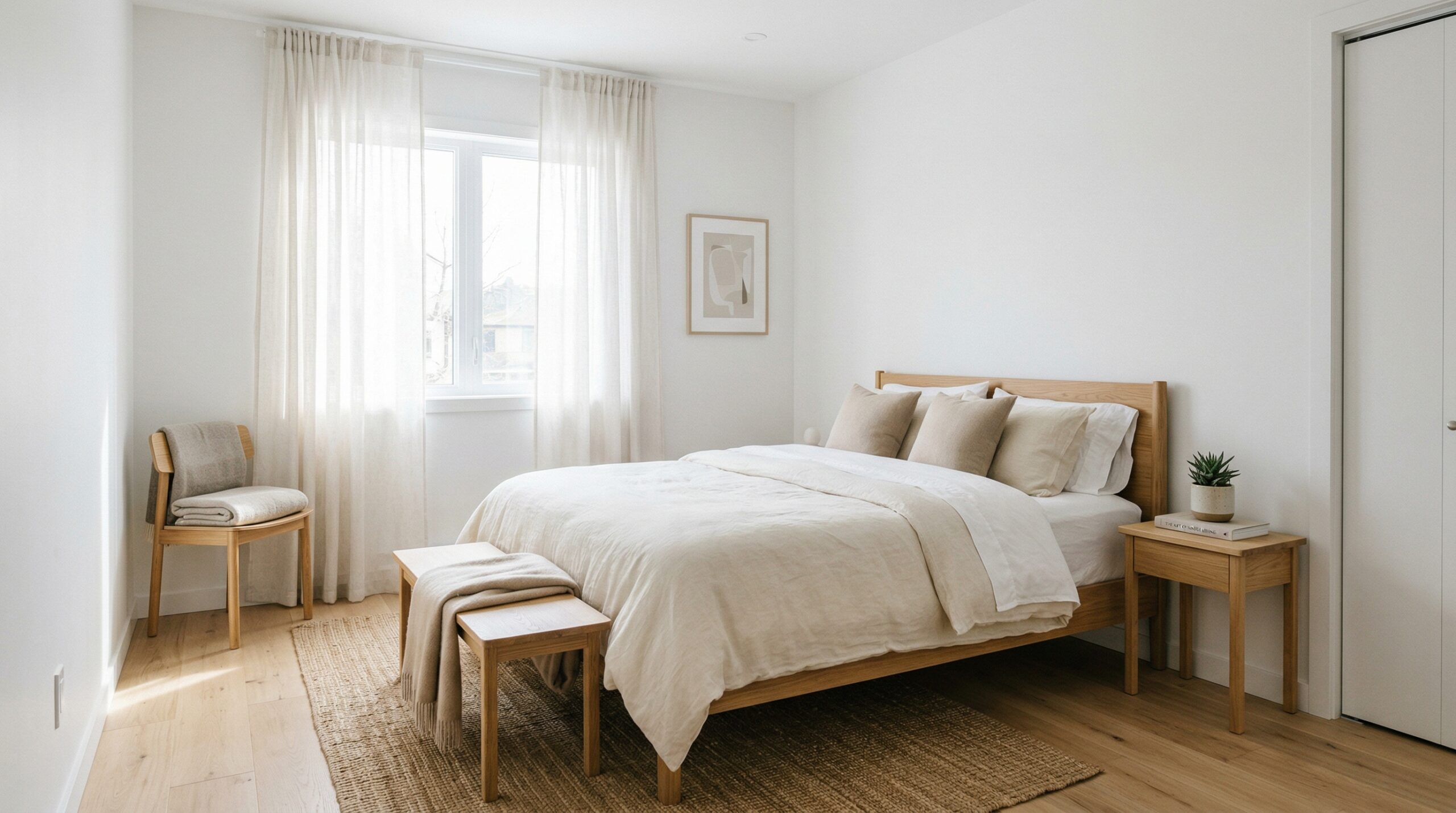
Minimalist bedding is about texture, not pattern.
What to choose:
- Solid colors (white, cream, beige, gray)
- Natural fabrics (linen, cotton, bamboo)
- Simple textures (waffle weave, stonewashed linen)
- Minimal pillows (2-4 max, not 10 decorative pillows)
What to avoid:
- Busy patterns or bold prints
- Too many throw pillows
- Mismatched bedding sets
- Heavy, ornate bedspreads
Pro tip: All-white bedding is classic and timeless, but cream or beige adds warmth without sacrificing the minimalist aesthetic.
DECOR: LESS IS MORE
In a minimalist bedroom, every decorative item should be intentional.
What to include (choose 3-5 items total):
- One or two plants (real or high-quality faux)
- A single piece of wall art (large and simple, not a gallery wall)
- A small vase or ceramic object
- A stack of 2-3 books
- A simple table lamp
What to avoid:
- Knick-knacks and trinkets
- Too many picture frames
- Decorative pillows that serve no function
- Anything you don’t love looking at
The nightstand test: Your nightstand should have 1-3 items max. If it’s crowded, remove items until it feels calm.
LIGHTING: CREATING THE RIGHT MOOD
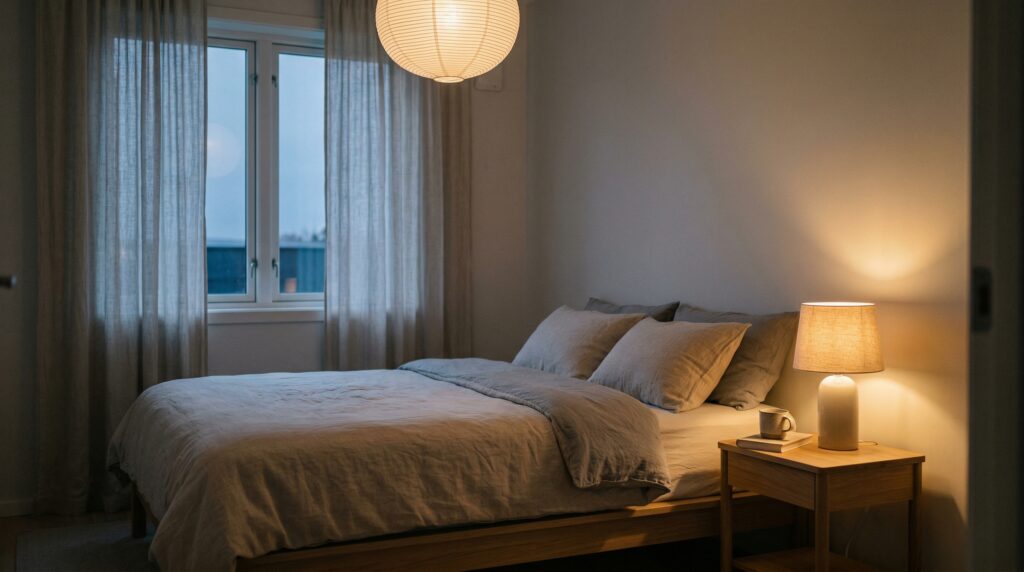
Lighting is critical in a minimalist bedroom. You want soft, layered lighting — not harsh overhead lights.
Lighting layers:
- Ambient lighting — Overhead light or ceiling fixture (dimmable is best)
- Task lighting — Bedside lamps for reading
- Accent lighting — Optional: string lights, candles, or a small accent lamp
Best light bulbs for bedrooms:
- Warm white (2700K-3000K)
- Avoid cool white or daylight bulbs (too harsh)
Pro tip: Install dimmer switches. Being able to control light intensity is key to creating a restful atmosphere.
BEFORE & AFTER: THE MINIMALIST TRANSFORMATION
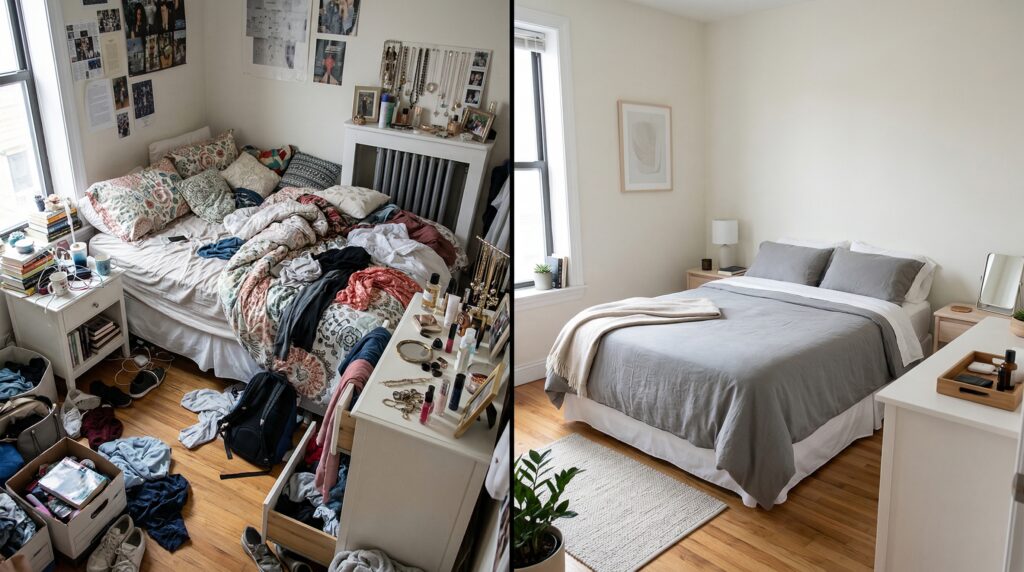
Before (Cluttered Bedroom):
- Surfaces covered with items
- Multiple decorative pillows on the bed
- Clothes on chairs or floor
- Mismatched furniture
- Busy patterns and colors
After (Minimalist Bedroom):
- Clear surfaces (1-2 items per nightstand)
- Simple bedding (2-4 pillows max)
- Everything put away or hidden
- Cohesive furniture in neutral tones
- Calm, neutral color palette
The transformation doesn’t require buying new furniture. Often, it’s about removing items, not adding them.
COMMON MISTAKES TO AVOID
1. Going Too Stark
Minimalism should feel calm, not cold. Add warmth with wood tones, soft textiles, and a plant or two.
2. Forgetting Function
Don’t remove so much that the room becomes impractical. You still need storage, lighting, and a place to sit.
3. Keeping Things “Just in Case”
If you haven’t used it in 6 months, you probably don’t need it in your bedroom.
4. Ignoring Personal Style
Minimalism doesn’t mean your bedroom has to look like a hotel. Add personal touches — just keep them intentional and few.
MINIMALIST BEDROOM CHECKLIST
Use this checklist to create your minimalist bedroom:
Declutter:
- [ ] Remove all items from surfaces
- [ ] Keep only 1-3 items per nightstand
- [ ] Donate or store items you don’t use regularly
- [ ] Clear the floor (no piles of clothes or shoes)
Furniture:
- [ ] Keep only essential furniture (bed, nightstand, dresser)
- [ ] Remove decorative furniture that serves no function
- [ ] Choose simple, clean-lined pieces
Color Palette:
- [ ] Stick to 2-3 neutral colors
- [ ] Use white, cream, beige, or soft gray as base
- [ ] Add warmth with natural wood tones
Bedding:
- [ ] Choose solid colors or simple textures
- [ ] Limit pillows to 2-4
- [ ] Use natural fabrics (linen, cotton)
Decor:
- [ ] Keep decor to 3-5 intentional items
- [ ] Add 1-2 plants
- [ ] Hang one large piece of art (not a gallery wall)
Storage:
- [ ] Use under-bed storage for hidden items
- [ ] Keep closet organized and doors closed
- [ ] Everything has a designated place
Lighting:
- [ ] Install dimmable overhead light
- [ ] Add bedside lamps for reading
- [ ] Use warm white bulbs (2700K-3000K)
WHERE TO SHOP FOR MINIMALIST BEDROOM ESSENTIALS
Budget-Friendly:
- IKEA (Hemnes and Malm furniture lines)
- Target (Threshold bedding and decor)
- H&M Home (affordable linen bedding)
Mid-Range:
- West Elm (modern minimalist furniture)
- Parachute (high-quality linen bedding)
- CB2 (clean-lined furniture)
High-End:
- Muji (Japanese minimalist aesthetic)
- The Citizenry (ethically-made textiles)
- Brooklinen (luxury bedding)
Pro tip: Start with bedding and lighting. These two elements have the biggest impact on how your bedroom feels.
FINAL THOUGHTS
Creating a minimalist bedroom is less about following rules and more about asking yourself: Does this item serve me? Does it make my space feel calmer?
If the answer is no, let it go.
The goal isn’t perfection. It’s a bedroom that feels restful, intentional, and like a true sanctuary — a place where you can disconnect from the noise and just breathe.