15 Aesthetic Entryway Ideas to Make a Stunning First Impression
Your entryway is the first space guests see when they enter your home, making it the perfect opportunity to set the tone for your entire interior design. Whether you’re working with a spacious foyer or a narrow hallway, creating an aesthetic entryway that’s both beautiful and functional is entirely achievable. In this guide, we’ll explore 15 inspiring ideas that blend style with practicality, helping you transform your entryway into a welcoming space that makes a lasting first impression.
1. Embrace Warm Color Palettes
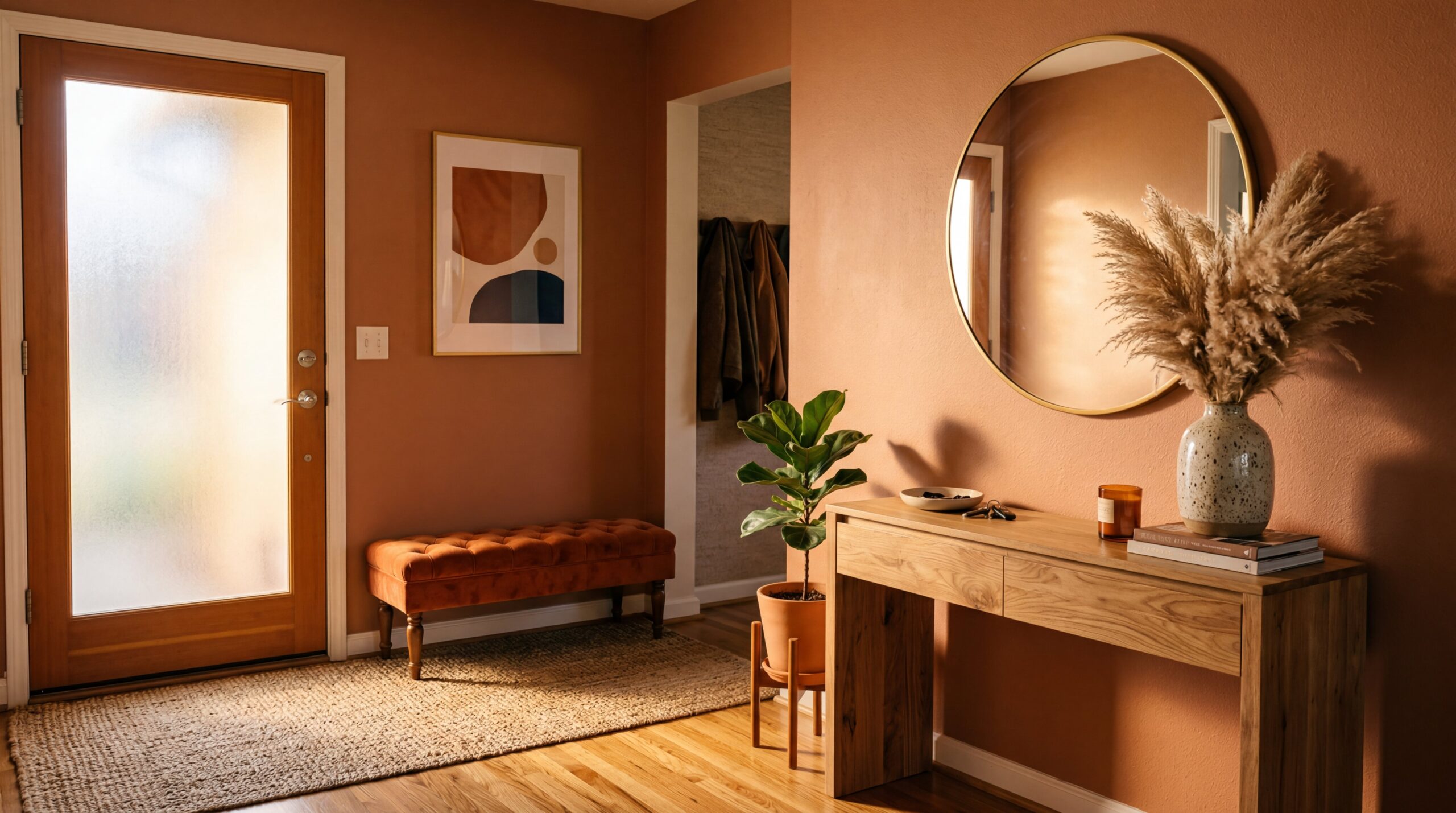
Color has the power to instantly transform the mood of your entryway. Instead of defaulting to neutral whites and beiges, consider embracing warm, saturated hues that create an inviting atmosphere from the moment someone steps through your door. Terracotta oranges, rust reds, and burnt siennas bring a cozy, earthy warmth that feels both modern and timeless. These colors work beautifully as accent walls, providing a rich backdrop for natural wood furniture and brass accents.
Pair warm wall colors with complementary textiles and accessories. A burnt orange velvet bench adds a touch of luxury while providing practical seating for putting on shoes. Natural jute rugs in warm tones ground the space and add texture without overwhelming the design. The key is to layer different shades within the same warm color family, creating depth and visual interest that feels cohesive rather than chaotic.
2. Invest in a Statement Mirror
A well-chosen mirror serves double duty in an entryway: it provides a practical spot for last-minute appearance checks while also reflecting light to make the space feel larger and brighter. Look for mirrors with distinctive frames that complement your overall aesthetic. Brass and gold-toned frames add warmth and sophistication, while natural wood frames bring an organic, grounded feel to the space.
Consider the scale of your mirror carefully. In a spacious entryway, a large round or arched mirror can serve as a stunning focal point. For smaller spaces, a medium-sized mirror with an ornate frame adds personality without overwhelming the area. Position your mirror strategically to reflect natural light from windows or doors, maximizing the brightness in your entryway throughout the day.
3. Choose Multi-Functional Furniture
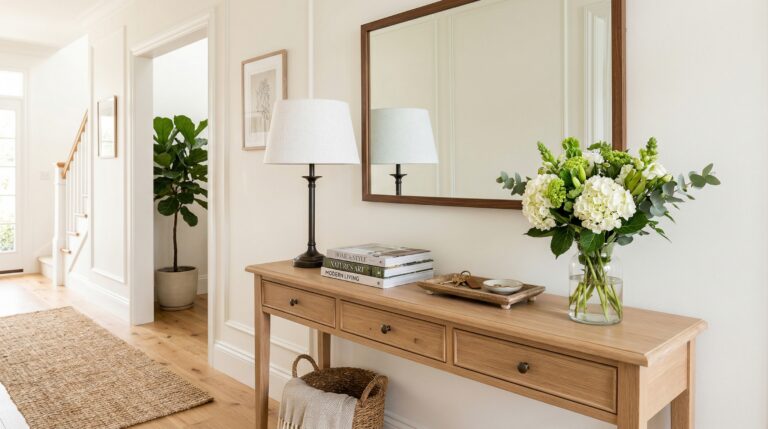
The best entryway furniture combines beauty with practicality. A console table provides a surface for keys, mail, and decorative objects, while drawers or shelves underneath offer hidden storage for everyday essentials. Look for pieces in natural materials like oak or walnut that bring warmth and character to the space.
Benches with built-in storage are particularly valuable in entryways, offering a comfortable spot to sit while putting on shoes and concealing items like extra blankets or seasonal accessories. Opt for benches upholstered in durable, easy-to-clean fabrics like velvet or linen in rich, saturated colors that add visual interest to the space.
4. Layer Your Lighting
Proper lighting is essential for creating an inviting entryway atmosphere. Combine ambient lighting from overhead fixtures with task lighting from table lamps or wall sconces. Warm-toned bulbs (2700-3000K) create a cozy, welcoming glow that’s far more inviting than harsh, cool white light.
If your entryway has a console table, add a ceramic or brass table lamp with a warm-toned shade. The soft glow creates an intimate atmosphere while providing practical light for finding keys or checking your appearance. Wall-mounted picture lights or sconces add architectural interest and can highlight artwork or mirrors, adding layers of visual depth to your entryway design.
5. Style Your Console Table Like a Pro
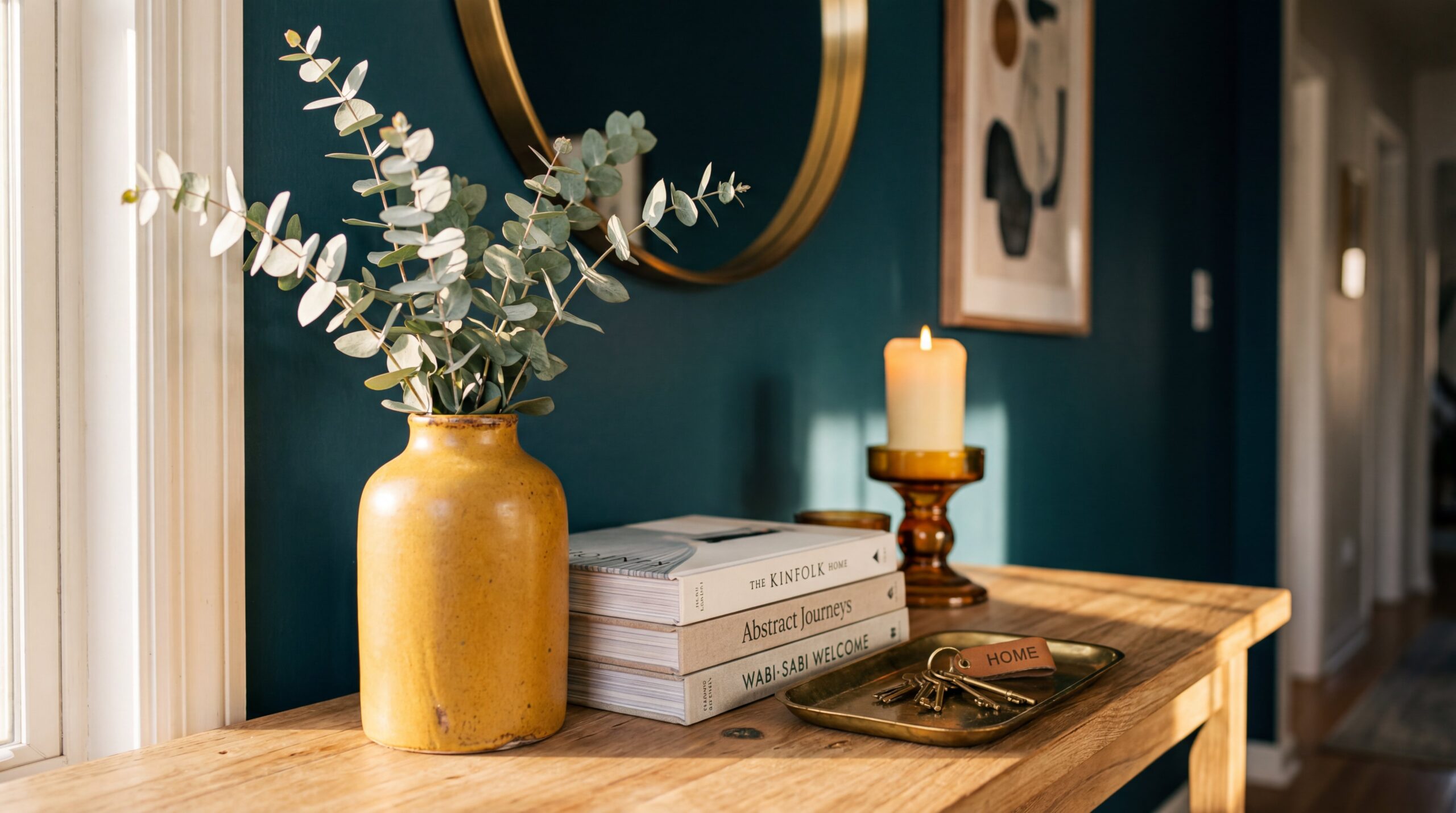
Console table styling is an art form that balances aesthetics with functionality. Start with a large statement piece like a ceramic vase filled with dried pampas grass or fresh eucalyptus branches. This vertical element draws the eye upward and adds natural texture to the space.
Layer in smaller accessories at varying heights: a stack of coffee table books provides both visual interest and a surface for smaller objects, while a decorative tray corrals everyday items like keys and sunglasses. Add a small potted plant or succulent for a touch of life, and don’t forget practical elements like a small dish for jewelry or a candle for ambiance. The key is to create visual balance while leaving enough clear surface space for daily use.
6. Incorporate Natural Elements
Bringing nature indoors instantly makes a space feel more alive and welcoming. In your entryway, this can take many forms: a potted fiddle leaf fig or snake plant adds height and greenery, while dried botanicals like pampas grass or eucalyptus provide texture without requiring maintenance.
Natural materials in your furniture and accessories also contribute to this organic feel. Woven jute rugs, rattan baskets for storage, and wooden elements in your console table or mirror frame all help create a connection to the natural world. These materials add warmth and texture while maintaining a sophisticated, curated aesthetic that feels intentional rather than cluttered.
7. Add Personality with Art
Don’t overlook the walls in your entryway—they’re prime real estate for expressing your personal style. A single large-scale abstract print in a gold or brass frame can serve as a stunning focal point, while a small gallery wall of coordinated prints adds visual interest without overwhelming a smaller space.
Choose artwork that complements your color palette and overall aesthetic. Abstract pieces in warm tones echo the colors elsewhere in your entryway, creating a cohesive look. Frame selection matters too: matching frames create a unified, intentional feel, while the finish (brass, gold, natural wood, or matte black) should coordinate with other metal accents in the space.
8. Create Texture Through Textiles
Textiles add softness and warmth to what can otherwise feel like a hard, transitional space. Start with a rug that anchors the area and defines the entryway zone. Vintage Persian rugs in warm tones like rust, cream, and teal add character and history, while natural jute or sisal rugs provide texture in a more minimalist aesthetic.
If you have a bench, consider adding cushions in complementary colors—but avoid the generic throw blanket draped over the back, which can feel like an overused styling cliche. Instead, opt for well-fitted cushions in rich, saturated fabrics like velvet or textured linen that add comfort and visual interest without looking overly staged.
9. Maximize Small Entryway Spaces
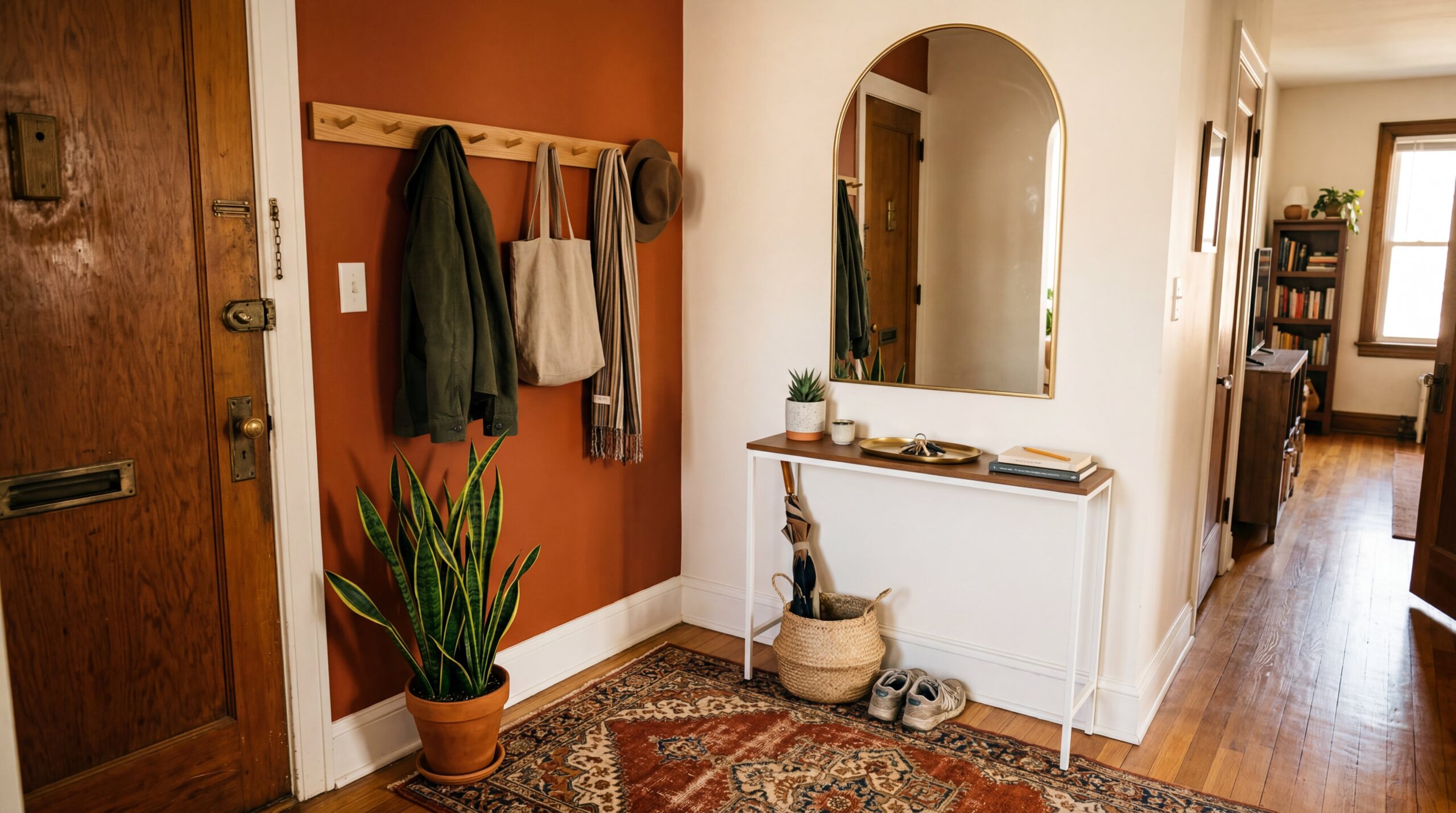
Even the smallest entryway can make a big impact with thoughtful design choices. In narrow spaces, a slim console table provides function without overwhelming the area. Wall-mounted coat hooks eliminate the need for a bulky coat rack while adding a decorative element—look for hooks in natural wood or brass that complement your overall aesthetic.
Vertical storage is your friend in small entryways. Floating shelves provide display space without taking up floor area, while tall, narrow mirrors create the illusion of more space by reflecting light. Choose furniture with slim profiles and avoid overcrowding the space with too many accessories—in small entryways, less is definitely more.
10. Establish a Cohesive Color Story
A successful entryway design tells a clear color story that sets expectations for the rest of your home. Choose a dominant color for your walls or largest furniture piece, then layer in one or two complementary accent colors through accessories and textiles. For example, if your walls are terracotta orange, you might add deep teal green in cushions and artwork, with brass accents tying everything together.
High saturation and strong contrast create visual impact that makes your entryway memorable. Don’t be afraid of bold color choices—your entryway is a relatively small space where you can take more risks than you might in a living room or bedroom. The key is to commit to your color palette and repeat it throughout the space for a cohesive, intentional look.
11. Incorporate Smart Storage Solutions
An aesthetic entryway must also be functional, which means incorporating storage that keeps clutter at bay. Baskets tucked under console tables or benches provide hidden storage for shoes, dog leashes, or reusable shopping bags. Choose woven baskets in natural materials that add texture while concealing everyday items.
Wall-mounted coat racks with individual hooks offer a more refined alternative to traditional coat trees, allowing each family member to have their own designated spot. Small trays or dishes on your console table corral keys, sunglasses, and other pocket items, preventing them from cluttering the surface. The goal is to create designated homes for everything that typically lands in your entryway, maintaining the aesthetic you’ve worked to create.
12. Play with Scale and Proportion
Understanding scale is crucial for creating a balanced entryway design. In a spacious foyer, don’t be afraid to go big: an oversized round mirror, a substantial console table, and a large potted plant all help fill the space appropriately. Conversely, in a small entryway, choosing furniture and accessories that are proportional to the space prevents it from feeling cramped.
The height of your console table matters too—standard height is around 30-32 inches, which works well for most spaces. Your mirror should be hung so that the center is at average eye level (around 57-60 inches from the floor), though this can be adjusted based on the heights of people in your household. These proportional relationships create a sense of harmony that makes the space feel professionally designed.
13. Create a Luxurious Atmosphere
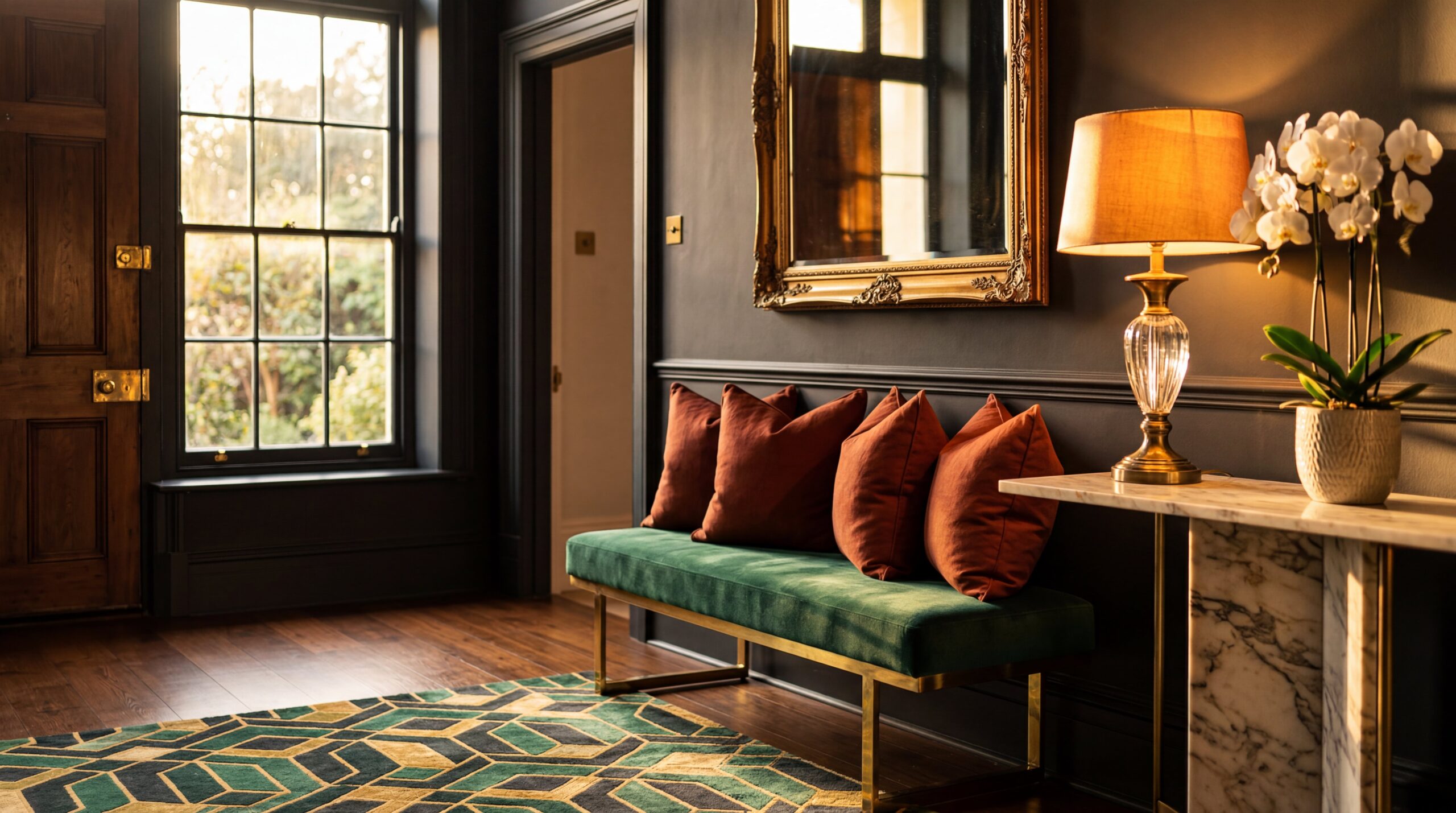
If you’re drawn to a more sophisticated aesthetic, consider incorporating luxurious materials and finishes into your entryway design. Rich, jewel-toned colors like emerald green or deep navy create drama and elegance, especially when paired with dark charcoal or black walls that provide striking contrast.
Marble console tables, crystal table lamps, and ornate gold-framed mirrors all contribute to a sense of luxury. An emerald green velvet bench with brass legs makes a bold statement while providing practical seating. The key to pulling off this look is balance—pair these rich, dramatic elements with clean lines and uncluttered surfaces to avoid feeling overly ornate or stuffy.
14. Embrace the Scandinavian Minimalist Approach
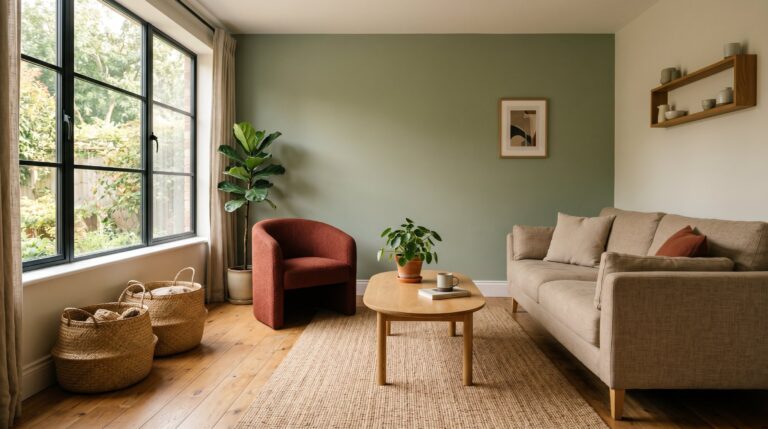
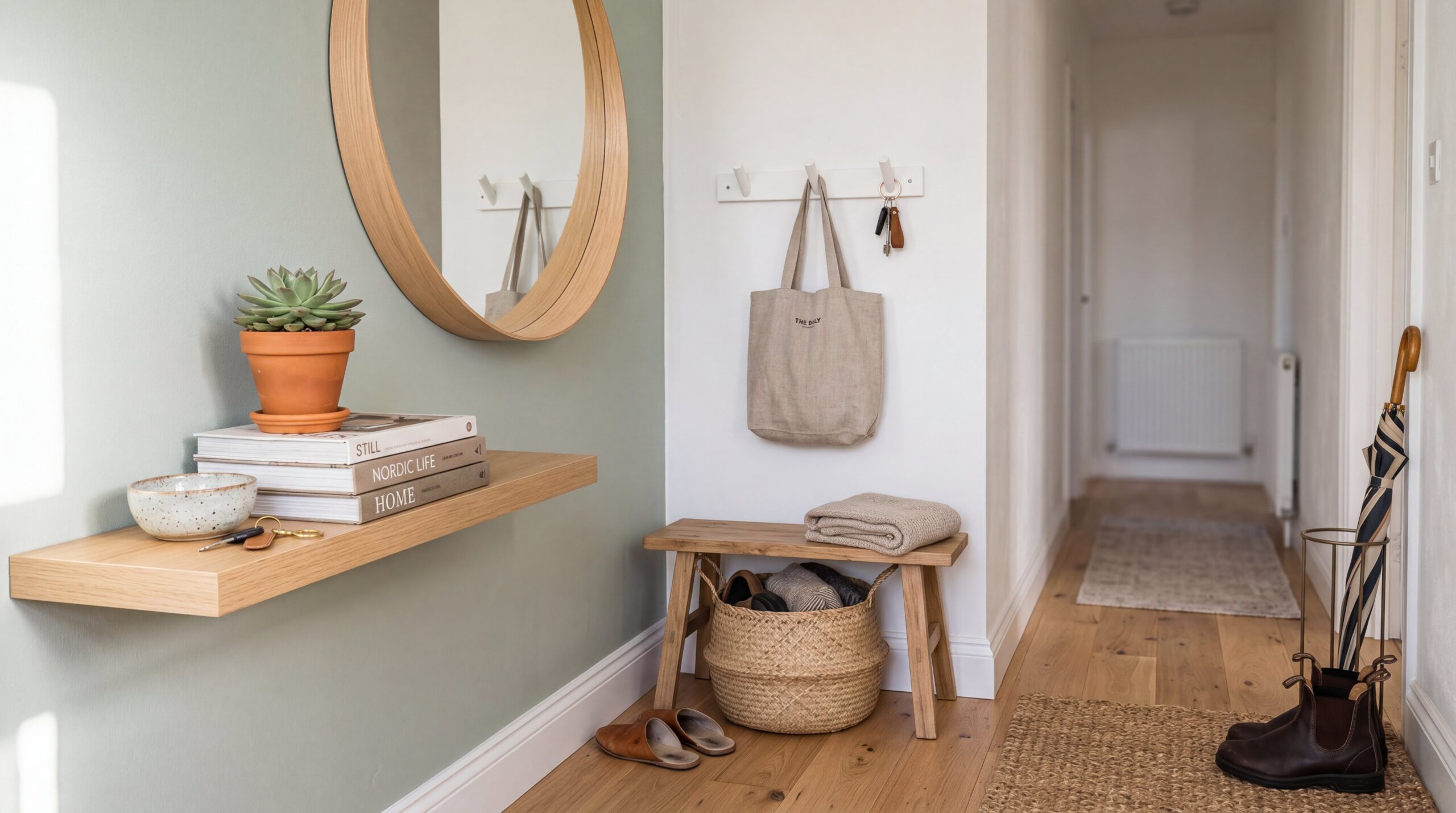
For those who prefer a more pared-back aesthetic, Scandinavian minimalism offers a serene alternative. Start with a soft, muted color palette: sage green, soft gray, or warm white walls create a calm backdrop. Natural wood furniture in light finishes like oak or ash brings warmth without heaviness.
Keep accessories minimal and intentional: a single ceramic bowl on a floating shelf, a small succulent, and a round natural wood mirror might be all you need. The beauty of this approach lies in its restraint—every element serves a purpose and has room to breathe. Natural light is emphasized, with sheer curtains or bare windows allowing maximum brightness to flood the space.
15. Don’t Forget the Finishing Touches
The difference between a good entryway and a great one often comes down to the finishing touches. Fresh flowers or botanicals bring life and a subtle fragrance to the space. A scented candle in a beautiful ceramic vessel adds ambiance and can be lit when expecting guests.
Consider the sensory experience of your entryway beyond just the visual. A small dish of decorative objects that make a pleasant sound when you drop your keys into it, the soft texture of a velvet bench cushion, the subtle scent of eucalyptus or a candle—these details create a multi-sensory welcome that makes your entryway truly memorable.