Small Space Living Room Ideas — How to Make a Tiny Living Room Feel Spacious
A small living room doesn’t have to feel cramped. With the right design choices, you can make even the tiniest space feel open, functional, and inviting.
The key isn’t about fitting more stuff in — it’s about choosing the right pieces, using smart layout strategies, and creating visual tricks that make the space feel larger than it actually is.
Here’s how to design a small living room that feels spacious.
WHY SMALL LIVING ROOMS FEEL CRAMPED (AND HOW TO FIX IT)
Most small living rooms feel cramped for three reasons:
- Too much furniture — Every piece takes up visual and physical space
- Poor furniture placement — Blocking traffic flow or windows
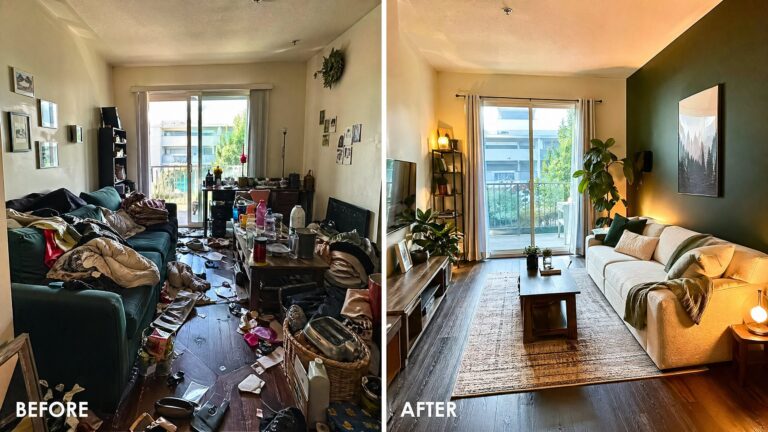
- Dark colors and clutter — Making the space feel closed in
The solution isn’t to remove everything. It’s about being intentional with what you keep and how you arrange it.
THE GOLDEN RULES OF SMALL SPACE DESIGN
Before we dive into specific tips, here are the core principles:
Rule 1: Less is more
Every item in your living room should serve a purpose. If it doesn’t, it’s taking up valuable space.
Rule 2: Light colors expand space
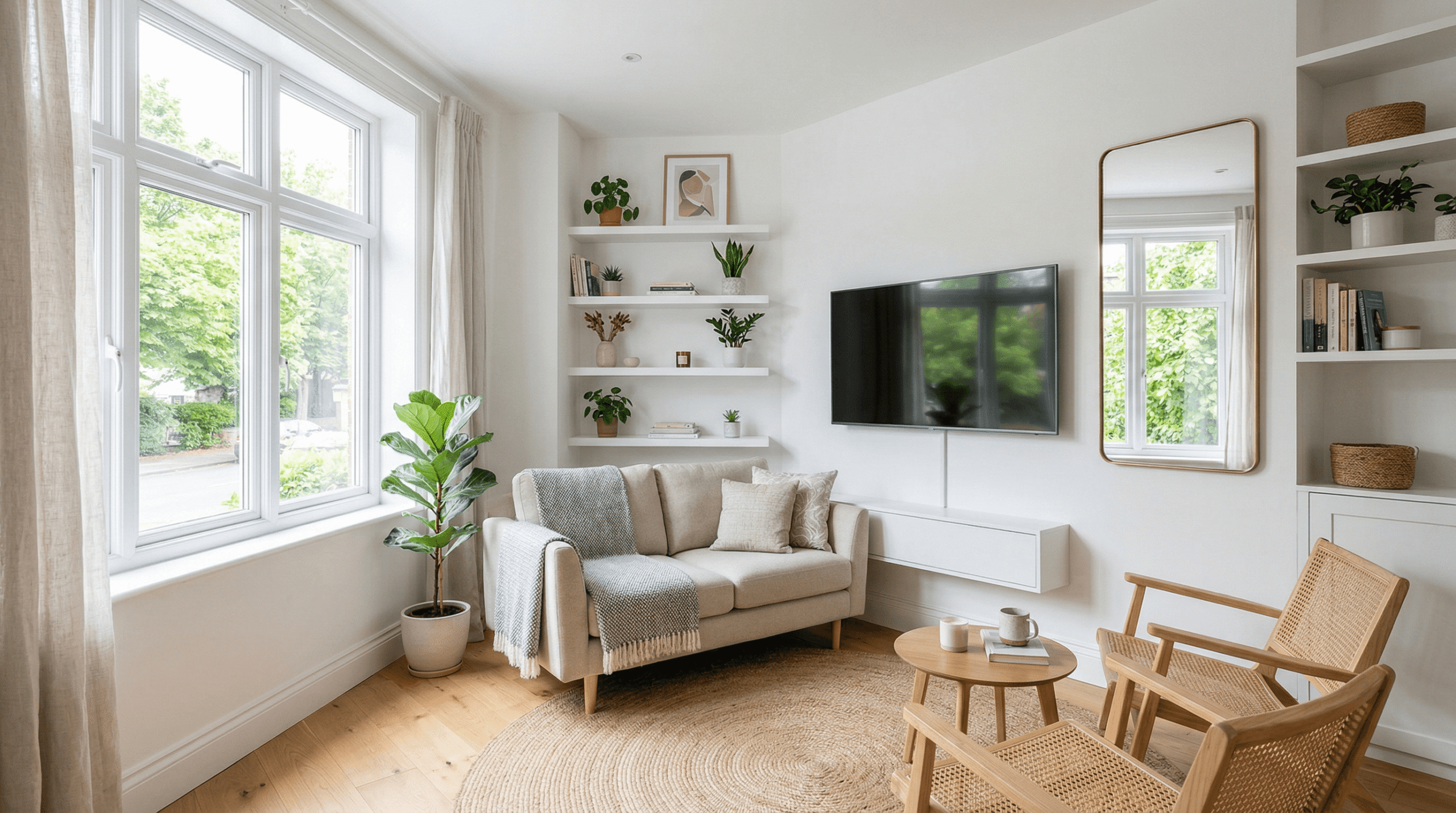
White, cream, and light grey walls make rooms feel larger. Dark colors make them feel smaller.
Rule 3: Use vertical space
When you can’t expand outward, expand upward. Tall shelves and wall-mounted storage free up floor space.
Rule 4: Create visual flow
Furniture should guide the eye through the room, not block it. Leave clear pathways.
Rule 5: Multi-functional furniture is your friend
A storage ottoman beats a regular coffee table. A sofa bed beats a regular sofa.
CHOOSE THE RIGHT SIZE FURNITURE
The biggest mistake in small living rooms: oversized furniture.
Sofa Sizing
For a small living room (under 150 sq ft):
- Loveseat (58-64 inches) instead of full sofa
- Apartment-size sofa (72-80 inches) instead of standard sofa (84-96 inches)
- Armless sofa (takes up less visual space)
Avoid:
- Sectionals (unless it’s a small-scale sectional designed for apartments)
- Bulky recliners
- Oversized sofas that dominate the room
Coffee Table Sizing
Best options:
- Round coffee table (no sharp corners, easier to navigate)
- Glass coffee table (visually lighter than wood)
- Nesting tables (tuck away when not needed)
- Ottoman with storage (doubles as seating and storage)
Measurements:
- Leave 14-18 inches between sofa and coffee table
- Coffee table should be 2/3 the length of your sofa
TV Stand Sizing
Best options:
- Wall-mounted TV (frees up floor space entirely)
- Floating TV console (creates visual lightness)
- Narrow media console (12-16 inches deep instead of 18-24 inches)
CHOOSE MULTI-FUNCTIONAL FURNITURE
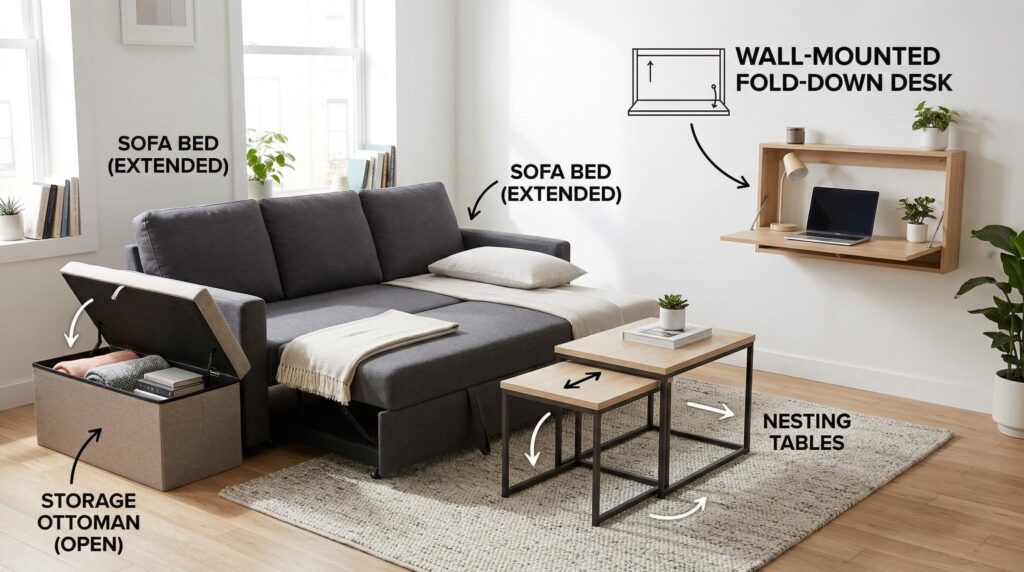
In a small space, every piece should do double duty.
Storage Ottoman
- Serves as coffee table
- Provides hidden storage for blankets, remotes, magazines
- Can be used as extra seating
Sofa Bed
- Functions as regular sofa during the day
- Converts to guest bed when needed
- Modern designs don’t look like sofa beds
Nesting Tables
- Stack together when not in use
- Pull out for extra surface space when entertaining
- Takes up minimal floor space
Wall-Mounted Fold-Down Desk
- Folds flat against wall when not in use
- Creates workspace without permanent footprint
- Perfect for small living rooms that double as home offices
Storage Bench
- Provides seating
- Stores items inside
- Can be placed under window or against wall
USE VERTICAL SPACE
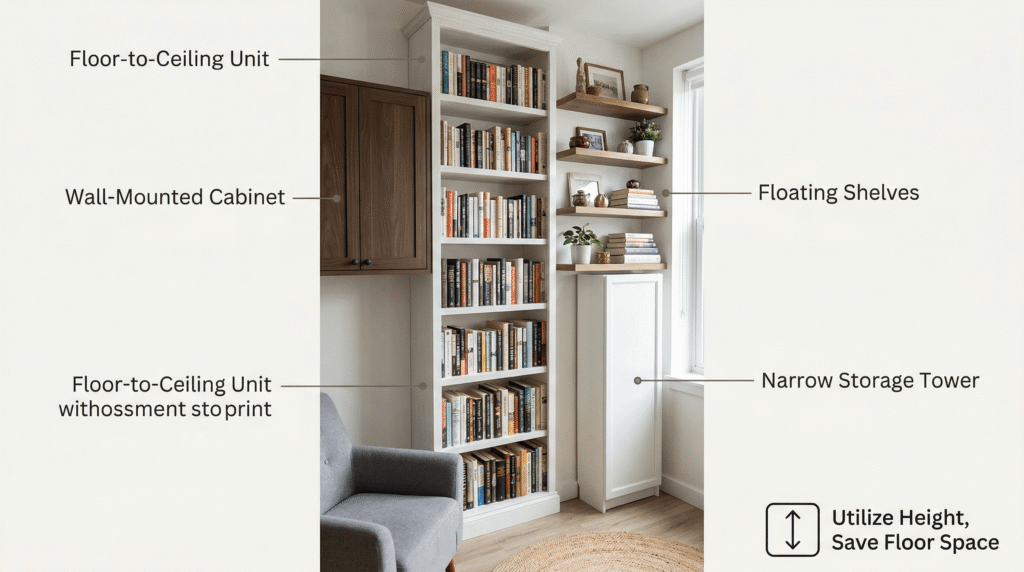
When floor space is limited, go vertical.
Floor-to-Ceiling Shelving
- Draws the eye upward, making ceilings feel higher
- Provides tons of storage without taking up floor space
- Use for books, decor, and storage baskets
Wall-Mounted Cabinets
- Keep items off the floor
- Create storage without visual bulk
- Ideal above TV or sofa
Floating Shelves
- Display decor without bulky furniture
- Can be arranged in creative patterns
- Keep the floor clear
Tall, Narrow Bookcases
- Use vertical space efficiently
- Footprint is small (12-16 inches deep)
- Provides significant storage
Pro tip: Paint shelves the same color as walls to make them “disappear” and feel less cluttered.
COLOR TRICKS TO MAKE SPACE FEEL BIGGER
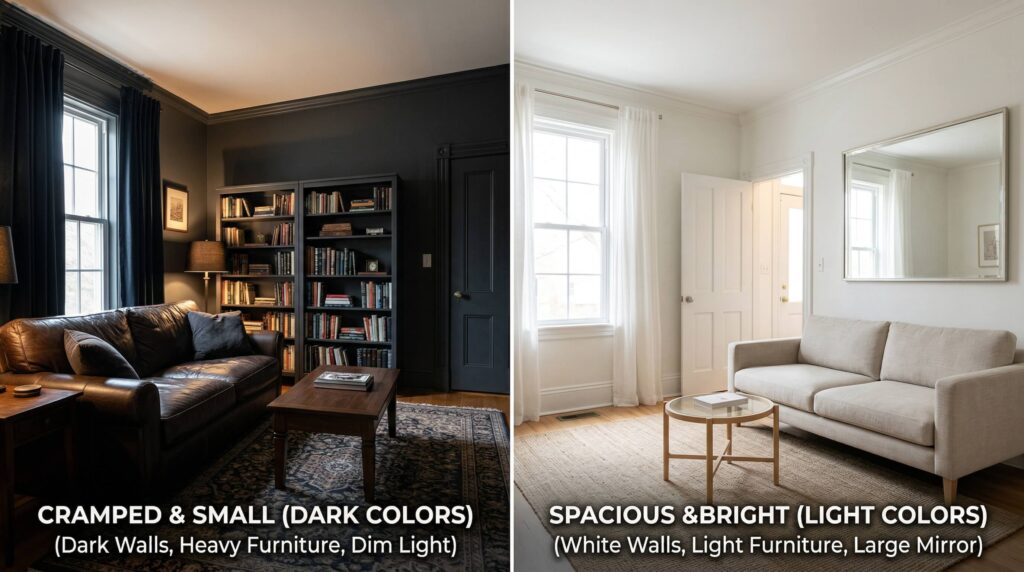
Color has a huge impact on how large a room feels.
Best Colors for Small Living Rooms
Walls:
- White (classic, reflects light)
- Soft grey (modern, still light)
- Warm beige (cozy but spacious)
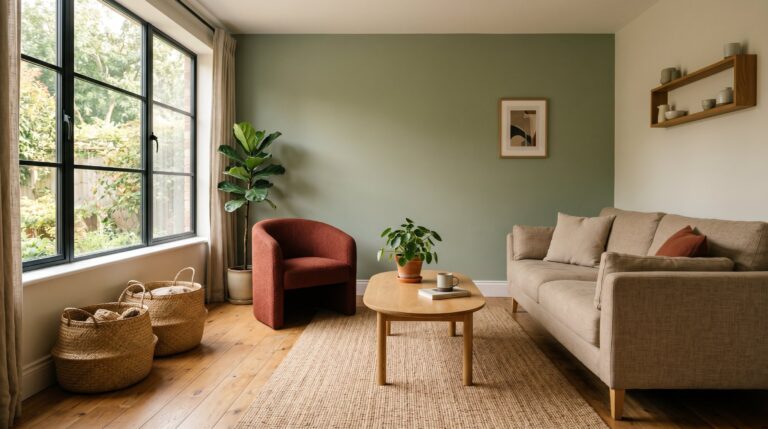
- Pale blue-grey (calming and airy)
Furniture:
- Light neutrals (beige, grey, cream)
- Match furniture color to wall color (creates visual continuity)
Accents:
- One or two accent colors max
- Use in small doses (throw pillows, art)
Colors to Avoid
- Dark walls (navy, charcoal, black) — make rooms feel smaller
- Bold accent walls — break up visual flow
- Too many colors — create visual clutter
The Monochromatic Trick
Use different shades of the same color throughout the room. This creates a cohesive, flowing look that makes the space feel larger.
Example:
- Walls: Soft white
- Sofa: Light grey
- Rug: Medium grey
- Accents: Charcoal grey
LIGHTING STRATEGIES
Good lighting makes small spaces feel larger and more inviting.
Layer Your Lighting
1. Ambient lighting (overhead)
- Flush-mount ceiling light or recessed lighting
- Avoid bulky chandeliers
2. Task lighting (reading, working)
- Floor lamp next to sofa
- Table lamp on side table
3. Accent lighting (mood, ambiance)
- LED strip lights behind TV
- Wall sconces (save floor space)
Maximize Natural Light
- Use sheer curtains or no curtains
- Keep windows unobstructed
- Place mirrors opposite windows to reflect light
Choose the Right Bulbs
- Warm white (2700K-3000K) for cozy feel
- Avoid cool white (feels clinical)
- Use dimmers to adjust brightness
MIRRORS: THE SECRET WEAPON
Mirrors are the easiest way to make a small living room feel larger.
Where to Place Mirrors
Best placement:
- Opposite a window (reflects natural light)
- Above the sofa (creates focal point and depth)
- On the longest wall (makes room feel wider)
Avoid:
- Directly opposite the TV (creates glare)
- Too many mirrors (feels disorienting)
Mirror Styles for Small Spaces
- Large single mirror (more impactful than multiple small ones)
- Frameless or thin-framed (less visual weight)
- Leaning floor mirror (adds height, easy to move)
DECLUTTER AND ORGANIZE
Clutter makes small spaces feel even smaller.
What to Remove
- Extra throw pillows (2-3 max)
- Decorative items you don’t love
- Magazines and books (keep only current reads)
- Excess blankets (store in ottoman or closet)
Smart Storage Solutions
Hidden storage:
- Storage ottoman
- Sofa with storage underneath
- Media console with drawers
Baskets:
- Woven baskets on shelves
- Store remotes, chargers, small items
- Keeps clutter contained but accessible
Cable management:
- Use cable clips or sleeves
- Hide cords behind furniture
- Reduces visual clutter significantly
SMALL LIVING ROOM LAYOUT IDEAS
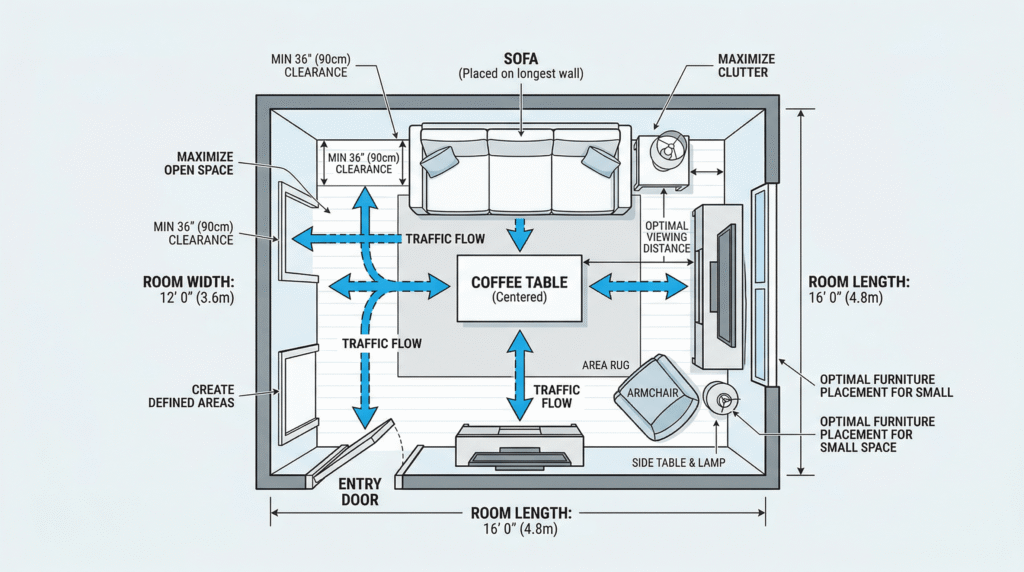
Layout is everything in a small space.
Layout 1: Sofa Against the Wall
Best for: Very small rooms (under 100 sq ft)
- Sofa against longest wall
- Coffee table or ottoman in front
- TV on opposite wall or corner
- One accent chair if space allows
Traffic flow: Clear path from entrance to other rooms
Layout 2: Floating Furniture
Best for: Narrow rooms
- Sofa pulled away from wall (12-18 inches)
- Creates walkway behind sofa
- Console table behind sofa for storage/display
- Makes room feel more spacious
Layout 3: L-Shaped Layout
Best for: Square rooms
- Loveseat on one wall
- Two accent chairs perpendicular
- Creates conversation area
- Leaves one side open for traffic flow
Layout 4: Diagonal Placement
Best for: Awkward room shapes
- Sofa placed at angle
- Creates visual interest
- Can make room feel larger
- Works well in rooms with multiple doorways
Pro tip: Leave at least 30 inches of walkway space for comfortable traffic flow.
RUGS IN SMALL LIVING ROOMS
Rugs can make or break a small space.
Rug Size Rules
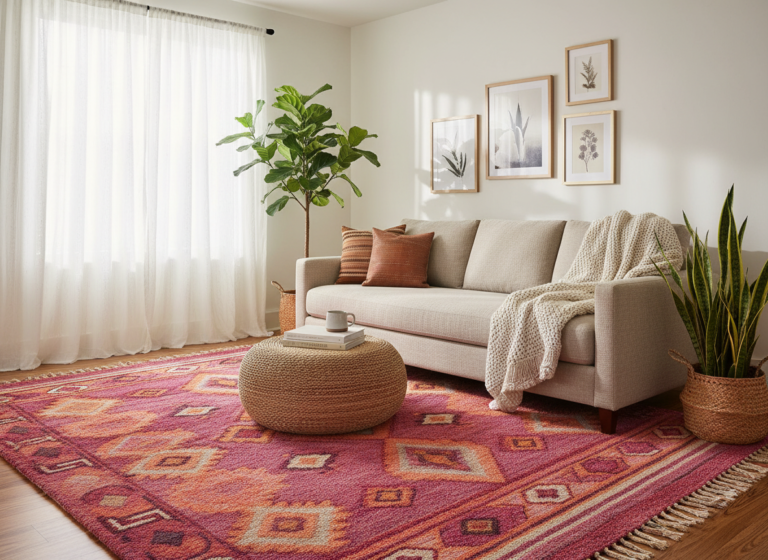
Too small: Makes room feel choppy and smaller
Too large: Overwhelms the space
Just right: Front legs of sofa and chairs rest on rug
Common rug sizes for small living rooms:
- 5×7 feet (very small rooms)
- 6×9 feet (small to medium rooms)
- 8×10 feet (medium rooms)
Rug Color
- Light colors make space feel larger
- Neutral tones (beige, grey, cream) are safest
- Avoid busy patterns (create visual clutter)
WINDOW TREATMENTS
Windows are valuable in small spaces — don’t block them.
Best Options
Sheer curtains:
- Let in maximum light
- Provide privacy without darkness
- Make room feel airy
Roman shades:
- Clean, tailored look
- Fold up completely when open
- Don’t take up visual space
No curtains:
- If privacy isn’t an issue
- Maximizes light
- Creates clean, modern look
Avoid
- Heavy drapes (make room feel dark and small)
- Curtains that block window when open
- Valances (add visual clutter)
DECOR FOR SMALL LIVING ROOMS
Less is more when it comes to decor.
What to Include (Choose 3-5 Items Max)
- One piece of wall art (large single piece better than gallery wall)
- 1-2 plants (real or high-quality faux)
- 2-3 throw pillows on sofa
- One throw blanket
- One decorative object on coffee table
What to Skip
- Gallery walls (too visually busy)
- Excessive throw pillows (more than 3)
- Knick-knacks on every surface
- Multiple small decor items
The One-In-One-Out Rule
For every new item you bring in, remove one item. This prevents clutter from accumulating.
COMMON SMALL LIVING ROOM MISTAKES
Mistake 1: Pushing All Furniture Against Walls
This actually makes the room feel smaller. Floating furniture creates depth.
Mistake 2: Choosing Dark Colors
Dark walls and furniture absorb light and make spaces feel closed in.
Mistake 3: Too Much Furniture
You don’t need a sofa, loveseat, three chairs, and an ottoman. Choose essentials only.
Mistake 4: Blocking Windows
Windows provide light and make rooms feel larger. Don’t block them with furniture.
Mistake 5: Ignoring Vertical Space
Floor space is limited, but wall space isn’t. Use it.
Mistake 6: No Focal Point
Every room needs a focal point (TV, fireplace, large window). Without one, the room feels disorganized.
SMALL LIVING ROOM CHECKLIST
Use this checklist to evaluate your space:
Furniture:
- [ ] Sofa is appropriately sized (not oversized)
- [ ] Coffee table is proportional (2/3 length of sofa)
- [ ] All furniture serves a purpose
- [ ] Multi-functional pieces are used where possible
Layout:
- [ ] Clear traffic flow (at least 30 inches)
- [ ] Furniture doesn’t block windows or doorways
- [ ] Focal point is established
Color:
- [ ] Walls are light neutral color
- [ ] Furniture is light or matches walls
- [ ] Accent colors are minimal (1-2 max)
Storage:
- [ ] Clutter is hidden or contained
- [ ] Vertical space is utilized
- [ ] Surfaces are mostly clear
Lighting:
- [ ] Multiple light sources (ambient, task, accent)
- [ ] Natural light is maximized
- [ ] No bulky light fixtures
Decor:
- [ ] Decor is minimal (3-5 items)
- [ ] Large mirror is used to create depth
- [ ] No visual clutter
WHERE TO SHOP FOR SMALL SPACE FURNITURE
Affordable:
- IKEA (space-saving furniture specialists)
- Target (Threshold line has apartment-sized pieces)
- Wayfair (filter by dimensions)
Mid-Range:
- West Elm (modern, compact designs)
- CB2 (small-space focused)
- Article (apartment-sized sectionals and sofas)
High-End:
- Room & Board (custom sizing available)
- Design Within Reach (space-efficient modern furniture)
Pro tip: Always measure your space and doorways before buying. Many furniture stores offer free design consultations.
FINAL THOUGHTS
A small living room can be just as functional and beautiful as a large one — it just requires more intentional design choices.
Start with these three changes:
- Remove one piece of furniture (probably that extra chair)
- Paint walls a light neutral color
- Add a large mirror
You’ll be amazed at how much more spacious your room feels.
Remember: small space design isn’t about deprivation. It’s about choosing quality over quantity, being intentional with every piece, and creating a space that feels calm and open rather than cramped and cluttered.
Your small living room can be your favorite room in the house — when it’s designed right.