Plant Styling Vignette — How to Create an Indoor Jungle Corner That Feels Alive
You know that feeling when you walk into a plant shop and you’re surrounded by lush greenery, warm terracotta pots, and that earthy smell of soil? That’s the feeling I want you to recreate in your own home. Not just a single plant on a shelf, but a real plant styling vignette — a dedicated corner that feels like a mini indoor jungle.
I’m not talking about the sterile, minimalist “one fiddle leaf fig in a white pot” approach. I’m talking about layered greenery, warm rust and sage tones, vintage planters, and that lived-in, bohemian charm that makes a space feel alive. If you’ve been craving more nature in your home but don’t know where to start, this guide is for you.
WHY PLANT VIGNETTES WORK BETTER THAN SCATTERED PLANTS
Here’s the thing most people get wrong about plant styling: they buy plants one at a time and scatter them around the house. A succulent here, a pothos there. The result? Your home feels cluttered, not lush.
A plant vignette is different. It’s an intentional grouping of plants in one dedicated corner or area. When you cluster plants together, you create visual impact. The eye reads it as a cohesive design moment, not random greenery. Plus, grouping plants together actually helps them thrive — they create their own microclimate with higher humidity.
Science backs this up. A 2015 study published in the Journal of Physiological Anthropology found that interacting with indoor plants can reduce psychological and physiological stress. But here’s the key: the effect is stronger when plants are grouped together in a visually rich display, not scattered sparsely.
START WITH HEIGHT VARIATION
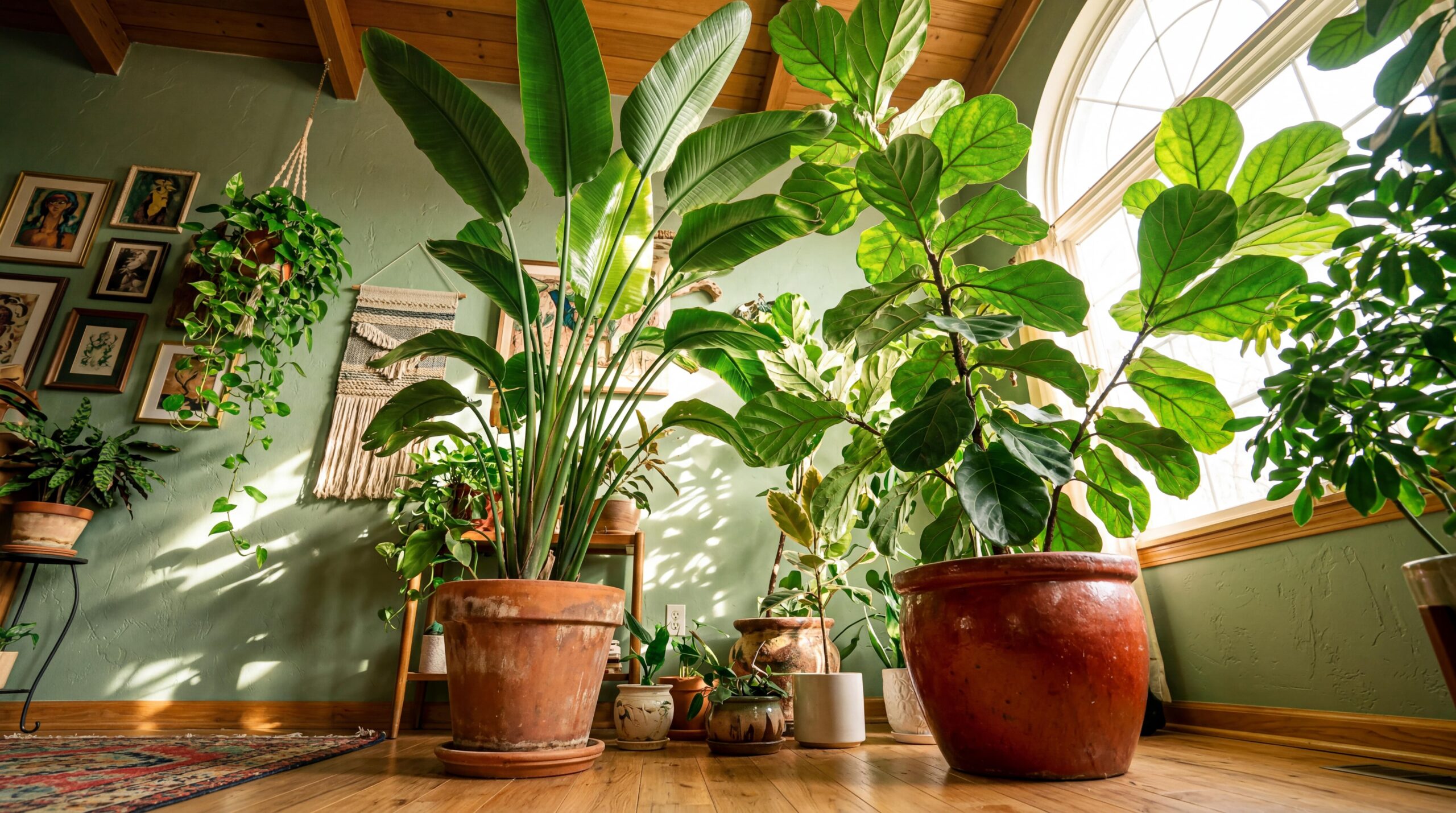
The secret to a dynamic plant vignette is height variation. You want tall plants, medium plants, and low trailing plants all working together.
Start with a tall statement plant as your anchor — think bird of paradise, fiddle leaf fig, or a large monstera. This should be your tallest element, ideally 4-6 feet tall. Place it in the back corner of your vignette space.
Next, add medium-height plants at 2-3 feet tall. Rubber trees, snake plants, and medium-sized monsteras work beautifully here. These fill the middle layer and create depth.
Finally, bring in low plants and trailing varieties. Pothos, string of pearls, and small succulents add texture at the bottom and can cascade over the edges of tables or plant stands.
Why does this matter? Your eye naturally follows vertical lines upward. When you create multiple height levels, you’re guiding the viewer’s gaze through the entire vignette, making the space feel fuller and more intentional.
COMMIT TO THE RUST & SAGE PALETTE
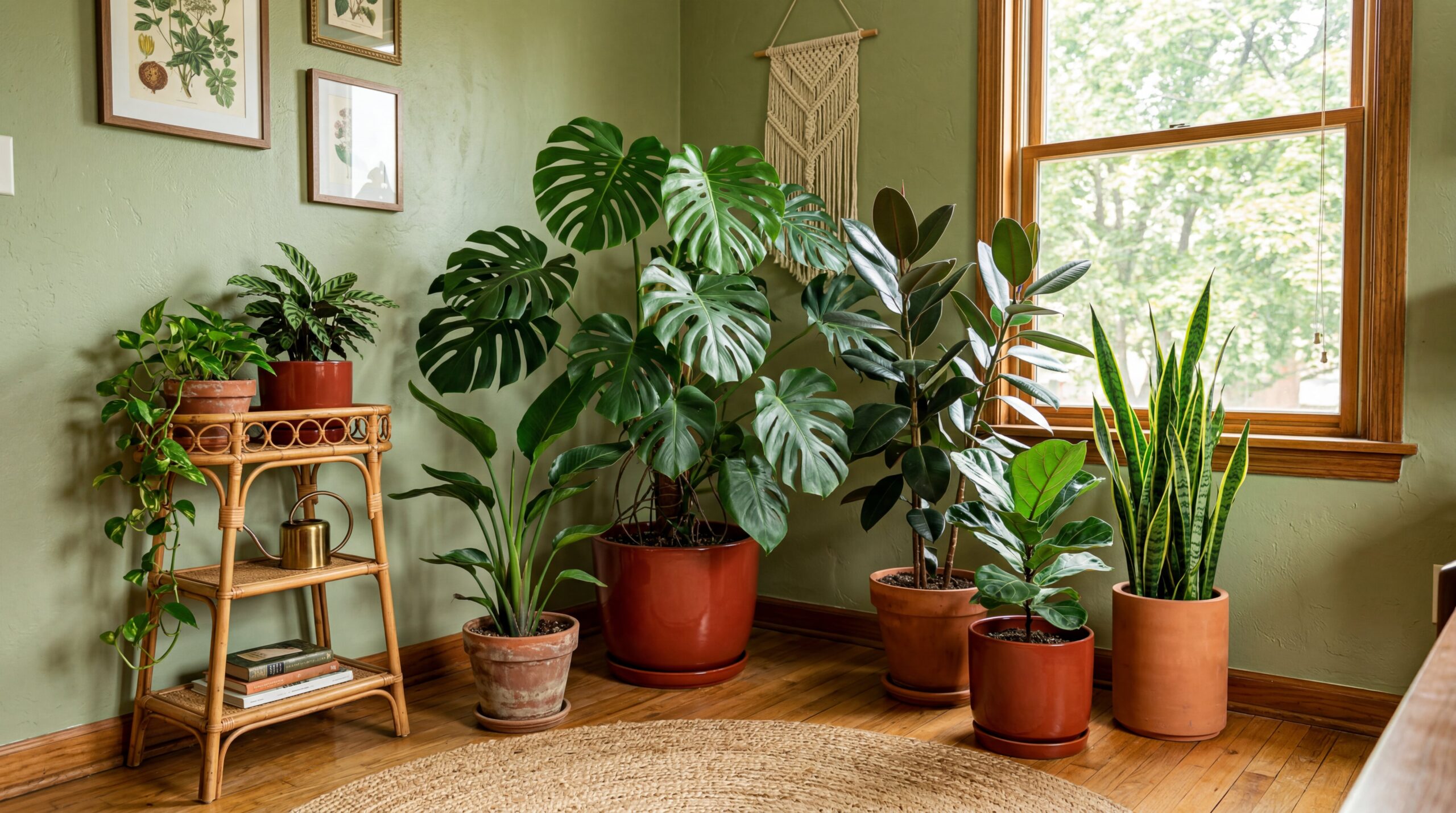
This is where most people play it safe with basic terracotta or white pots. Don’t. If you want your plant corner to feel warm and bohemian, you need to commit to a color palette.
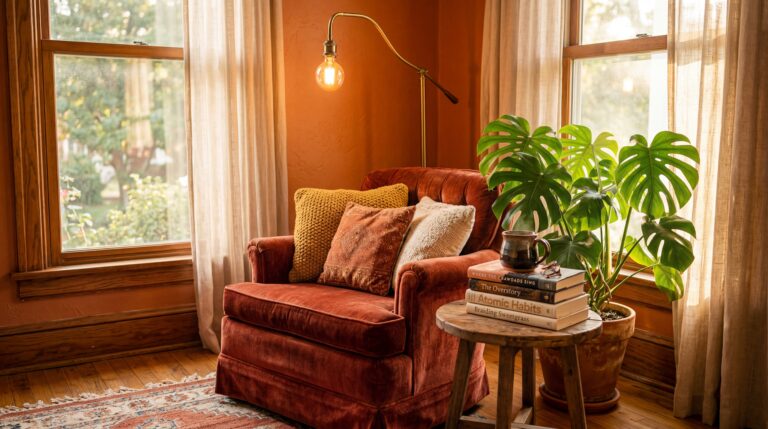
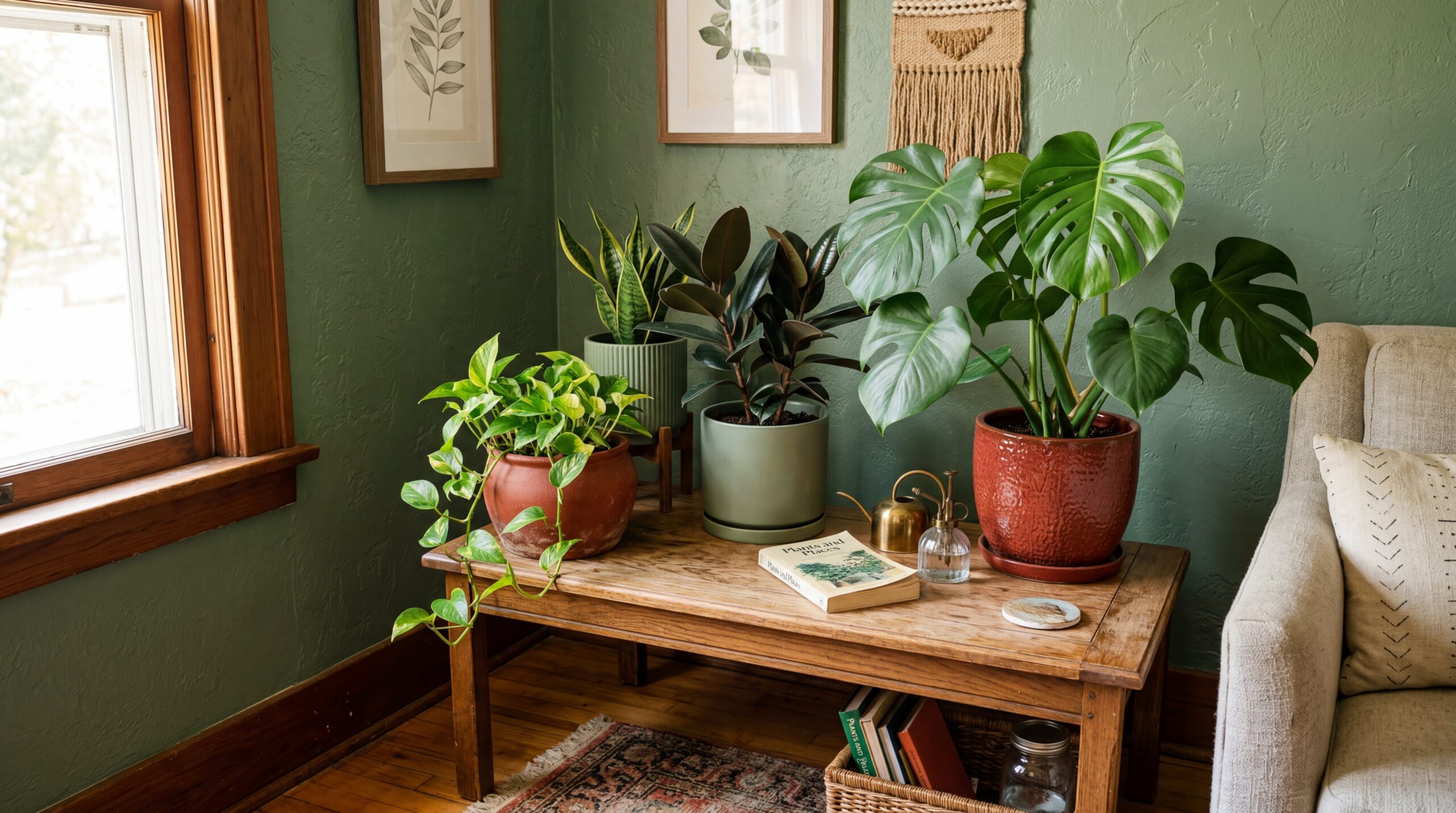
I’m obsessed with the rust and sage combination right now. Rust red and burnt orange pots bring warmth and earthiness. Sage green planters echo the plant foliage while adding a soft, muted contrast. Together, they create a palette that feels grounded, natural, and deeply comforting.
Here’s how to execute this: choose 60% of your pots in rust, terracotta, or burnt orange tones. These are your dominant colors. Then add 30% in sage green or muted olive. Finally, use 10% in natural materials like woven baskets or raw ceramic for texture.
Paint your wall in a complementary tone if you’re feeling bold. A sage green accent wall makes rust-toned pots pop. A rust-colored wall creates a moody backdrop for green foliage. If painting feels like too much commitment, start with the pots and see how transformative color can be.
LAYER IN DECORATIVE ELEMENTS
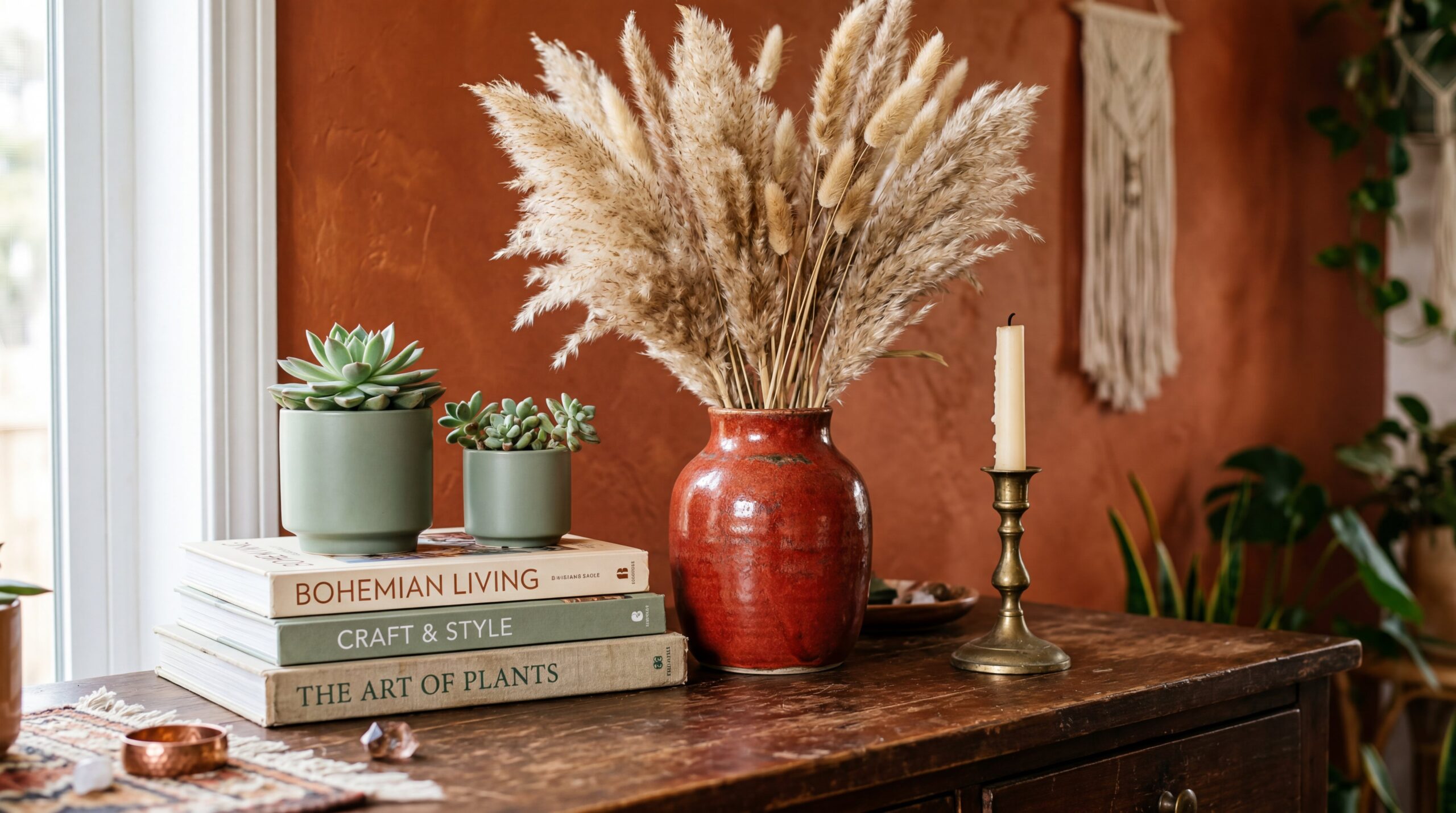
A plant vignette isn’t just about plants. It’s about creating a styled moment that tells a story. This is where you bring in decorative elements that make the corner feel curated, not just functional.
Add a vintage wooden side table or console as your base. This gives you a surface to style and adds warmth through natural wood tones. On this surface, layer in a few key objects: a brass candlestick, a small stack of art books, a ceramic vase with dried pampas grass or eucalyptus.
These elements serve two purposes. First, they add visual interest and break up the greenery with different textures and shapes. Second, they make the vignette feel lived-in and personal, like this is a corner you actually use and love, not just a staged photo op.
Keep it to 3-5 decorative objects maximum. Too many and it feels cluttered. Too few and it feels sparse. You’re looking for that sweet spot where every object feels intentional.
USE MIRRORS TO AMPLIFY GREENERY
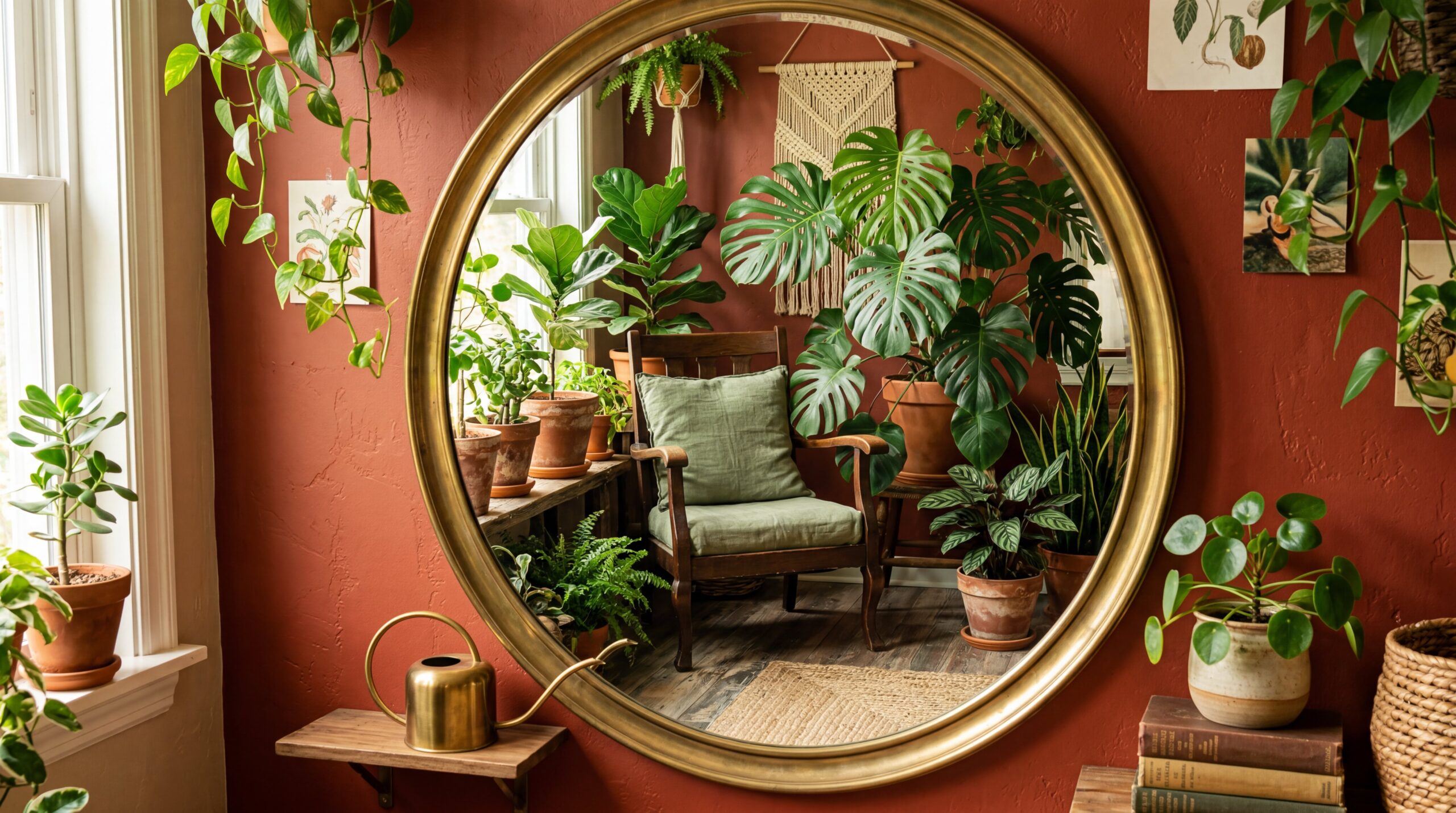
Here’s a trick that interior designers use all the time: place a large mirror behind or beside your plant vignette. The mirror reflects the greenery, essentially doubling the visual impact of your plants.
A large round brass mirror or an arched mirror works beautifully in a bohemian plant corner. Position it so it catches natural light from a nearby window and reflects it back into the space. This not only makes your plants look more lush, but it also brightens the corner and makes it feel more spacious.
The psychological effect is real. Mirrors create depth and dimension, tricking the eye into perceiving more space and more greenery than actually exists. It’s a low-cost, high-impact way to amplify your plant styling.
ADD TEXTURE WITH NATURAL MATERIALS
Don’t stop at plants and pots. Texture is what makes a vignette feel rich and layered. Bring in natural materials that complement the organic feel of the plants.
A woven jute rug or a vintage kilim rug grounds the space and adds warmth underfoot. A rattan plant stand elevates some of your plants and adds visual interest through its woven texture. Woven baskets can hold extra pots or be used as cachepots for a more casual, bohemian look.
These natural materials — wood, jute, rattan, linen — all share an earthy, organic quality that harmonizes with plants. They make the space feel cohesive and intentional, not like you just bought a bunch of random stuff from different stores.
LIGHTING MATTERS MORE THAN YOU THINK
Even the most beautifully styled plant vignette will fall flat without good lighting. And I’m not just talking about light for the plants to grow — I’m talking about ambient lighting that makes the corner feel warm and inviting.
If your plant corner is near a window, you’re already halfway there. Natural light is the best light. Position your vignette to catch soft, indirect sunlight, especially in the afternoon when the light is warm and golden.
If your corner is darker, add a floor lamp or a table lamp with a warm-toned bulb (2700K-3000K). This creates a cozy glow in the evening and highlights the textures and colors of your plants and pots. Avoid harsh, cool-toned lighting — it kills the warm, bohemian vibe you’re going for.
COMMON MISTAKES TO AVOID
Let me save you from the mistakes I see all the time:
Mistake #1: All plants at the same height. This creates a flat, boring look. Always vary your heights.
Mistake #2: Too many small plants. Five tiny succulents don’t create impact. You need at least one or two large statement plants.
Mistake #3: Ignoring the wall color. A white wall is fine, but a colored accent wall (sage, rust, terracotta) takes your vignette from good to stunning.
Mistake #4: Overcrowding. Leave some breathing room between plants. You want lush, not chaotic.
Mistake #5: Forgetting maintenance. Group plants with similar watering needs together. Don’t put a thirsty fern next to a drought-tolerant snake plant.
YOUR 4-WEEK ACTION PLAN
Week 1: Choose your corner and prep the space.\ Pick a corner with decent natural light. Clear it out completely. Measure the space so you know what size plants and furniture will fit.
Week 2: Shop for plants and pots.\ Buy 1 tall plant, 2-3 medium plants, and 2-3 small or trailing plants. Choose pots in your rust and sage palette. Don’t forget a plant stand or side table.
Week 3: Arrange and style.\ Start with your tallest plant in the back. Layer in medium and small plants. Add decorative elements. Step back and adjust until it feels balanced.
Week 4: Refine and maintain.\ Live with your vignette for a week. Notice what’s working and what’s not. Move things around if needed. Establish a watering routine.
FINAL THOUGHTS
Creating a plant styling vignette isn’t about perfection. It’s about bringing more life, warmth, and nature into your home in a way that feels intentional and beautiful. The rust and sage palette, the layered heights, the natural textures — these are all tools to help you create a corner that feels alive and inviting.
Start small if you need to. Even three plants grouped together on a side table can create a vignette effect. But I encourage you to go bigger. Dedicate a whole corner. Commit to the color palette. Layer in the decorative elements. You’ll be amazed at how much joy a lush plant corner can bring to your daily life.
Now go create your indoor jungle. Your home — and your soul — will thank you.