I Don’t Trust Wellness Products. I Trust These 4 Teas.
Affiliate Disclosure: This post contains Amazon affiliate links. If you purchase through my links, I may earn a small commission at no extra cost to you. I only recommend what I actually use.
I spent three years buying supplements I didn’t finish, teas I drank twice, and powders I mixed into one smoothie and quietly moved to the back of the pantry.
At some point I made a personal policy: I’m not buying anything wellness-related unless I can find actual research behind the active ingredient — not a blog saying it’s “amazing,” not an influencer looking improbably healthy on a Tuesday morning. Research.
This policy is responsible for 90% of the wellness aisle being off-limits to me.
These four teas survived it.
Why Most Wellness Teas Don’t Work (And How to Tell the Difference)
The functional ingredient has to be present in a therapeutic dose. That’s the whole game.
A tea that contains “ashwagandha extract” in the seventh position on an ingredient list, after “natural flavors” and “orange peel,” is not going to do what ashwagandha does. You’re paying for the label, not the herb.
The teas below have something in common: the functional ingredient is the product, not a supporting cast member. Some have a single herb. Some have a few, but each one is there for a reason that’s backed by use that goes back decades or centuries — not invented by a marketing team last year.
4 Teas That Held Up When I Actually Looked Into Them
☕ #1 — For When You Want to Break Up With Coffee (But Still Need Something Real): Rishi Tea Reishi Mushroom Hero
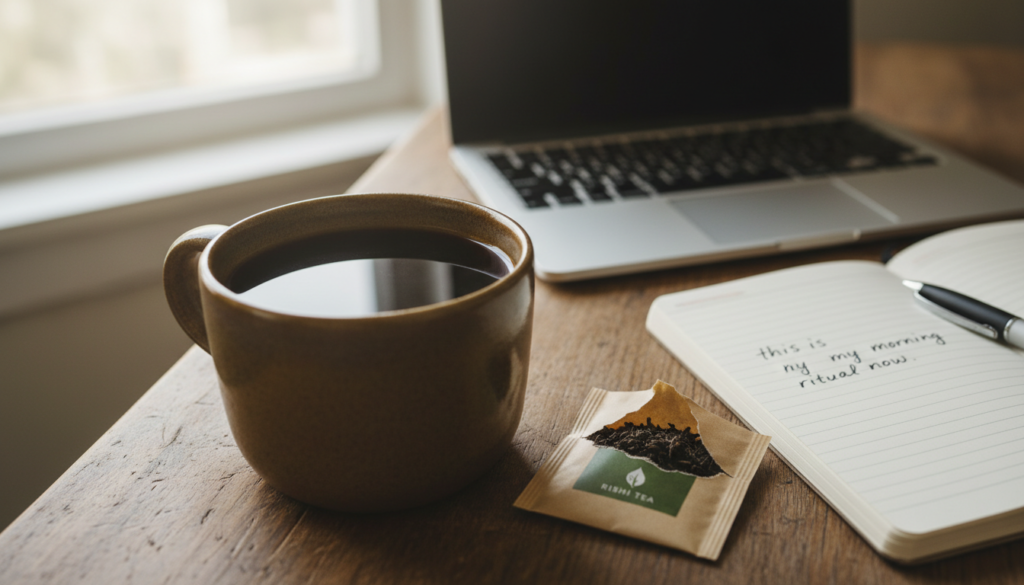
What it is: A loose-leaf blend of reishi mushroom, maitake mushroom, astragalus root, roasted dandelion root, cocoa shells, and chicory root. Zero caffeine. It brews dark and rich, like a cross between coffee and a deep herbal tea.
What the research says: Reishi has one of the longest documented histories of use in East Asian medicine — thousands of years as a tonic for immune function, stress resilience, and sustained energy. Astragalus root is similarly well-documented for immune support and adaptogenic properties. Neither of these is a trend. They’re in traditional Chinese pharmacopeias.
What I actually noticed: I switched from a second cup of coffee to this around noon. The difference: no 3pm crash. No jittery edge that makes me check my email seventeen times in a row. Something more like steadiness.
Taste: Rich, earthy, slightly chocolatey from the cocoa shells. Nothing like what you expect a “mushroom tea” to taste like. I drink it black. Some people add oat milk and call it a latte, which also works.
Best for: The person who has a complicated relationship with caffeine but doesn’t want to give up something substantial and warm in their mug.
Check Rishi Tea Reishi Mushroom Hero on Amazon →
🌺 #2 — For When You Want Your Skin to Actually Show the Results: The Republic of Tea Natural Hibiscus
What it is: Dried hibiscus flowers. That’s the ingredient list. The Republic of Tea has been sourcing these since the 1990s — they call it “superflower” because hibiscus has a significantly higher antioxidant profile than most herbs in the wellness category.
What the research says: Hibiscus contains anthocyanins — the same class of antioxidant pigments found in blueberries and purple cabbage — at unusually high concentrations. Published research has found links to reduced oxidative stress, support for healthy blood pressure, and the kind of free-radical scavenging that matters for skin aging over time. It also contains natural vitamin C and organic acids that support collagen production.
This is not a “beauty tea” because it has rose petals and a butterfly on the box. It’s functional because the active compounds in hibiscus have been studied in actual clinical settings.
Taste: Tart, cranberry-adjacent, bright. You can drink it hot or cold. Iced with a little honey is genuinely one of the best things I’ve made in my kitchen that also happens to be good for me.
Best for: The person who’s spending money on serums and supplements and hasn’t tried working on skin health from the inside. Also the person who just wants something that tastes like a treat and happens to be doing something useful.
Check Republic of Tea Natural Hibiscus on Amazon →
🌿 #3 — For Inflammation, Allergies, and the Tired-All-the-Time Category: Starwest Botanicals Organic Nettle Leaf
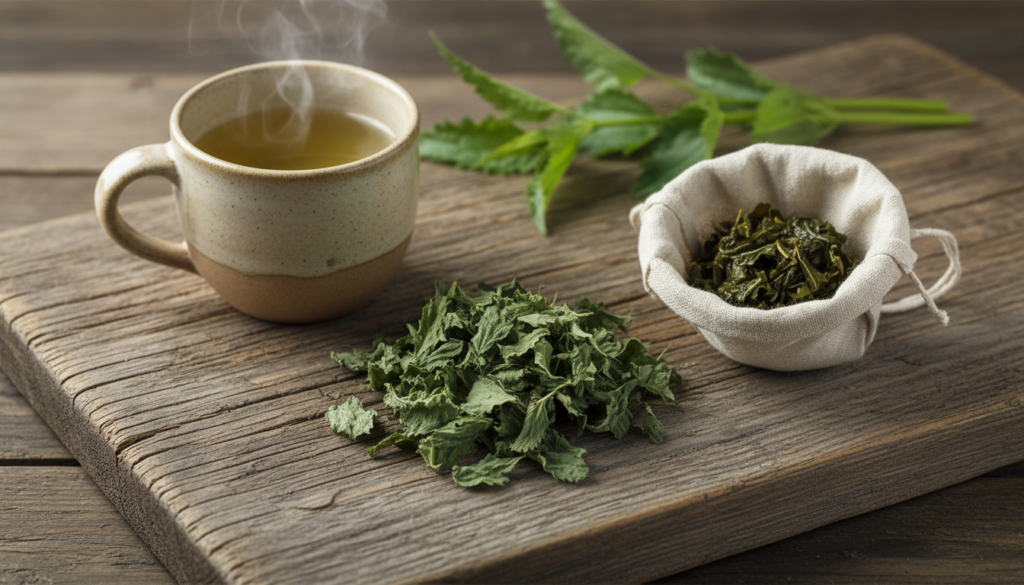
What it is: Organic stinging nettle leaf, cut and sifted, in loose form. One ingredient. Starwest Botanicals has been a trusted supplier of bulk medicinal herbs since 1975 — their nettle is USDA certified organic and sourced whole.
What the research says: Nettle has a surprisingly robust research profile for something so overlooked. Studies have examined its effects on seasonal allergies (it inhibits several inflammatory pathways), joint health and osteoarthritis, iron absorption (nettle leaf contains non-heme iron), and even blood sugar regulation. It’s also one of the most nutritionally dense herbs you can steep — it contains calcium, magnesium, potassium, and vitamins A, C, and K.
This is not a fashionable tea. You won’t see it on a wellness influencer’s shelf. It doesn’t have a sleek box or a compelling brand story. It just does things.
Taste: Grassy, earthy, mild. Similar to a green tea but softer. Takes about 5-7 minutes of steeping in hot water to develop properly. Add a squeeze of lemon — it brightens the flavor and increases the absorption of iron from the plant.
Best for: The person dealing with seasonal allergies, chronic low-grade inflammation, fatigue that might be iron-related, or anyone who just wants something medicinal and unsponsored.
Note on preparation: Loose leaf means you’ll need a strainer or infuser. A basic mesh tea infuser costs about $3 on Amazon. Worth it.
Check Starwest Botanicals Organic Nettle Leaf on Amazon →
🌱 #4 — For When You Want Adaptogens Without the Marketing: Buddha Teas Ashwagandha Root Tea
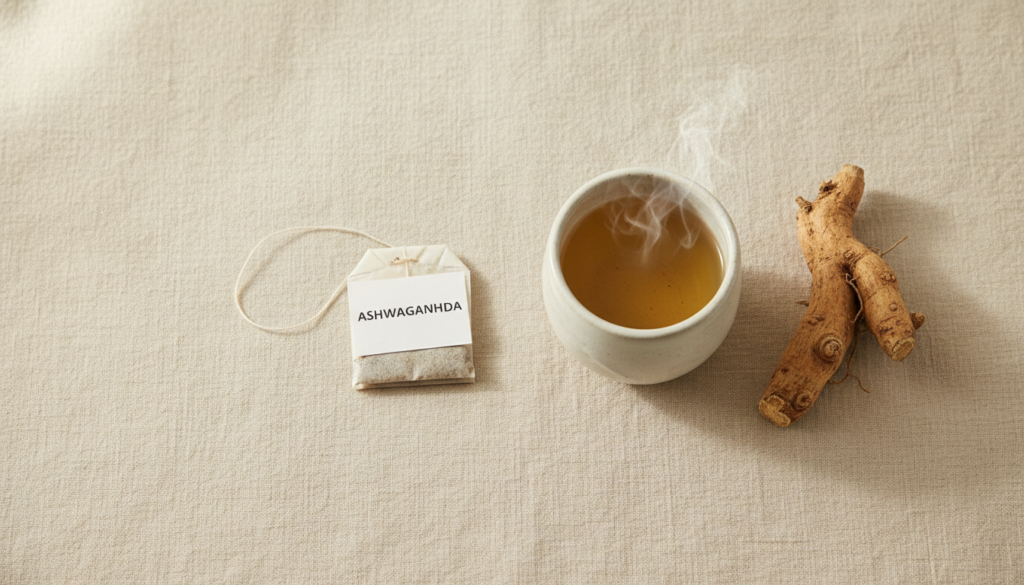
What it is: Organic ashwagandha root. One herb. Buddha Teas uses bleach-free bags, adds nothing artificial, and formats this as a single-herb tea so you know exactly what you’re getting and how much.
What the research says: Ashwagandha (Withania somnifera) has the most studied adaptogen profile of any herb in Western research, with multiple randomized controlled trials finding significant effects on cortisol levels, perceived stress, sleep quality, and cognitive function. It’s an ancient Ayurvedic herb that has held up unusually well to modern clinical scrutiny.
The difference between this and blended teas that contain ashwagandha: there’s no question about dose. You’re getting the root, steeped directly. No filler herbs, no “proprietary blend” ambiguity.
Taste: Earthy, slightly bitter, faintly woody. Not a pleasure tea — this is a function tea. Honey improves it. If taste is your priority, this isn’t your pick. If you want reliable adaptogenic support and you’d rather know exactly what’s in your cup, this is it.
Caveat: Ashwagandha is generally safe but does interact with some thyroid medications and sedatives. If you’re on either, check with your doctor. Don’t use during pregnancy.
Best for: The person who wants the adaptogen effect without paying for a brand’s blend where ashwagandha is one of twelve listed herbs and who knows if it’s at a meaningful dose.
Check Buddha Teas Ashwagandha Root Tea on Amazon →
The Skeptic’s Shortcut
| You’re dealing with… | Get this |
|---|---|
| Caffeine dependency you want to break | Rishi Tea Reishi Mushroom Hero |
| Skin aging, oxidative stress, looking more alive | Republic of Tea Hibiscus |
| Seasonal allergies, inflammation, low energy, low iron | Starwest Botanicals Nettle Leaf |
| Stress and cortisol, want pure adaptogen support | Buddha Teas Ashwagandha Root |
What I’ve Stopped Believing In
I’ve stopped believing in any wellness product that needs extensive marketing to explain why it works. If the mechanism requires five paragraphs of “ancient wisdom meets modern science” copy, I’m out.
The four above don’t need that. Reishi mushroom has centuries of documented use. Hibiscus has published trials. Nettle has a nutritional profile you can look up in any botanical reference. Ashwagandha has more clinical studies than most supplements on the pharmacy shelf.
They work by being what they are. The research didn’t invent that — it confirmed it.
All four are on Amazon. Links above. None of them are cheap-looking because they’re not trying to be.
Rishi Tea Reishi Mushroom Hero →
Republic of Tea Natural Hibiscus →
Starwest Botanicals Organic Nettle Leaf →
Buddha Teas Ashwagandha Root Tea →
Affiliate Disclosure: This post contains Amazon affiliate links. If you make a purchase through my links, I may earn a small commission at no extra cost to you.