Best Tea for Brain Fog: 3 Herbal Teas I Actually Reach For
Affiliate Disclosure: This post contains Amazon affiliate links. I may earn a small commission at no extra cost to you.
I used to lose the word mid-sentence. Read the same paragraph three times and still not absorb it. Walk into the kitchen and forget why. Coffee fixed it for about ninety minutes, then made it worse. These three teas are the only things that actually moved the fog — not by forcing alertness, but by working on what coffee never touches.
Why Brain Fog Isn’t a Caffeine Problem
Most brain fog isn’t about being tired — it’s reduced blood flow to the brain, low-grade inflammation, or a nervous system stuck in high alert. Caffeine forces alertness on top of all three without fixing any of them, which is why the 3pm crash always comes back harder.
The teas below work on the actual mechanisms: one increases circulation to the brain, one calms an overactive nervous system while keeping you sharp, one supports the protein your brain uses to repair and build new connections. None of them work in twenty minutes. All three need two to three weeks of daily drinking before you notice anything.
At a Glance
| If your fog feels like… | This is the one |
|---|---|
| Slow recall, can’t find the word | Ginkgo Biloba |
| Foggy and wired/anxious at the same time | Gotu Kola |
| Flat, unmotivated, “can’t even start thinking” | Lion’s Mane |

🍃 Ginkgo Biloba — For When You Can’t Find the Word
What it is: Buddha Teas Organic Ginkgo Biloba, single-ingredient leaf tea, nothing else on the label.
The mechanism: Ginkgo has been used in Traditional Chinese Medicine for over a thousand years specifically for memory and circulation. Modern research keeps coming back to the same finding — it improves blood flow to the brain, including the small vessels that carry oxygen to the areas responsible for recall and processing speed.
What I noticed: The specific thing that changed was word retrieval. Not big leaps in focus — just fewer mid-sentence stalls where I knew what I meant but couldn’t grab the word. That showed up around week two.
Taste: Mild, slightly bitter, a little grassy — closer to green tea than to anything sweet.
Best for: Slow recall, “tip of the tongue” moments, that specific frustration of knowing the thought exists but not being able to reach it.
Check Buddha Teas Ginkgo Biloba on Amazon →
🌱 Gotu Kola — For Foggy and Anxious at the Same Time
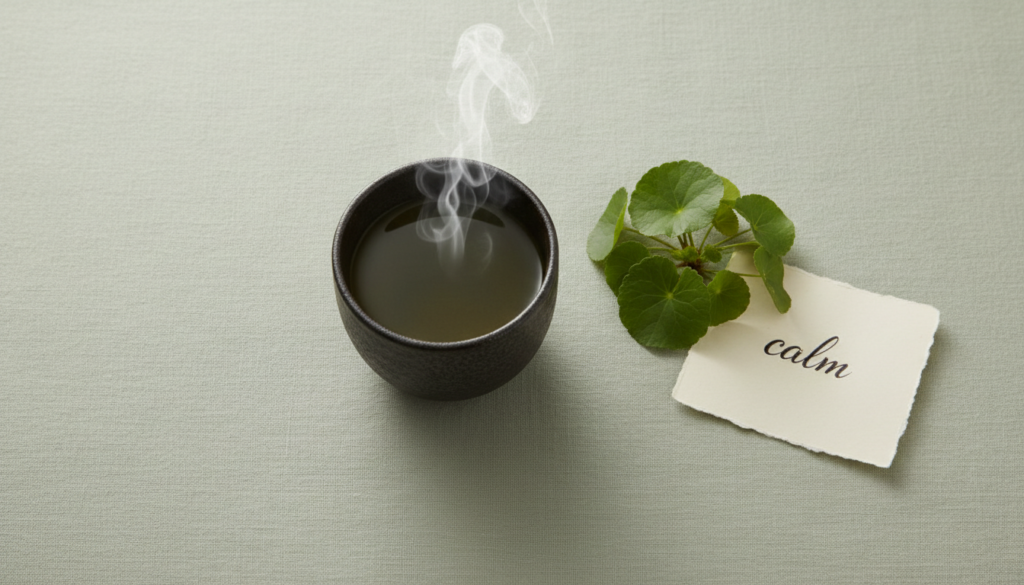
What it is: Buddha Teas Organic Gotu Kola, single ingredient, made from Centella asiatica — a staple herb in Ayurvedic medicine for over a thousand years.
The mechanism: Gotu kola is unusual because it does two things most “focus” herbs don’t do together — it supports circulation to the brain’s smaller vessels while also calming an overactive nervous system, without the sedation of something like valerian. Ayurvedic tradition calls this combination “calm alertness.” It’s the herb you reach for when fog and low-grade anxiety are tangled together, not separate problems.
What I noticed: Both things lifted at the same time, which surprised me — usually a calming tea makes me sleepier, not clearer.
Taste: Earthy, mellow, slightly bitter. Mixes well with a little honey if the bitterness is too much at first.
Best for: The specific combination of foggy and keyed up — your brain feels slow but your body feels tense.
Check Buddha Teas Gotu Kola on Amazon →

🍄 Lion’s Mane — For “I Can’t Even Start Thinking About This”
What it is: Bravo Tea Lion’s Mane Mushroom Herbal Tea — a caffeine-free blend built around lion’s mane mushroom and extract, with eleuthero and astragalus root supporting it.
The mechanism: Lion’s mane is one of the few foods studied for stimulating nerve growth factor (NGF) — a protein your brain relies on to maintain and repair neural connections. Where ginkgo moves blood and gotu kola calms the nervous system, lion’s mane works on the brain’s actual repair process. It’s the slowest of the three to show results and arguably the most foundational.
What I noticed: This was less about sharper recall and more about motivation to think at all — the “ugh, I can’t even start” feeling showed up less often by week three.
Taste: Earthy, mild, faintly mushroom-forward but not unpleasant — closer to a roasted root tea than anything fungal-tasting.
Best for: Flat, unmotivated fog where the problem isn’t recall, it’s not wanting to engage your brain in the first place.
Check Bravo Tea Lion’s Mane on Amazon →
Quick Answers
Does tea actually help with brain fog?
Herbal teas won’t fix fog caused by sleep deprivation or a medical issue — see a doctor if it’s sudden or severe. But for the everyday fog tied to circulation, inflammation, or a wired nervous system, ginkgo, gotu kola, and lion’s mane all have research behind the specific mechanisms involved.
How long before ginkgo biloba tea actually works?
Most people notice something between two and four weeks of daily drinking. It’s not a same-day fix — that’s the coffee approach, and it doesn’t last.
Can you drink more than one of these in the same day?
Yes, they don’t conflict. Some people rotate — ginkgo in the morning, gotu kola midday if anxiety spikes. Start with one and see what you actually need before stacking them.
Is lion’s mane tea safe every day?
Generally yes for most adults, but skip it if you have a mushroom allergy, and check with a doctor if you’re on blood thinners or pregnant — same caution as any new herbal supplement.
The Honest Version
None of these taste like dessert. None of them work in a day. What they have in common is that they target the actual mechanism behind the fog instead of just shouting over it the way caffeine does. Pick the one that matches your specific kind of foggy — recall, anxious, or unmotivated — and give it three weeks before deciding it’s not working.
Buddha Teas Ginkgo Biloba →
Buddha Teas Gotu Kola →
Bravo Tea Lion’s Mane →
Affiliate Disclosure: This post contains Amazon affiliate links. If you make a purchase through my links, I may earn a small commission at no extra cost to you.