I Tried 11 “Wellness” Teas So You Don’t Have to Waste $200 Finding Out Which Ones Actually Work
*Affiliate Disclosure: This post contains Amazon affiliate links. If you purchase through my links, I may earn a small commission at no extra cost to you. I only recommend products I’ve personally tested.*
I have a graveyard of tea boxes in my kitchen cabinet.
Not the cute, curated kind you see in aesthetic flat lays. The real kind — half-open boxes with three bags missing, a flavor I bought because the packaging said “calm” and I was having a week, a ginger blend I tried once and abandoned because it tasted like punishment.
At some point I had convinced myself that if I just found the *right* tea, things would feel more manageable. Sleep would come easier. My stomach would stop staging protests after dinner. The 3pm energy crash would politely stop existing.
So I kept buying teas.
Then I actually sat down and tested them. Systematically. For two months. With notes.
Here’s what I found.
—
## Before We Get Into It: What Makes a Wellness Tea Actually Work
Most teas at the grocery store are flavored water with good marketing. The ones that genuinely do something share a few traits:
**Therapeutic-grade herbs, not just “natural flavors.”** There’s a difference between a tea that contains chamomile and one that contains a standardized dose of chamomile extract. The label matters.
**No fillers or artificial anything.** Cheap tea bags often contain more fannings and dust than actual herbs. Look for whole-leaf or cut-and-sifted herbs with recognizable ingredient lists.
**Organic when it matters.** Herbs absorb pesticides more readily than most crops. For anything you’re drinking for health benefits, organic isn’t just branding — it’s relevant.
The four teas below all pass these filters. They also actually do what they say they do, which is a lower bar than it sounds.
—
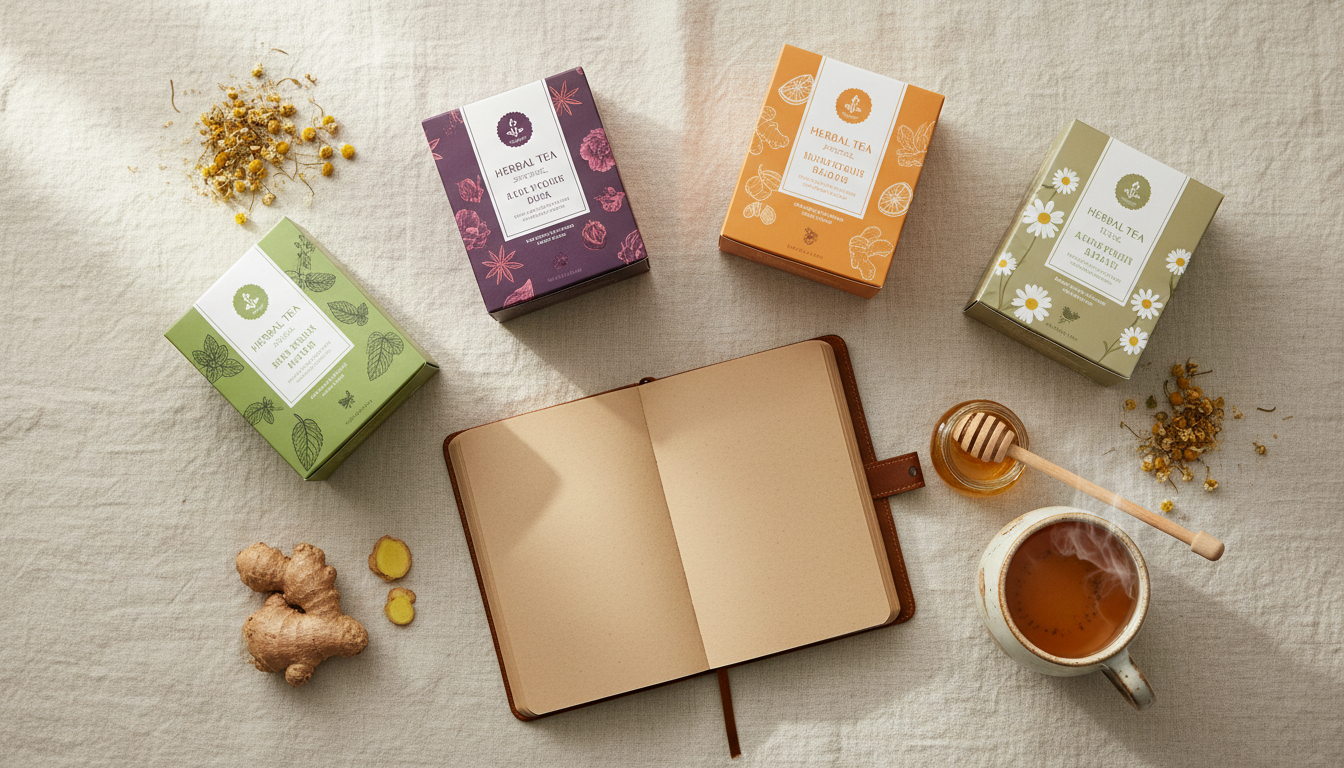
## The 4 Best Wellness Teas on Amazon (Tested & Ranked by What You Actually Need)
—
### 🌿 #1 — For Stress & Anxiety: Yogi Stress Relief, Honey Lavender

**What it claims:** Calming blend with ashwagandha, holy basil (tulsi), and lavender to ease stress and quiet the mind.
**What it actually does:** Taken consistently — I mean actually every day, not just during emergencies — I noticed a genuine edge-softening effect within about two weeks. The ashwagandha is the active ingredient here; it’s an adaptogen with real research behind it. The lavender makes it smell incredible. The honey flavor makes it feel like a reward instead of medicine.
**Taste:** Floral, warm, slightly sweet. One of the most genuinely pleasant teas I tried. I would drink this even if it did nothing.
**Best time to drink:** Afternoon or early evening. Good for the “I need to decompress but it’s only 4pm” window.
**Ingredient highlight:** Ashwagandha root + holy basil — both adaptogens with published research on cortisol reduction.
**[Check Yogi Stress Relief on Amazon →]**
—
### 🌙 #2 — For Sleep: Traditional Medicinals Organic Nighty Night

**What it claims:** Sleep support blend with passionflower and valerian to ease the transition into rest.
**What it actually does:** This one surprised me. I was skeptical of any tea claiming to help with sleep — chamomile alone rarely moves the needle for me. But Traditional Medicinals uses medicinal-grade herbs, not decorative amounts. The valerian root is measurable. Passionflower has solid research on reducing sleep onset time.
I slept deeper on nights I had this. Not knocked-out deep, but the kind of sleep where you don’t remember checking your phone seventeen times.
**Taste:** Earthy, slightly bitter, distinctly herbal. This is not a tea you drink for pleasure. You drink it because you want to sleep. If taste is a dealbreaker, add a little honey.
**Best time to drink:** 30–45 minutes before bed. Give it time to work.
**Caveat:** Valerian can interact with some medications. If you’re on anything, check with your doctor. Don’t take it with alcohol.
**Ingredient highlight:** Passionflower + valerian — both clinically studied for sleep improvement.
**[Check Traditional Medicinals Nighty Night on Amazon →]**
—
### 🫚 #3 — For Digestion & Immunity: Pukka Three Ginger Organic Herbal Tea
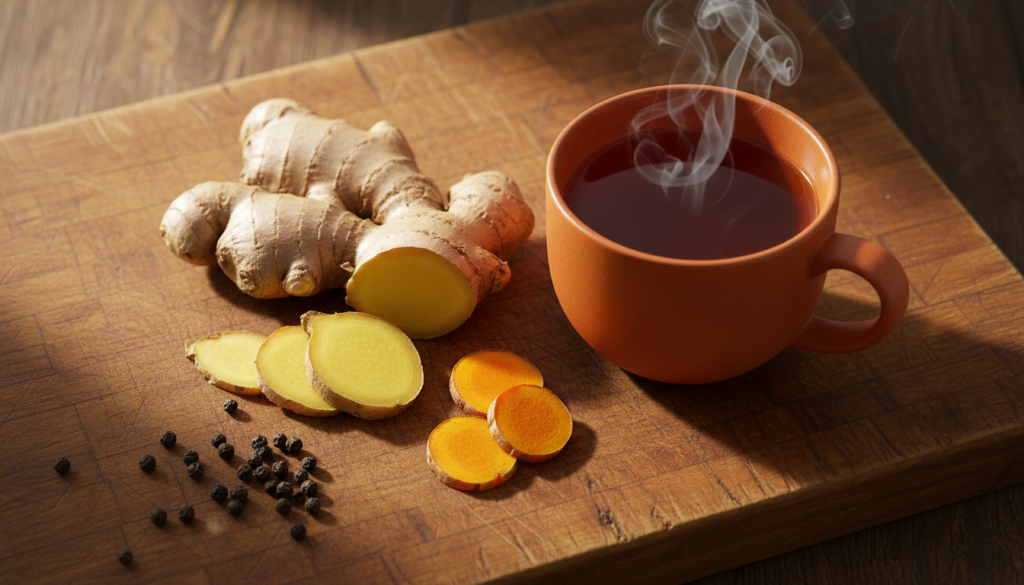
**What it claims:** Warming digestive support from three types of ginger — fresh, dried, and galangal — plus turmeric.
**What it actually does:** After-dinner bloating is my nemesis. This tea has become non-negotiable after heavy meals. The warmth is immediate — you can feel it in your chest within minutes. Over time, I noticed my post-meal digestion was noticeably smoother. The turmeric and black pepper combination also supports the anti-inflammatory angle if that’s what you’re after.
**Taste:** Spicy, warming, intensely gingery. Not subtle at all. If you like ginger, you will love this. If ginger isn’t your thing, this isn’t the one.
**Best time to drink:** Right after dinner, or anytime you feel your stomach staging a complaint.
**Ingredient highlight:** Fresh ginger + galangal + turmeric + black pepper (piperine boosts turmeric absorption by up to 2000%).
**[Check Pukka Three Ginger on Amazon →]**
—
### 🍄 #4 — For Energy Without the Crash: Four Sigmatic Mushroom Matcha
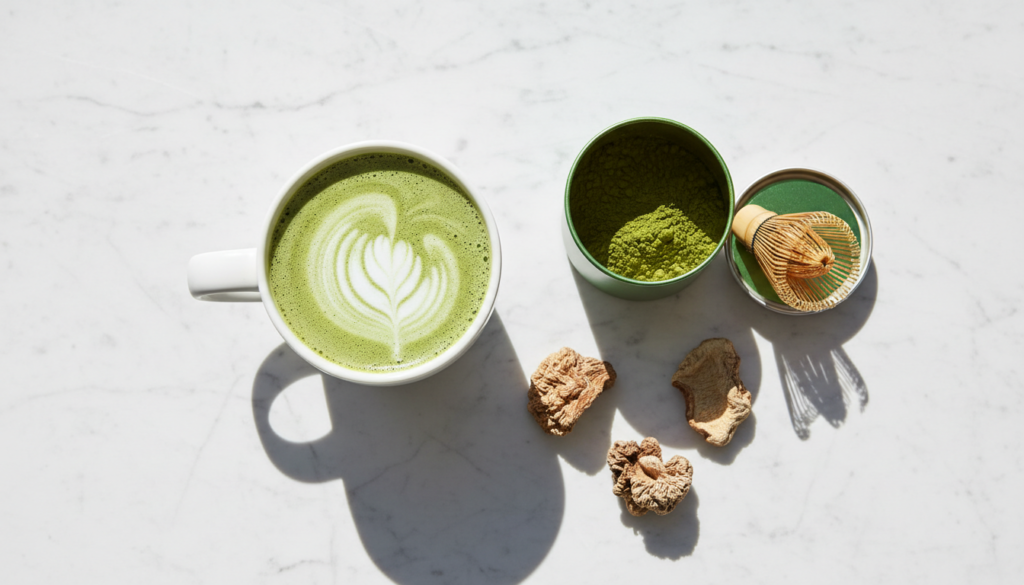
**What it claims:** Ceremonial-grade matcha combined with lion’s mane and chaga mushrooms for calm, focused energy.
**What it actually does:** I have a complicated relationship with caffeine. Coffee makes me functional but also occasionally unhinged. Matcha is gentler — the L-theanine in green tea smooths out the caffeine curve so you get focus without the jitter tax. Adding lion’s mane (which has research linking it to cognitive function and nerve growth factor) takes it further. This is the tea I reach for when I need to work.
**Taste:** Earthy matcha with a slight umami depth from the mushrooms. Less sweet than most matcha products you’ll find at coffee shops. Slightly vegetal, in a good way.
**Best time to drink:** Morning or before focused work. Not after 2pm unless you want to lie awake thinking about your to-do list.
**Ingredient highlight:** L-theanine + lion’s mane — the combination that makes focus feel effortless rather than forced.
**[Check Four Sigmatic Mushroom Matcha on Amazon →]**
—
## Which One Is Actually for You
No point buying all four (I learned this the expensive way). Here’s the shortcut:
| You need… | Get this |
|—|—|
| To turn down the mental noise | Yogi Stress Relief |
| To actually fall asleep at a reasonable hour | Traditional Medicinals Nighty Night |
| To stop feeling wrecked after meals | Pukka Three Ginger |
| To replace your second (or third) coffee | Four Sigmatic Mushroom Matcha |
One tea, one problem. Start there.
—
## A Few Things I Learned the Hard Way
**Consistency matters more than the tea itself.**
Every single one of these works better over two weeks than over two days. Give it time before you decide it’s not working.
**Tea is not a miracle.** It works alongside sleep, food, and movement — not instead of them. If you’re running on four hours and three coffees, no amount of ashwagandha is going to fix that.
**Steep time changes everything.** Under-steep and you get flavored water. Over-steep and you get bitter regret. Use boiling water for herbal teas (not matcha — 175°F for that one) and follow the steeping time on the box.
**Bags vs. loose leaf.** All four of these are available in bags, which is fine. If you’re serious about one in particular, look for the loose-leaf version — better herb quality and more control over strength.
—
## The Bottom Line
The wellness tea market is full of pretty boxes and empty promises. These four aren’t. They use real therapeutic herbs at real doses, and they do what they say — if you give them a fair chance and drink them consistently.
Pick the one that matches what you actually need right now. That’s the only selection strategy that works.
All four are available on Amazon with Prime shipping — links for each are above.
—