Minimalist Living Room Organization — Clear the Clutter, Keep the Style
Minimalist living rooms look effortless. Clean surfaces. Organized shelves. Everything in its place.
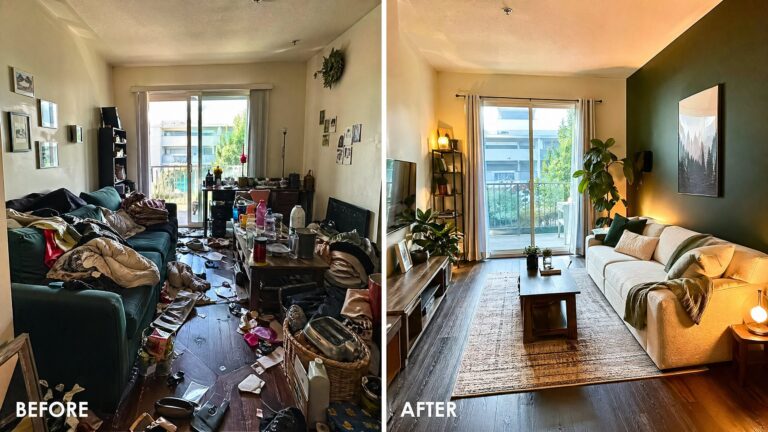
But here’s what nobody shows you: the messy “before” that came before that perfect “after.”
I used to think minimalism meant getting rid of everything. White walls. Empty shelves. One sad plant in the corner. I tried that approach for six months. My living room looked like a doctor’s waiting room. Cold. Sterile. Unwelcoming.
Then I figured out what minimalist organization actually means. And it’s not what Instagram makes you think.
Affiliate Disclosure: This post contains affiliate links. If you purchase through these links, I may earn a small commission at no extra cost to you. I only recommend products I genuinely believe will add value to your space. Read full disclosure →
Why Most Minimalist Living Rooms Fail
The problem with most minimalist advice? It focuses on aesthetics, not organization.
“Get rid of 90% of your stuff.” Okay, but which 90%? “Keep only what sparks joy.” What if my TV remote doesn’t spark joy but I still need it? “Everything should have a home.” Great, but where?
Minimalism without a system is just… emptiness. You get rid of stuff, but you don’t know what to keep or where to put it. Six months later, the clutter creeps back in.
The real secret to a minimalist living room isn’t owning less. It’s organizing what you keep so well that it feels like you own less.
The 3 Rules of Minimalist Organization
After years of trying (and failing) at minimalism, I’ve narrowed it down to three non-negotiable rules. These aren’t aesthetic guidelines. These are the systems that keep your living room organized without making it feel cold.
Rule 1: One Function Per Item
In a minimalist living room, every item must serve a clear function. No “decorative” clutter.
That coffee table? It’s for coffee, books, and your laptop. Not for collecting random stuff. That shelf? It’s for books you actually read. Not for dusty decorations you bought three years ago. That basket? It’s for throw blankets. Not for “miscellaneous stuff I’ll deal with later.”
I went through my living room and asked: “What is this for?” If I couldn’t answer in five seconds, it went in the donate pile.
This one rule cleared 40% of my living room clutter. Forty percent.
Rule 2: Closed Storage for Everyday Items
Here’s the truth about minimalist living rooms: they hide the mess.
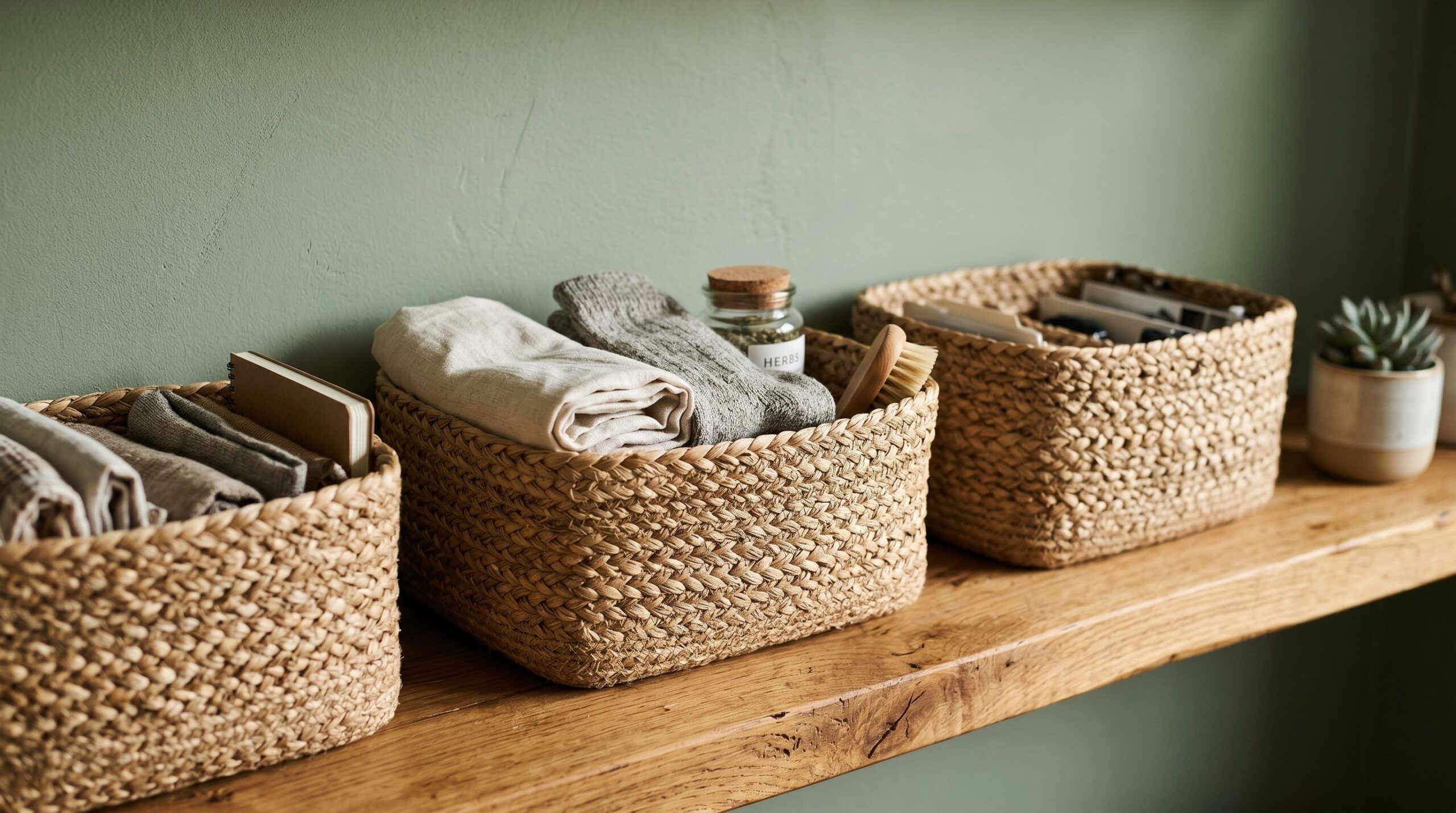
Those beautiful minimalist photos you see? The remotes, chargers, and random papers are hidden in closed storage. Baskets. Drawers. Cabinets.
Open shelving works for books and plants. But everyday items — the stuff you use constantly — need closed storage. Otherwise, your “minimalist” living room becomes a cluttered mess within a week.
I added three woven baskets to my living room. One for remotes and chargers. One for magazines and mail. One for throw blankets. Game changer.
Rule 3: The One-Surface Rule
This is the rule that keeps minimalism from creeping back into clutter.
Pick one surface in your living room that’s allowed to have stuff on it. The coffee table. The side table. One surface.
Every other surface stays clear. Always.
No “I’ll just put this here for now.” No “I’ll deal with it later.” If it’s not on your designated surface, it doesn’t belong in the living room.
This rule sounds extreme. But it’s the only thing that kept my living room organized long-term.
The System That Changed Everything
Look, I didn’t figure this out on my own.
I struggled with minimalist organization for two years. I’d declutter, feel great for a month, then watch the clutter creep back in. I was about to give up on minimalism entirely.
Then I found Declutter Fast: How to Get Your Home in Order Almost Immediately by Mimi Tanner.
This isn’t a minimalism book. It’s a complete organization system designed for people who want results fast. Not months of “mindful decluttering.” Days.
What made it work for me:
Clear decision-making framework. I finally knew what to keep and what to let go. No more second-guessing.
Room-by-room action plans. I didn’t have to figure out where to start. The system told me exactly what to do.
Maintenance strategies. This wasn’t a one-time purge. It was a system I could actually maintain.
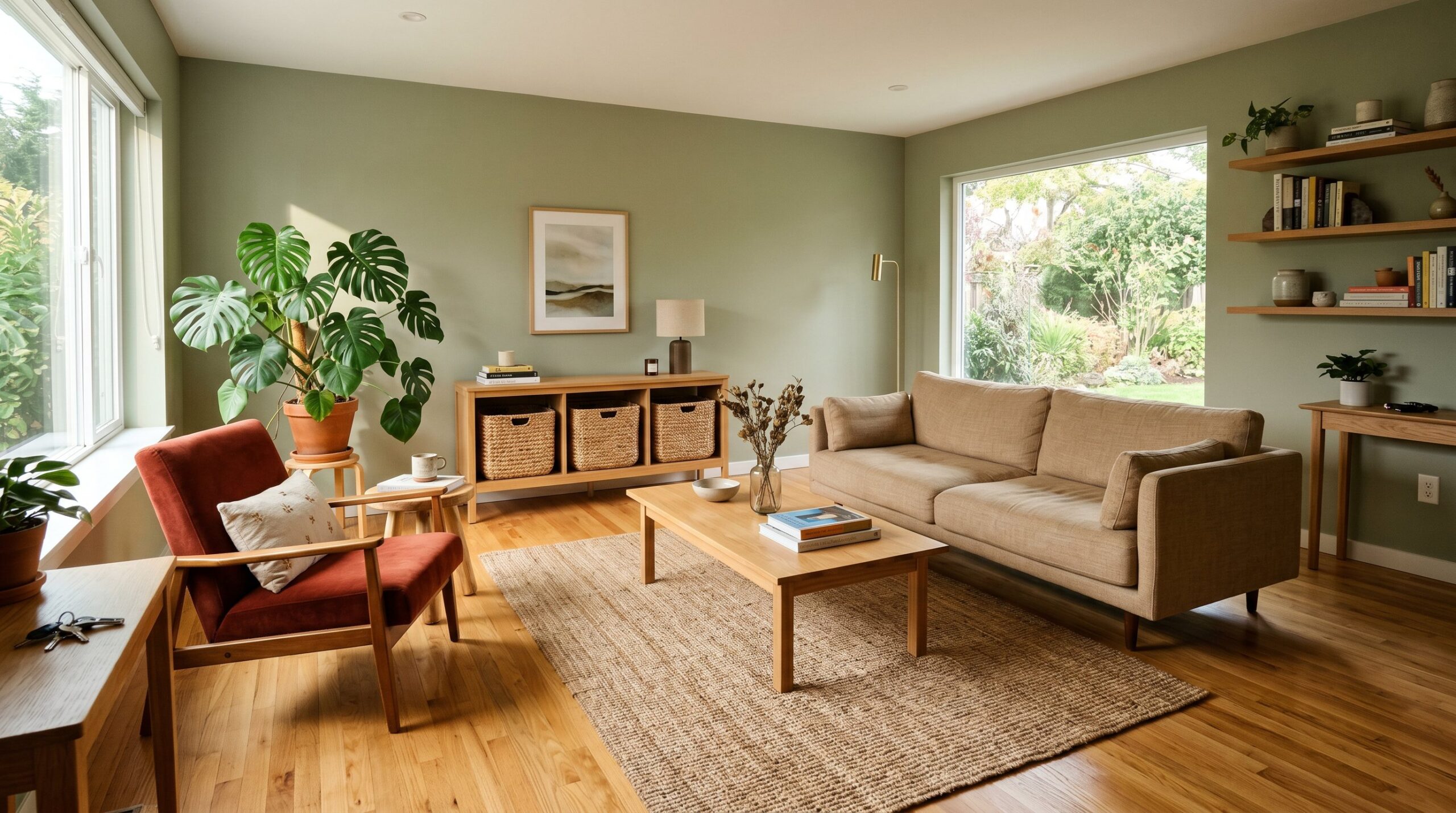
The 3 rules I shared above? They’re adapted from the core principles in Declutter Fast, combined with what I learned from actually living in a minimalist space.
If you’re serious about creating a minimalist living room that stays organized, check out Declutter Fast here. It’s the system that finally made minimalism work for me.
The Mistakes I Made (So You Don’t Have To)
Getting rid of too much too fast. I donated half my living room in one weekend. Then I regretted it and bought new stuff. Declutter slowly. You can always get rid of more later.
Buying expensive storage first. I spent $300 on matching storage baskets before I decluttered. Half of them sat empty. Declutter first, then see what storage you actually need.
Ignoring closed storage. I thought minimalism meant open shelving everywhere. Wrong. Closed storage is what keeps minimalism looking clean.
Not maintaining the system. I’d declutter, then stop following my own rules. The clutter came back within weeks. The system only works if you maintain it.
Your Minimalist Living Room Action Plan
Ready to actually do this? Here’s what worked for me:
Day 1: Apply the One Function Per Item rule. Go through every item in your living room. If it doesn’t have a clear function, donate it.
Day 2: Set up closed storage. Get 2-3 baskets or bins for everyday items (remotes, chargers, blankets).
Day 3: Choose your one designated surface. Make it the coffee table or side table. Commit to keeping every other surface clear.
Day 4-7: Maintain the system. Put things back in their homes every evening. Stick to the one-surface rule.
The Real Transformation
Minimalist organization isn’t about deprivation. It’s not about living in an empty white box.
It’s about creating a living room that feels calm and spacious because everything has a place. Where you can find what you need without digging through clutter. Where you can actually relax because the space isn’t visually overwhelming.
The transformation happens when you stop trying to make your living room look minimalist and start organizing it to function minimally. When you give every item a purpose. When you hide the everyday mess in closed storage. When you maintain clear surfaces.
Your minimalist living room can be warm, organized, and actually livable. It just needs the right system.
If you want the complete roadmap — the one that helped me finally make minimalism work — check out Declutter Fast here. It’s the fastest path from cluttered chaos to minimalist calm.
Start with the One Function Per Item rule today. Your organized living room is waiting.