Small Space Declutter Strategy — How to Get Your Tiny Home in Order Fast
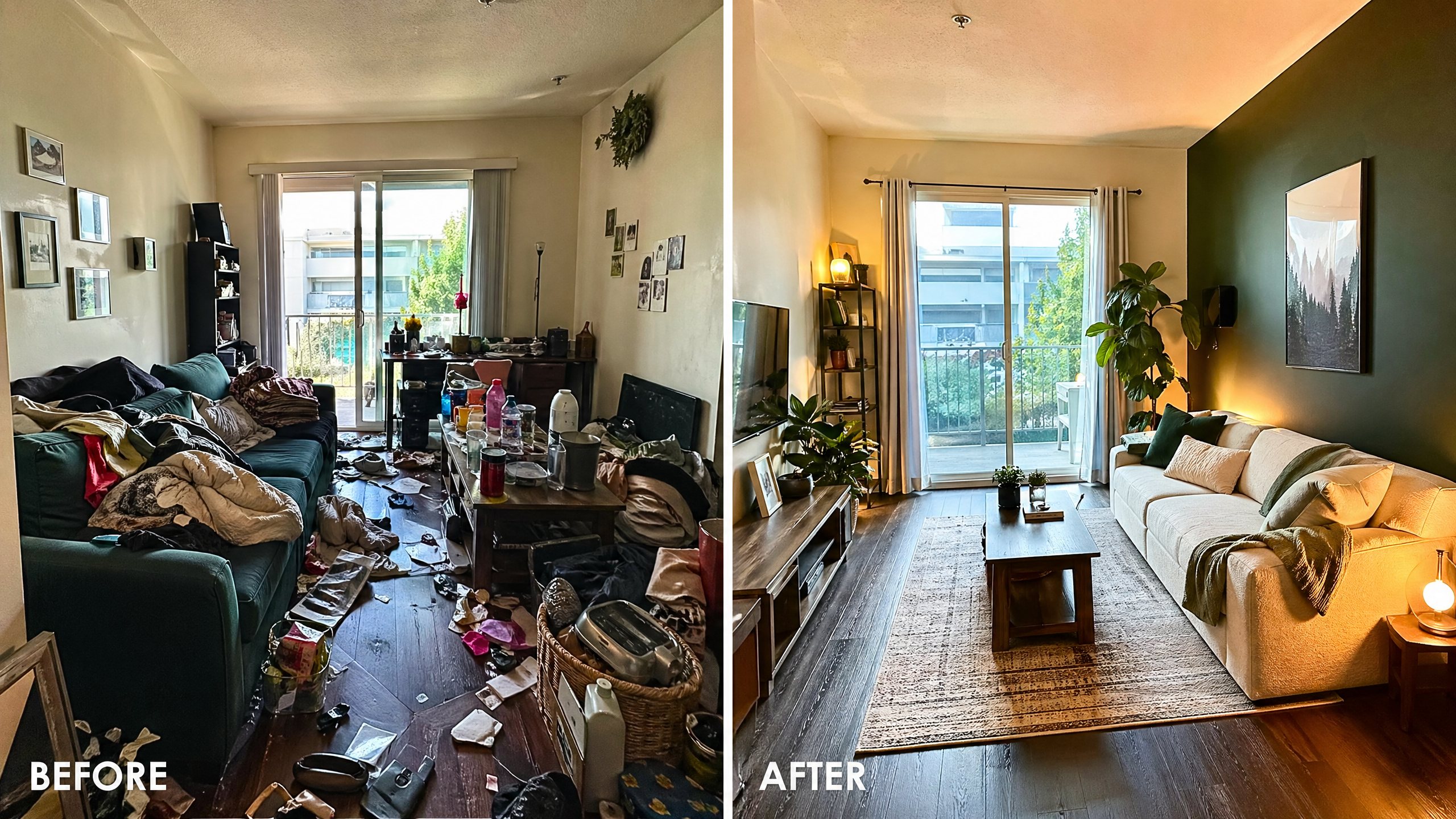
Living in a small space doesn’t mean living with clutter. In fact, small apartments and compact homes can be some of the most organized, functional, and beautiful spaces — if you know how to declutter them properly.
The problem isn’t the size of your space. The problem is that most decluttering advice is written for people with walk-in closets, spare rooms, and endless storage. That advice doesn’t work when you’re living in 400 square feet.
Today, I’m going to show you a decluttering strategy specifically designed for small spaces. This isn’t about buying more storage bins or rearranging your clutter. This is about creating a system that actually works for tiny apartments, studio living, and compact homes.
Ready to transform your small space from cramped and chaotic to organized and breathable? Let’s get started.
Affiliate Disclosure: This post contains affiliate links. If you purchase through these links, I may earn a small commission at no extra cost to you. I only recommend products I genuinely believe will add value to your space. Thank you for supporting Refined Living! Read full disclosure →
WHY SMALL SPACES NEED A DIFFERENT DECLUTTER STRATEGY
Before we dive into the how, let’s talk about why standard decluttering advice fails in small spaces.
The “Just Store It” Problem: Most decluttering advice assumes you have storage space. “Put it in the garage.” “Store it in the basement.” “Keep it in the spare room.” When you live in a small apartment, you don’t have those options. Every item you keep takes up valuable living space.
The “One-Size-Fits-All” Myth: Decluttering a 2,000-square-foot house is fundamentally different from decluttering a 400-square-foot studio. In a large home, you can afford to keep things “just in case.” In a small space, every item needs to earn its place.
The Visibility Factor: In a small space, clutter is always visible. There’s no “hiding” mess in another room. Your living room is also your bedroom, your dining room, and your office. If one area is cluttered, your entire home feels cluttered.
The Psychological Weight: Small spaces amplify the psychological impact of clutter. When you’re surrounded by stuff in a confined area, it creates a constant low-level stress. Your brain never gets a visual break.
The good news? Once you understand these challenges, you can create a decluttering strategy that actually works for small spaces.
THE SMALL SPACE DECLUTTER SYSTEM (4 STEPS)
This isn’t a marathon decluttering session. This is a systematic approach that works with the realities of small-space living.
### Step 1: The Ruthless Edit (Day 1)
In a small space, you can’t afford to keep things you don’t use. The first step is a ruthless edit of everything you own.
The Small Space Rule: If you haven’t used it in 3 months, it goes. Not 6 months. Not a year. Three months.
Why 3 months? Because in a small space, you cycle through your possessions faster. If you haven’t reached for something in 3 months, you’re working around it, not using it.
How to Execute:
1. Start with one category (clothes, books, kitchen items)
2. Pull everything out
3. Ask: “Have I used this in the past 3 months?”
4. If no, it goes in the donate/sell pile
5. If yes, it goes back — but only if you have a designated spot for it
The Exceptions: Seasonal items (winter coats, holiday decorations) and sentimental items get a pass. But be honest about what’s truly sentimental versus what’s just guilt-keeping.
### Step 2: Assign Every Item a Home (Day 2)
In a small space, homeless items are your enemy. If something doesn’t have a designated spot, it will end up on your counter, your floor, or your chair.
The Home Assignment Rule: Every item you keep must have a specific, accessible home.
Not “somewhere in the closet.” Not “in that drawer.” A specific spot that you can name and point to.
How to Execute:
1. Look at what you decided to keep from Step 1
2. Assign each item a specific home
3. If you can’t find a home for it, you don’t have room for it
4. Label storage containers and drawers
5. Take a photo of where things go (seriously — this helps you maintain the system)
The Test: If you can’t tell someone exactly where to find your scissors, your tape, or your phone charger, those items don’t have homes yet.
### Step 3: Implement Vertical Storage (Day 3)
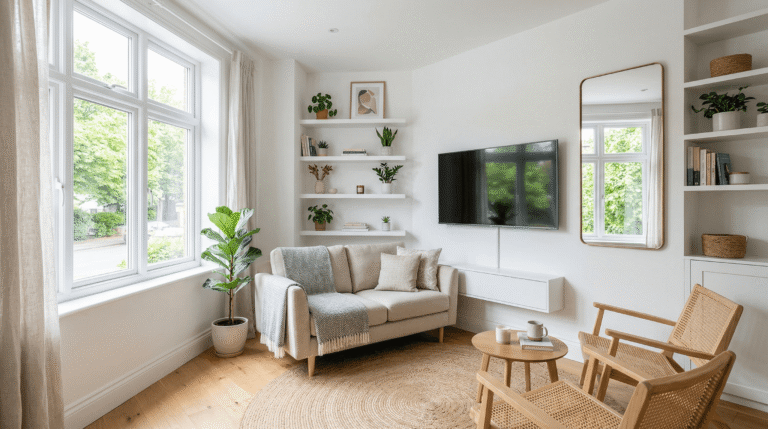
Small spaces have limited floor space but often underutilized wall space. Going vertical is the single most effective way to increase storage in a small apartment.
The Vertical Storage Principle: If it can go on a wall, it should go on a wall.
How to Execute:
1. Install floating shelves in every room
2. Use wall-mounted hooks for bags, coats, and accessories
3. Add over-the-door organizers for shoes, cleaning supplies, and pantry items
4. Mount your TV instead of using a stand
5. Use wall-mounted magazine racks for mail and papers
The Visual Balance: Vertical storage only works if it’s organized. Open shelving in a small space needs to look intentional, not cluttered. Use matching containers, limit the number of items per shelf, and leave some empty space.
### Step 4: Create Multi-Functional Zones (Day 4)
In a small space, every area needs to serve multiple purposes. The key is creating zones that can shift functions throughout the day.
The Multi-Function Rule: Every piece of furniture should serve at least two purposes.
How to Execute:
1. Coffee table = storage + surface + seating (ottoman style)
2. Bed = sleeping + storage (under-bed boxes or drawers)
3. Dining table = eating + desk + crafting
4. Entryway bench = seating + shoe storage + coat hooks above
5. Nightstand = bedside table + charging station + reading light
The Zone Shift: Your living room might be a workspace during the day, a dining room at dinner, and a relaxation zone in the evening. Use trays, baskets, and containers to quickly shift between functions.
START WITH A DECLUTTER SYSTEM
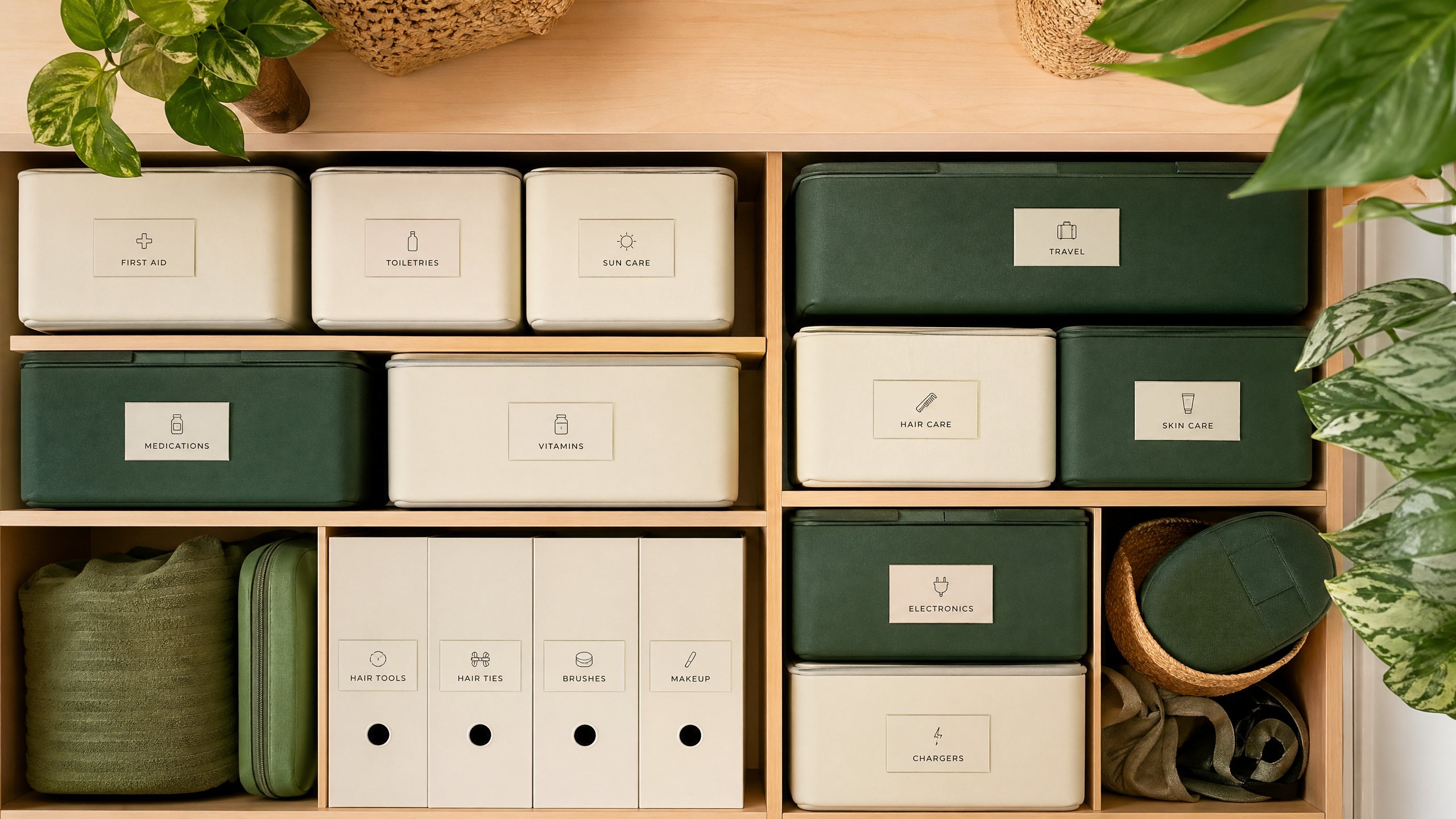
The difference between a one-time declutter and a lasting transformation is having a system.
The Daily 5-Minute Reset: Every evening, spend 5 minutes putting everything back in its home. This prevents clutter from accumulating.
The One-In-One-Out Rule: For every new item that comes into your small space, one item must leave. Bought a new shirt? Donate an old one. New book? Pass one along.
The Surface Rule: Kitchen counters, coffee tables, and nightstands should be clear except for 3-5 intentional items. Everything else goes in its home.
The Basket System: Keep a donation basket in your closet. When you realize you’re not using something, toss it in the basket. When it’s full, donate it.
USE VERTICAL STORAGE SOLUTIONS
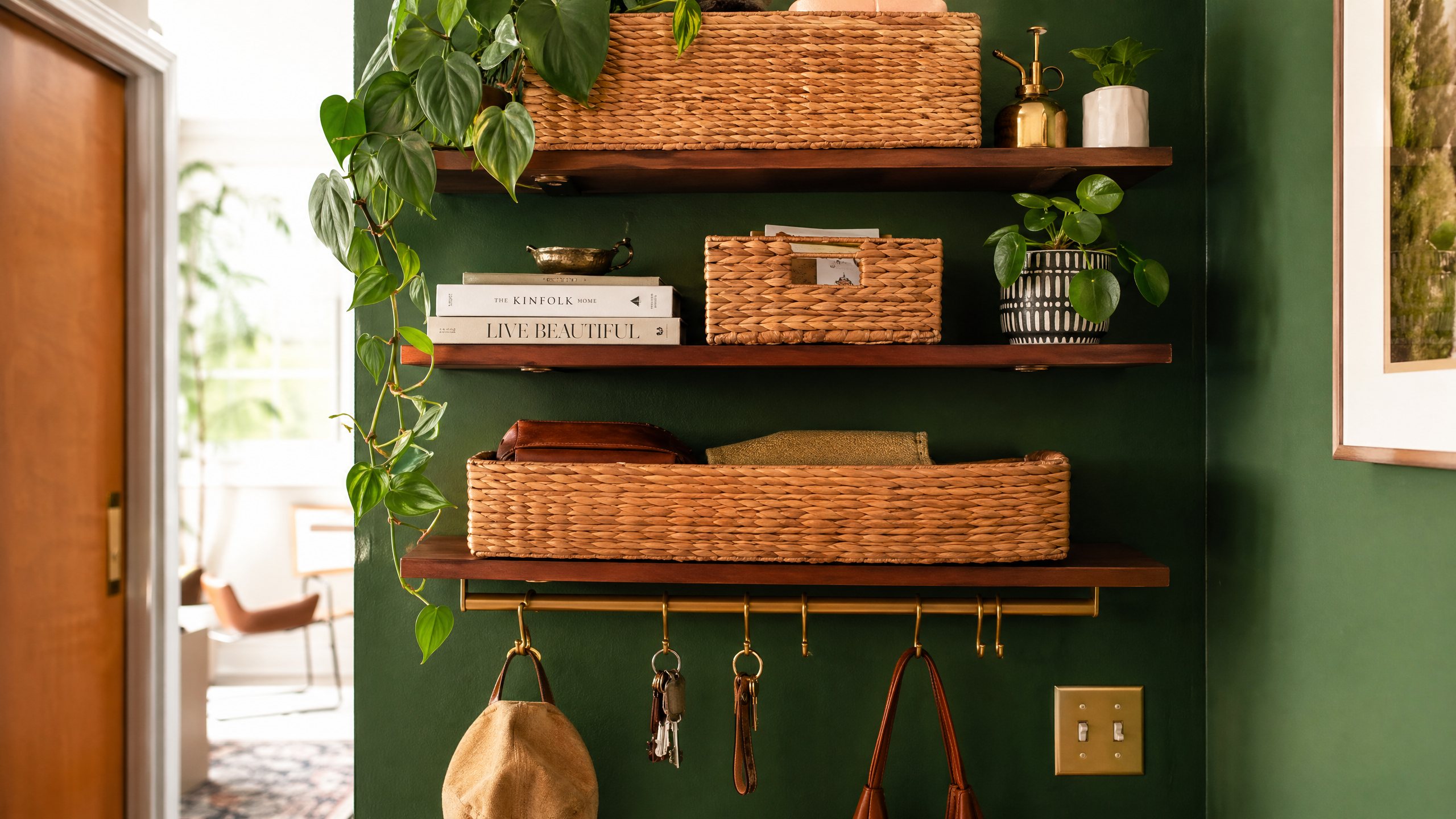
Let’s get specific about vertical storage, because this is where small spaces gain the most functional square footage.
Kitchen Vertical Storage:
– Magnetic knife strip on the wall
– Hanging pot rack or wall-mounted pot hooks
– Floating shelves for dishes and glassware
– Over-the-sink cutting board and drying rack
Bathroom Vertical Storage:
– Over-the-toilet shelving unit
– Wall-mounted towel bars (multiple levels)
– Magnetic strip for bobby pins and tweezers
– Shower caddy that hangs from the showerhead
Bedroom Vertical Storage:
– Wall-mounted nightstand (floating shelf)
– Hooks for bags and jewelry
– Floating shelves above the bed (instead of a headboard)
– Wall-mounted clothing rack for tomorrow’s outfit
Living Room Vertical Storage:
– Floor-to-ceiling bookshelves
– Wall-mounted TV console
– Floating shelves for plants and decor
– Wall-mounted desk that folds down
The Installation Investment: Yes, installing shelves and hooks requires some upfront effort. But in a small space, vertical storage is the difference between cramped and functional.
MAINTAIN CLEAR SURFACES
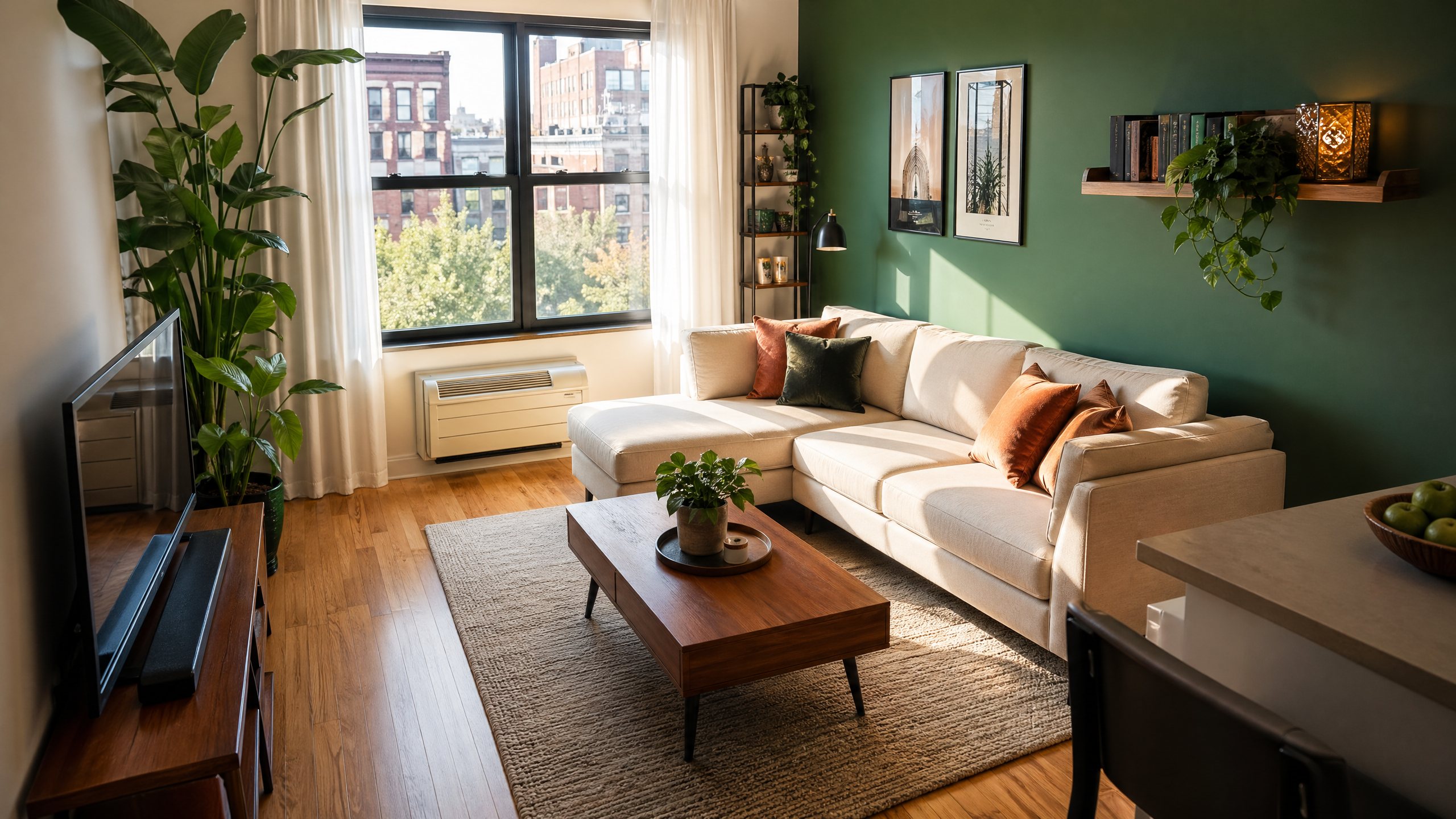
In a small space, clear surfaces create the illusion of more space. Cluttered surfaces make even a large room feel cramped.
The Surface Hierarchy:
Tier 1 Surfaces (Keep 90% Clear):
– Kitchen counters
– Dining table
– Coffee table
– Desk
These surfaces are for active use, not storage. Keep them clear except when you’re actively using them.
Tier 2 Surfaces (Keep 70% Clear):
– Nightstands
– Console tables
– Dresser tops
These can hold a few intentional items (lamp, plant, tray), but shouldn’t become catch-alls.
Tier 3 Surfaces (Keep 50% Clear):
– Bookshelves
– Open shelving
– Display areas
These are for display, but even display needs breathing room. Leave empty space between items.
The Tray Trick: If you need to keep items on a surface (keys, wallet, phone), corral them on a small tray. It creates a visual boundary and makes the surface look intentional, not cluttered.
CREATE MULTI-FUNCTIONAL ZONES
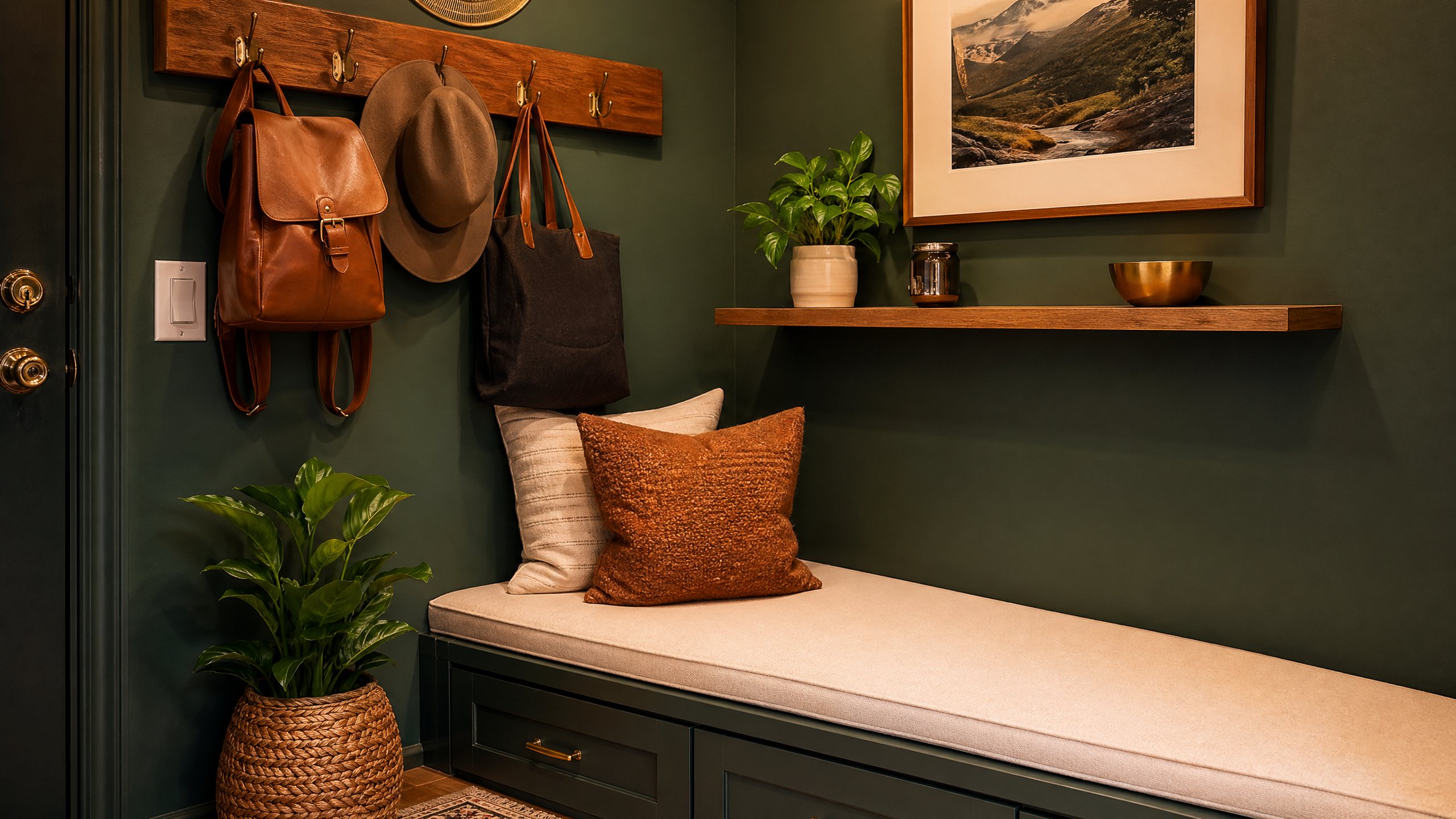
Let’s talk about how to make every zone in your small space work harder.
The Living Room Zone:
Day Function: Workspace
– Laptop on coffee table or small desk
– Charging station in a basket
– Work papers in a magazine rack
Evening Function: Relaxation
– Laptop goes away
– Throw blanket comes out
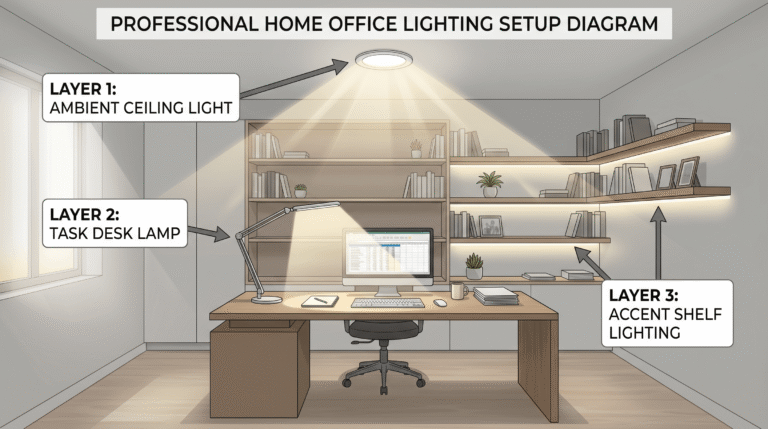
– Lighting shifts to ambient (lamps, not overhead)
Weekend Function: Dining
– Coffee table becomes dining table
– Placemats and napkins stored in coffee table drawer
– Chairs pulled in from other areas
The Bedroom Zone:
Night Function: Sleeping
– Bed made, surfaces clear
– Blackout curtains closed
– White noise machine on
Morning Function: Getting Ready
– Clothing rack with tomorrow’s outfit
– Small mirror and lighting for makeup
– Jewelry tray on dresser
Weekend Function: Relaxation
– Reading nook in corner chair
– Coffee on nightstand
– Natural light through open curtains
The Key to Multi-Function: Quick transitions. If it takes more than 2 minutes to shift a zone from one function to another, the system is too complicated.
WANT TO MASTER SMALL SPACE DECLUTTERING?
If you’re serious about getting your small space organized and keeping it that way, I highly recommend Declutter Fast: How to Get Your Home in Order Almost Immediately by Mimi Tanner.
This comprehensive guide is specifically designed for people who want results fast — not months from now, but days. It covers:
– The exact step-by-step system for decluttering any space
– How to decide what to keep and what to let go
– Strategies for maintaining order without constant effort
– Room-by-room decluttering plans
– How to prevent clutter from coming back
What I love about this guide is that it’s practical, not preachy. It doesn’t assume you have endless time or a minimalist mindset. It’s for real people living in real spaces who just want their homes to feel organized and breathable.
Get Declutter Fast: How to Get Your Home in Order Almost Immediately →
This is the system that thousands of people have used to transform their small spaces from chaotic to calm. If you’re tired of feeling cramped and overwhelmed by clutter, this guide will show you exactly how to fix it.
THE SMALL SPACE MINDSET SHIFT
Beyond the physical strategies, decluttering a small space requires a mindset shift.
Shift 1: From “Just in Case” to “Just in Time”
In a large home, you can keep things “just in case” you need them someday. In a small space, you can’t afford that luxury. Shift to “just in time” thinking: I’ll acquire what I need when I need it.
Shift 2: From “More Storage” to “Less Stuff”
The solution to clutter in a small space isn’t more storage containers. It’s owning less stuff. Every time you’re tempted to buy another bin or basket, ask: “What can I get rid of instead?”
Shift 3: From “Someday” to “Now”
Clutter accumulates when we defer decisions. “I’ll deal with that later.” “I’ll sort through this someday.” In a small space, someday needs to be now. Make decisions quickly and move on.
Shift 4: From “Sentimental” to “Selective Sentimental”
You can’t keep every sentimental item when you live in 400 square feet. Choose the most meaningful items and let the rest go. Take photos of items before donating them if it helps.
COMMON SMALL SPACE DECLUTTER MISTAKES
Mistake #1: Buying Storage Before Decluttering
Don’t buy bins, baskets, or shelving units until after you’ve decluttered. You’ll end up with storage for stuff you don’t need.
Mistake #2: Keeping Things Because They Were Expensive
The money is already spent. Keeping something you don’t use doesn’t get your money back. It just takes up space.
Mistake #3: Decluttering Too Slowly
In a small space, a slow declutter means living in chaos for weeks. Set a deadline (one week, max) and commit to it.
Mistake #4: Not Measuring Before Buying Furniture
Every piece of furniture in a small space needs to be the right size. Measure your space, measure the furniture, and don’t guess.
Mistake #5: Ignoring Vertical Space
If you’re not using your walls for storage, you’re wasting 50% of your available space.
YOUR SMALL SPACE DECLUTTER ACTION PLAN
Ready to transform your small space? Here’s your 4-day action plan:
Day 1: The Ruthless Edit
– Choose one category (clothes, kitchen, books)
– Pull everything out
– Apply the 3-month rule
– Create donate/sell piles
– Remove the donate pile from your home immediately
Day 2: Assign Homes
– Look at what you kept
– Assign each item a specific home
– Label containers and drawers
– Take photos of where things go
Day 3: Install Vertical Storage
– Identify bare walls
– Install floating shelves
– Add wall hooks
– Mount what can be mounted
Day 4: Create Multi-Functional Zones
– Identify your zones (living, sleeping, working)
– Assign multiple functions to each zone
– Set up quick-transition systems
– Test the zone shifts
Day 5 and Beyond: Maintain
– Daily 5-minute reset
– One-in-one-out rule
– Weekly surface clear
– Monthly declutter check
THE FINAL TRANSFORMATION
Decluttering a small space isn’t about deprivation. It’s not about living with nothing. It’s about creating a home that feels spacious, functional, and calm — even when you only have 400 square feet.
The transformation happens when you stop fighting your small space and start working with it. When you let go of the things you don’t use. When you assign every item a home. When you use your walls as storage. When you create zones that shift throughout the day.
Your small space can be organized, beautiful, and breathable. It just needs a system that actually works for small-space living.
Start with the ruthless edit. Assign every item a home. Go vertical with your storage. Create multi-functional zones. And most importantly, maintain the system with daily resets and the one-in-one-out rule.
That’s how you transform a cramped, cluttered small space into an organized home you actually want to spend time in. 🏠✨